Gas Price Spike Hits Lower-Income Americans Hardest, Fed Study Finds

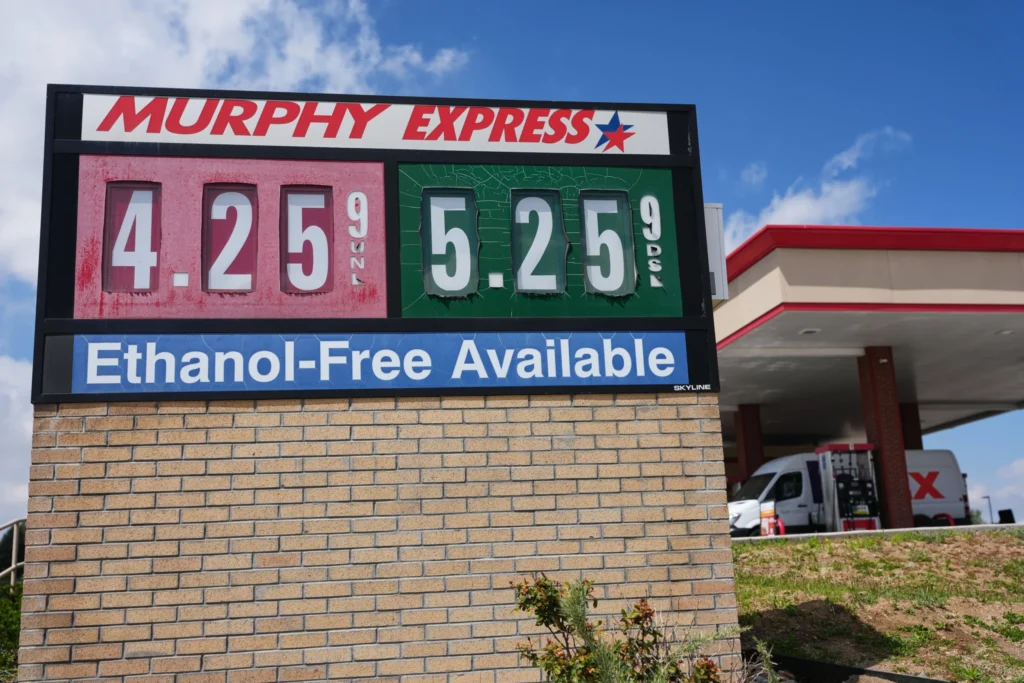
A new study from the Federal Reserve Bank of New York found that lower-income Americans are being hit hardest by rising gas prices linked to the Iran war, deepening economic inequality across the country.
The report showed that poorer households sharply reduced gasoline consumption in March but still ended up spending significantly more at the pump because of soaring fuel prices.
Lower-income households forced to cut driving
According to the study, households earning less than $40,000 annually reduced gas consumption by 7% in March after fuel prices surged following the start of the Iran conflict.
Despite driving less, those households still spent 12% more on gasoline during the month.
Researchers said many lower-income Americans likely adjusted by carpooling, combining errands, reducing travel, or relying more on public transportation.
Meanwhile, wealthier households earning at least $125,000 annually reduced gasoline use by just 1% while increasing gas spending by 19%.
Economists warn of a growing “K-shaped economy”
The report highlighted what economists describe as a “K-shaped economy,” where wealthier Americans continue to perform well financially while lower-income households struggle.
Researchers noted that higher-income Americans have benefited from rising stock market values and real estate gains in recent years, giving them greater flexibility to absorb higher fuel costs.
By contrast, poorer households remain more vulnerable to inflation and rising living expenses.
“We find that households had very different experiences with gasoline spending,” New York Fed researchers wrote in the report.
Gas prices surged after Iran conflict began
The Iran war began on Feb. 28, and gasoline prices increased roughly 25% by the end of March, according to government inflation data.
As of this week, gas prices are reportedly about 50% higher than before the conflict began.
The sharp increase has raised concerns among economists that higher fuel costs could eventually slow consumer spending and weaken economic growth.
Consumer spending pressure continues to grow
The New York Fed estimated that total spending at gas stations rose 15% in March compared to the previous month.
Economists warn that money spent on fuel reduces consumers’ ability to spend elsewhere in the economy, particularly on discretionary purchases such as entertainment, travel, and retail goods.
A separate report from Bank of America Institute found that some lower-income households are now spending up to 10% of their income on gasoline alone.
Higher-income households, by comparison, spend an average of just 2.7% of their income on fuel.
Signs of weaker discretionary spending emerging
The Bank of America report also showed discretionary spending growth slowed among poorer households during March while increasing among middle- and upper-income consumers.
Analysts say those trends could widen economic disparities further if fuel prices remain elevated.
Although overall consumer spending in the U.S. continued to grow modestly in March, economists warn the impact of sustained energy inflation may become more visible in the coming months.
Inflation concerns remain despite stable headline data
Despite strong employment figures and continued economic growth, surveys continue to show many Americans remain pessimistic about the economy.
Economists say rising fuel prices disproportionately affecting working-class households may help explain the disconnect between strong headline economic indicators and public frustration over living costs.
Author: Staff Writer | Edited for WTFwire.com | SOURCE: AP News
: 71