Trump and Kevin Warsh Now Share the Risks of the US Economy

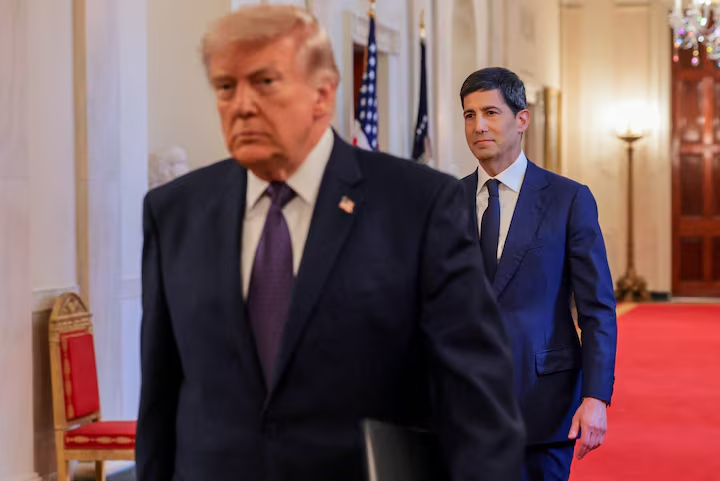
Donald Trump now fully owns the direction of the American economy after installing Kevin Warsh as the new chair of the Federal Reserve, ending years of public clashes with former Fed Chair Jerome Powell.
For years, Trump blamed Powell for high interest rates, weak housing activity and slower economic growth. But with Warsh now leading the central bank, economists say the White House can no longer point fingers elsewhere if inflation and borrowing costs continue rising.
Trump publicly backs Kevin Warsh
Trump hosted Warsh’s swearing-in ceremony at the White House in a highly public display of support.
Standing beside the new Fed chair, Trump praised Warsh and said he wanted the economy to continue booming.
The appointment places Trump’s influence across nearly every major area of U.S. economic policymaking at a critical moment ahead of the 2026 midterm elections.
Inflation and mortgage rates remain major concerns
Despite campaign promises to lower prices quickly, inflation has remained stubbornly high during Trump’s second term.
The Federal Reserve’s preferred inflation gauge has climbed from 2.3% in March 2025 to 3.5% annually. At the same time, the average 30-year mortgage rate has risen above 6.5%, adding pressure to the already weak housing market.
Gasoline prices have also surged since the United States entered the conflict with Iran earlier this year.
Analysts say rising energy costs and ongoing instability in global supply chains are making it harder for the administration to deliver on affordability promises.
Warsh faces a divided Federal Reserve
Although Warsh now leads the Federal Reserve, the institution remains deeply divided on monetary policy.
Minutes from the Fed’s April meeting showed the highest level of disagreement among policymakers in more than three decades. Several officials signaled that interest rates may need to rise further to contain inflation.
That position could create tensions with Trump, who has repeatedly pushed for lower borrowing costs.
Markets expect higher interest rates
Investors increasingly believe the Fed may eventually need to raise rates again if inflation continues accelerating.
Long-term Treasury yields have already climbed sharply, increasing borrowing costs for consumers and businesses alike.
Higher yields are also affecting:
- Mortgage rates
- Credit card borrowing
- Corporate financing
- Housing demand
Economists warn that continued inflation could become politically damaging for Republicans before the midterms.
Warsh wants a different style of leadership
Warsh has indicated he plans to move away from the consensus-driven leadership style used by Powell.
Instead, he has supported more open debate within the Federal Reserve and suggested the central bank should sometimes surprise markets instead of heavily signaling future policy decisions.
That approach could introduce greater volatility into financial markets, especially during a period of global uncertainty tied to the Middle East conflict and energy prices.
Trump can no longer blame the Fed
Under Powell, Trump regularly criticized the Federal Reserve publicly and used the central bank as a political target.
Now, analysts say that strategy becomes harder because Warsh is seen as Trump’s personal choice.
Political strategist Richard Stern said the affordability crisis and rising prices are unlikely to disappear quickly regardless of who leads the Fed.
Still, voters may increasingly connect the state of the economy directly to Trump and his administration as inflation, housing costs and fuel prices remain elevated.
Midterm elections could become economic referendum
Consumer confidence has weakened across multiple voter groups, including independents and Republicans, according to recent surveys.
With inflation still above the Federal Reserve’s target and economic frustration growing, Republicans could face increasing pressure heading into the 2026 elections.
The partnership between Trump and Warsh may ultimately determine whether the administration can stabilize prices without triggering a broader economic slowdown.
: 222