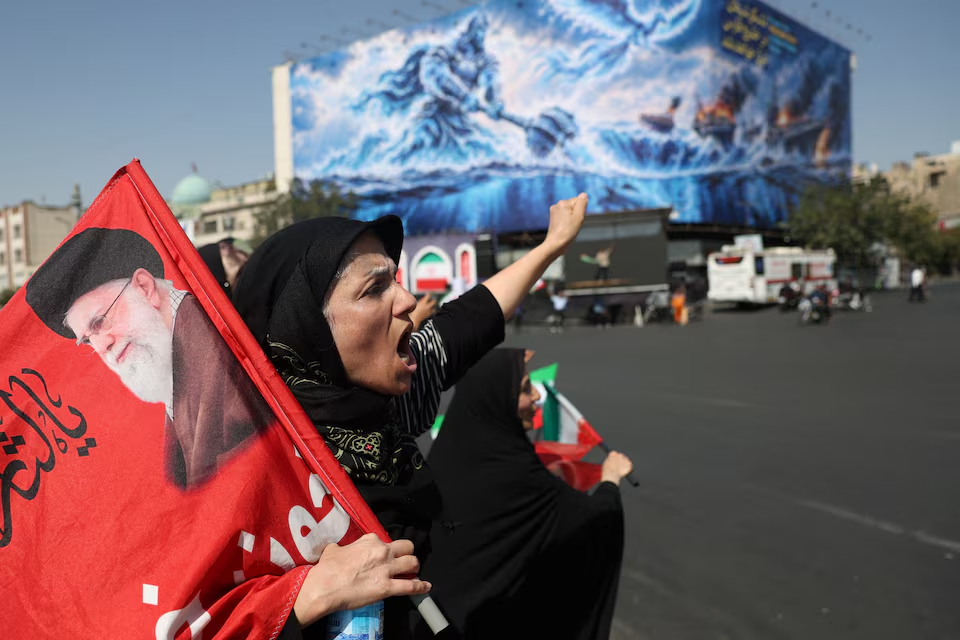
Trump Weighs Iran Ceasefire Deal as Hormuz Strait Remains Closed

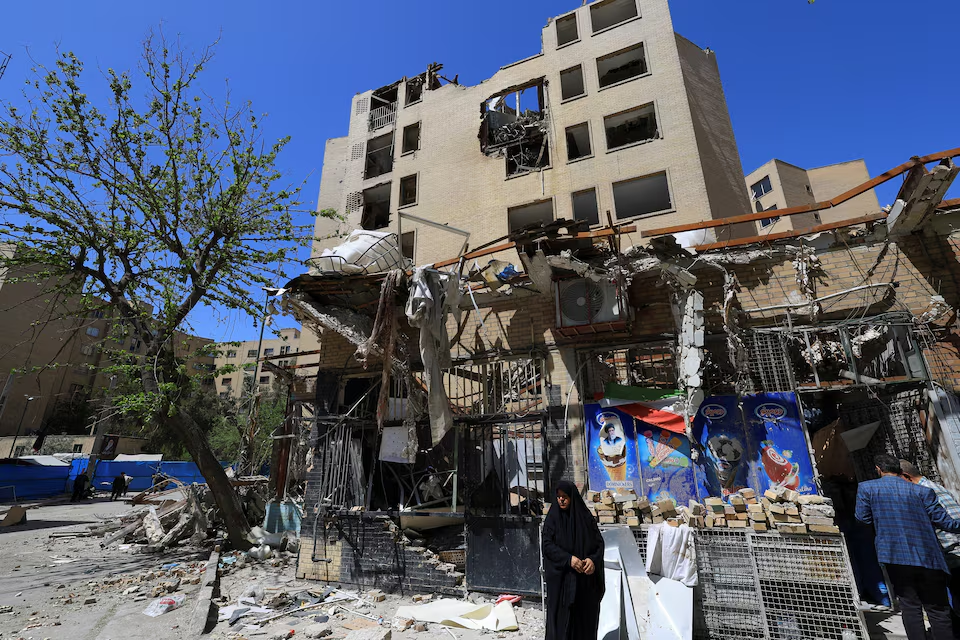
Donald Trump said Friday that he would make a final decision “imminently” on a possible Iran ceasefire deal that could extend the current truce and reopen the strategically critical Strait of Hormuz.
Speaking before entering the White House Situation Room, Trump said any agreement with Iran would require Tehran to permanently abandon any path toward nuclear weapons and immediately reopen the shipping lane without restrictions or tolls.
“Iran must agree that they will never have a Nuclear Weapon or Bomb,” Trump wrote on social media. “The Hormuz Strait must be immediately open, no tolls, for unrestricted shipping traffic.”
Negotiations continue amid fragile ceasefire
Sources familiar with the talks said negotiators are discussing a 60-day extension of the ceasefire that has technically been in place since April.
The proposed extension would allow oil and gas shipments to resume through the Strait of Hormuz while negotiators attempt to resolve more difficult issues, including Iran’s nuclear program, sanctions relief and regional military tensions.
A senior Iranian official told Reuters that a “political understanding” had largely been reached, though no final agreement had been signed.
Iranian state-linked media pushed back against some of Trump’s claims. The semi-official Fars news agency said Trump’s statements contained “a mixture of truth and falsehood” and accused Washington of attempting to claim a “fabricated victory.”
According to the report, Iran would reopen the strait only under its own maritime arrangements after the United States lifts restrictions on Iranian shipping.
Global economy pressured by Hormuz disruption
The closure of the Strait of Hormuz has become one of the most serious economic consequences of the Iran war.
Roughly one-fifth of the world’s oil and liquefied natural gas shipments normally pass through the narrow waterway connecting the Persian Gulf to global markets.
Since the conflict began on February 28, energy prices have surged worldwide, fueling inflation and disrupting international trade.
However, oil prices fell Friday and stock markets rose after reports suggested progress toward a possible agreement.
Trump also claimed mines in the strait would be removed and that ships trapped in the area could soon resume movement.
Nuclear material and frozen assets remain major disputes
The negotiations reportedly still include disagreements over Iran’s uranium stockpile and frozen financial assets abroad.
According to reports, there is discussion of transferring Iran’s highly enriched uranium to Kazakhstan under international supervision.
Rafael Grossi told the Financial Times that Kazakhstan has indicated a willingness to receive the material if an agreement is finalized.
Iranian media denied that any deal includes the destruction of nuclear material, though reports suggested Tehran could receive access to approximately $12 billion in frozen assets.
Trump, meanwhile, stated that “no money would be exchanged until further notice.”
Wider regional conflict still unresolved
The broader Middle East conflict remains deeply connected to the negotiations.
Iran continues demanding sanctions relief, a reduction of U.S. military presence in the region and an end to Israeli military operations in Lebanon against Hezbollah.
Israeli operations in Lebanon have displaced hundreds of thousands of civilians and caused extensive destruction in Beirut and southern Lebanon.
Diplomatic activity intensified Friday as Pakistani Foreign Minister Ishaq Dar arrived in Washington for meetings with U.S. Secretary of State Marco Rubio.
Despite signs of progress, both Washington and Tehran continue signaling that major differences remain unresolved as the ceasefire hangs in the balance.
: 338