Trump administration to end Medicare Part D subsidy program in 2027

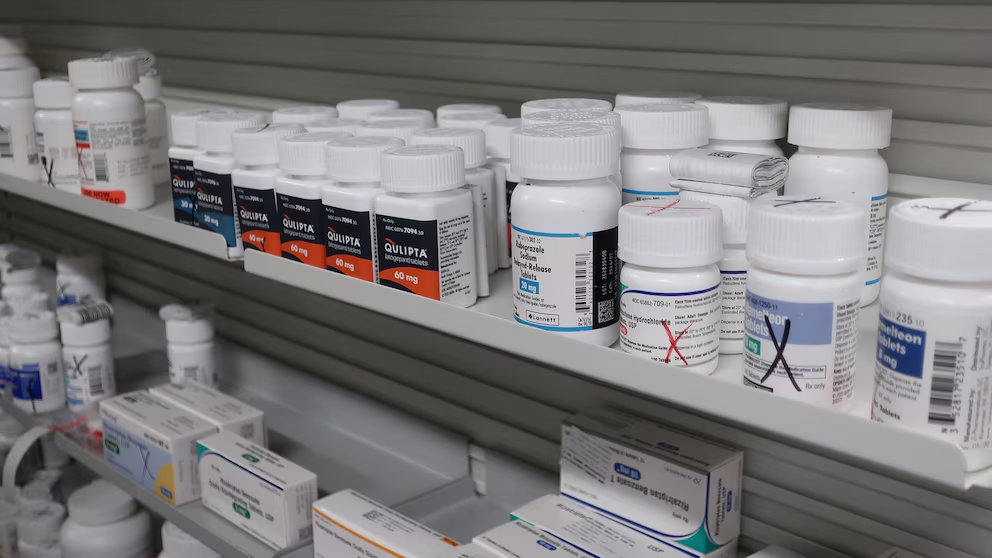
The Trump administration announced Tuesday it is ending a key Medicare subsidy that has kept prescription drug insurance premiums in check for tens of millions of older and disabled Americans, a move that health policy experts say will raise costs for roughly half of recipients when the change takes effect in 2027.
What Is Being Ended and Why
The Medicare Part D subsidy end 2027 prescription drug costs decision eliminates a federal payment the government currently makes to insurance companies to hold down premiums for Part D plans — the prescription drug benefit component of Medicare. The government currently pays billions of dollars to insurers to keep average premiums at approximately $36 per person per month, according to KFF, a health policy nonprofit. Without the subsidy, premiums for some enrollees could rise by as much as $20 per month, KFF estimates.
CMS Administrator Mehmet Oz announced the change Tuesday, framing it as a correction of what he described as a corporate insurance industry bailout created under the Biden administration’s Inflation Reduction Act. “We are stabilizing the market so this bailout is no longer needed,” Oz wrote on X, adding that “premiums will go up by less than $10 for most Medicare recipients, with many even seeing lower premiums.”
A Trump administration official said approximately half of enrollees would either see a premium increase of less than $10 or a premium decrease, and that most would have plans available at $10 or less per month. Enrollees will learn their new 2027 monthly cost this fall.
Scope of the Program
Medicare Part D covers prescription drug costs for an estimated 25 million enrollees. The program’s subsidies are set to expire at the end of the current year, with changes taking effect in 2027.
Political and Policy Context
The announcement arrives at a sensitive political moment. Affordable Care Act subsidies have also expired, and healthcare costs remain one of the top voter concerns heading into November’s midterm elections. Both changes compound the financial pressure on households already strained by elevated inflation driven in part by the Iran war’s effect on energy prices.
The Biden administration had defended the subsidy program as a component of the Inflation Reduction Act, which also gave Medicare the authority to negotiate drug prices directly with pharmaceutical companies — authority the Trump administration has not yet revoked but has not expanded. Oz referenced “most favored nation” pharmaceutical pricing deals as an alternative mechanism for keeping drug costs in check, alongside the administration’s existing GLP-1 weight loss drug access program for seniors at $50 per month.
The news was first reported by the Wall Street Journal.
Author: Staff Writer | Edited for WTFwire.com | SOURCE: ABC News
: 26