Diesel surge in Iran war pushes up food prices

Sticker shock has plagued drivers at the gas pump since the outbreak of war with Iran, but higher prices could soon follow them to the grocery store, the mall and just about everywhere else they shop, some economists told ABC News.
The reason for that is a surge in the cost of diesel fuel, which powers many of the trucks, trains and ships that transport products across a vast global supply chain. The price hike for any individual item will likely be modest, but the pileup of extra costs could weigh on wallets, they said.
“Pretty much everything you buy off a shelf is delivered by a truck that uses diesel,” Tyler Schipper, a professor of economics at the University of St. Thomas, told ABC News. “It’s the mechanism that takes an energy crisis in the Middle East and feeds it into other prices.”
Iran live updates: US has less clear picture of Iranian leadership positions: Gabbard
Iran has mounted a near-closure of the Strait of Hormuz, a critical trading route along the coast of Iran that facilitates the transport of about one-fifth of the global oil supply. Tit-for-tat attacks on oil and gas infrastructure across the Middle East appeared to heighten the risk in recent days.
The disruption has pushed global crude prices above $112 a barrel, which marks a staggering rise of more than 60% over the past month.
Oil accounts for about 4 of every 10 dollars in the price of diesel fuel, the U.S. Energy Information Administration says. Petroleum costs, in turn, have sent diesel prices soaring at their fastest four-week pace ever, Patrick De Haan, a petroleum analyst at GasBuddy, said in a X post on Wednesday.
The average price of a gallon of diesel stands at $5.09, jumping $1.42 or 38% over the past month, AAA data showed.
“Prices aren’t at record highs — but the speed of this surge is,” De Haan said.
President Donald Trump earlier this week called on a number of countries, including the United Kingdom and Australia, to help open the strait to shipping traffic. He appeared to abandon the plan on Tuesday, however, saying on social media “we no longer ‘need,’ or desire, the NATO Countries’ assistance — WE NEVER DID! Likewise, Japan, Australia, or South Korea.”
The short-lived effort to build an international coalition came days after Trump vowed a U.S. naval escort for oil tankers if needed. In an effort to lower oil prices in the meantime, the Trump administration has eased sanctions on Russian oil and suspended a key regulation of domestic oil transport, among other measures.
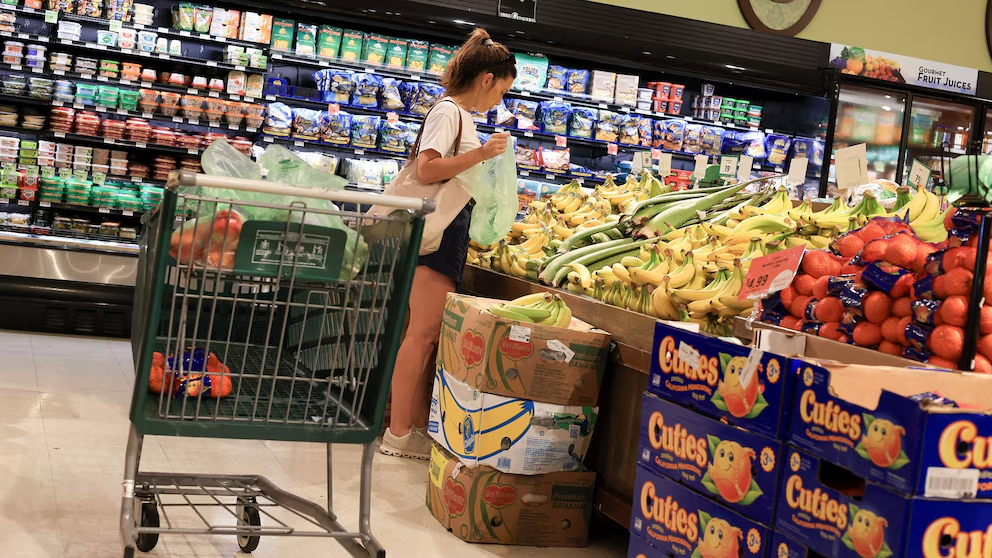
Since diesel is the lifeblood of the supply chain, a sudden rise in fuel costs will all but certainly result in higher prices charged by wholesalers in response to elevated transport expenses, some analysts said. In turn, many retailers will pass those costs along to shoppers, raising prices on shelves.
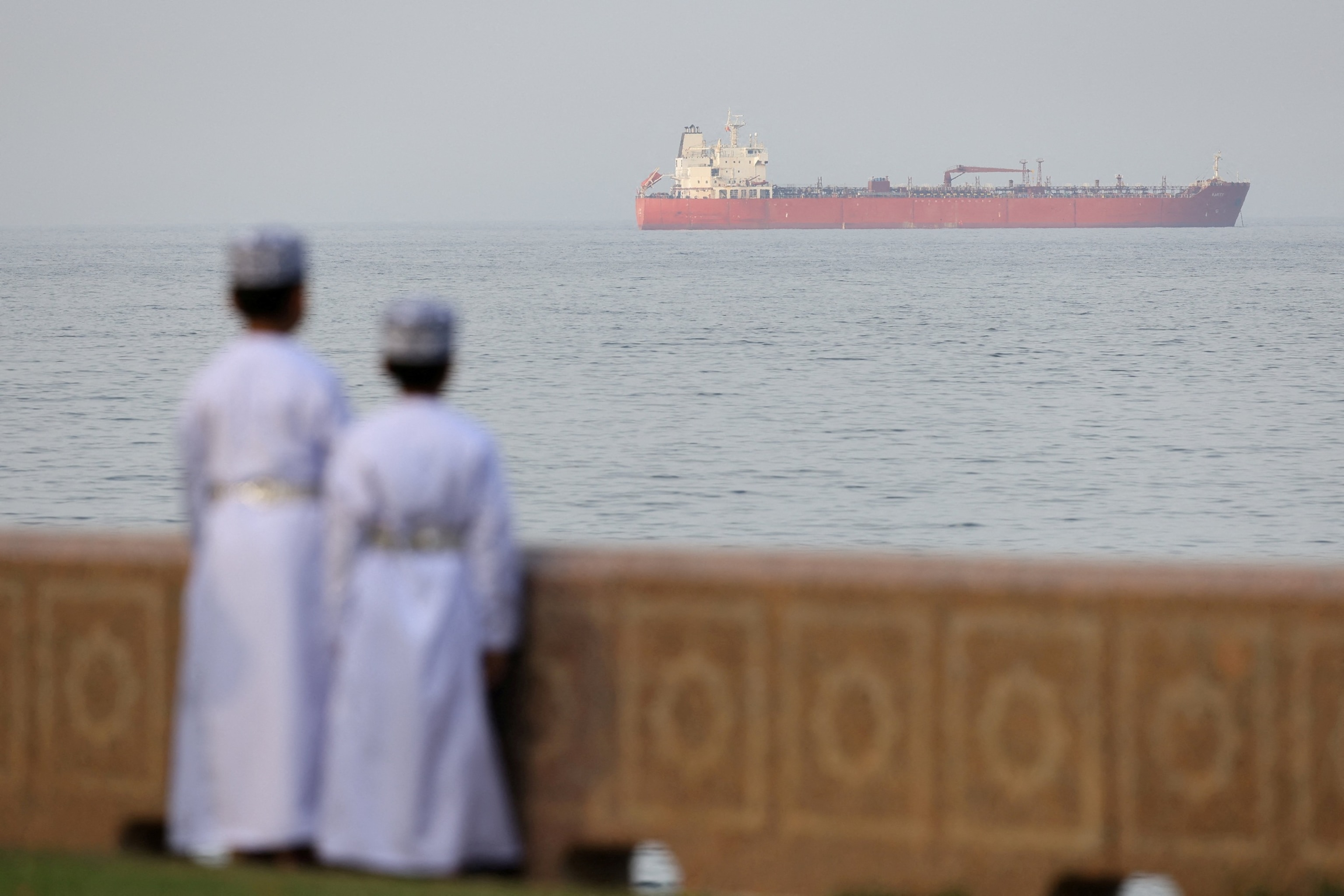
Children stand on the waterfront overlooking a tanker at anchor, amid the U.S.-Israeli conflict with Iran, off the coast of Muscat, Oman, March 18, 2026. Stelios Misinas/Reuters
Diesel fuel costs tied to domestic transport — such as trucking — typically hit retailers “quickly,” resulting in “modest” price pressure for sellers, Bank of America Global Research said in a note to clients shared with ABC News on Wednesday, citing a survey of 13 retailers and brands.
Every dollar spent on food, for instance, usually includes three or four cents that stem from transportation costs, Omair Sharif, founder of Inflation Insights, previously told ABC News.
“It’s typically not a huge number,” Sharif added. “But we’re seeing massive spikes in diesel prices.”
The price effects will likely show up first in fresh fruits and vegetables, since their short shelf life leaves them especially vulnerable to sudden increases in supply-chain costs, Schipper said. Other perishable products like grains and meats could also prove price sensitive, he added.
The prospect of higher food prices comes as the category already squeezes many shoppers. Food prices climbed 3.1% in February compared to a year earlier, registering above overall inflation and maintaining their pace from the previous month.
On the whole, inflation has cooled in recent months but remains slightly higher than the Federal Reserve’s target rate of 2%.
Even before the outset of war, the supply chain found itself weathering costs tied to President Donald Trump’s tariffs. In February, wholesale prices rose at their fastest pace since 2023, including a nearly 50% jump in fruit and vegetable costs, U.S. Bureau of Labor Statistics data on Wednesday showed.
“To the extent that upstream inflation is coming to consumers down the line, it’s hard to separate the upstream inflation pressure already there from the pressure that’s coming from oil-price increases,” Schipper said.
Still, the convergence of budget-busting forces is unlikely to bring the rate of inflation anywhere near its peak of more than 9% in the summer of 2022, Schipper added.
Why are your gas prices rising if the US barely imports any oil from the Strait of Hormuz?
That surge in prices came months after the Russian invasion of Ukraine sent global oil prices to $127.98, not far off from a high of $119.13 on Thursday. In 2022, however, the rise in oil prices coincided with a post-pandemic boom in consumer demand as shoppers emerged from the shutdown and drew upon federal stimulus checks.
The U.S. is also unlikely to revisit the bout of oil shock-induced inflation in the 1970s, since domestic oil production has grown dramatically over the decades since, Ed Yardeni, the president of market advisory firm Yardeni Research and former chief investment strategist at Deutsche Bank’s U.S. equities division, said in a note to investors on Wednesday.
“The economy’s resilience means that oil price shocks cause far less persistent inflation and much less severe growth disruptions than in the past,” Yardeni said.
Author: Staff Writer | Edited for WTFwire.com | SOURCE: ABC News
: 272