Eurozone inflation hits 3% as oil shock lifts prices

FRANKFURT — Inflation across the eurozone accelerated to 3% in April, driven by a sharp rise in energy costs linked to the war involving Iran, adding pressure on policymakers already facing weak economic growth.
Data from Eurostat showed consumer prices rose from 2.6% in March, with energy prices surging 10.9% year-over-year.
Oil shock feeds price surge
The increase comes as crude oil prices climb above $120 per barrel, up from roughly $73 before the conflict began in late February.
The spike has been fueled by disruptions in the Strait of Hormuz, a key shipping route that typically handles about one-fifth of global oil flows.
As a result, higher energy costs have quickly filtered through to fuel prices, transportation costs and household energy bills.
Growth weakens as inflation rises
At the same time, economic activity remains sluggish. Eurozone output expanded just 0.1% in the first quarter, underscoring a fragile recovery.
The combination of rising prices and weak growth has renewed concerns about the region’s economic outlook.
ECB faces policy dilemma
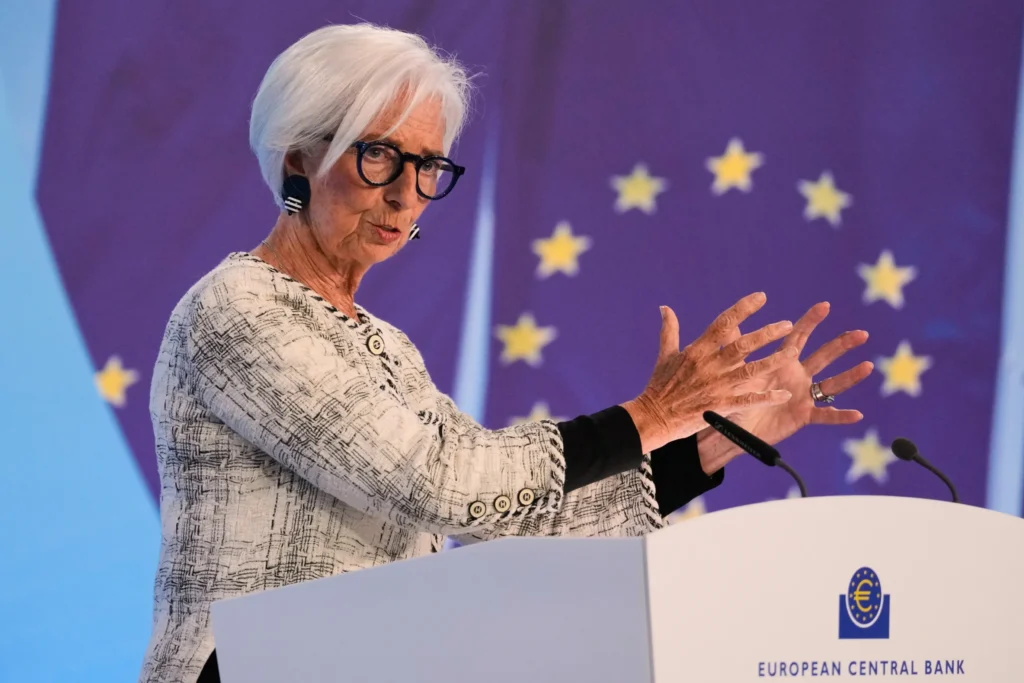
The European Central Bank kept interest rates unchanged at 2%, even as inflation moved further above its target.
ECB President Christine Lagarde said policymakers debated a rate increase but opted to wait for additional data ahead of their next meeting in June.
Typically, central banks raise rates to curb inflation. However, doing so risks slowing already weak growth by increasing borrowing costs.
Stagflation fears — but not yet
The current environment has prompted comparisons to “stagflation,” a scenario combining high inflation and stagnant growth.
Still, Lagarde rejected that characterization. She argued the situation differs from the oil shocks of the 1970s, citing a stronger labor market and inflation that is not yet deeply embedded.
Global policy pause
Meanwhile, other major central banks are also holding steady. The Federal Reserve, the Bank of England and the Bank of Japan all left rates unchanged this week.
This coordinated pause reflects uncertainty over how long energy-driven inflation will persist.
Outlook tied to energy markets
Looking ahead, the path for inflation will depend heavily on oil prices and geopolitical developments.
If supply disruptions ease, inflation could stabilize. However, continued pressure on energy markets may prolong elevated price levels.
Europe is facing a familiar economic tension: rising inflation driven by energy shocks alongside weak growth — a combination that complicates policy decisions and clouds the outlook for consumers and businesses alike.
Author: Staff Writer | Edited for WTFwire.com | SOURCE: AP News
: 222