Hormuz reopens, but US blockade keeps pressure on Iran

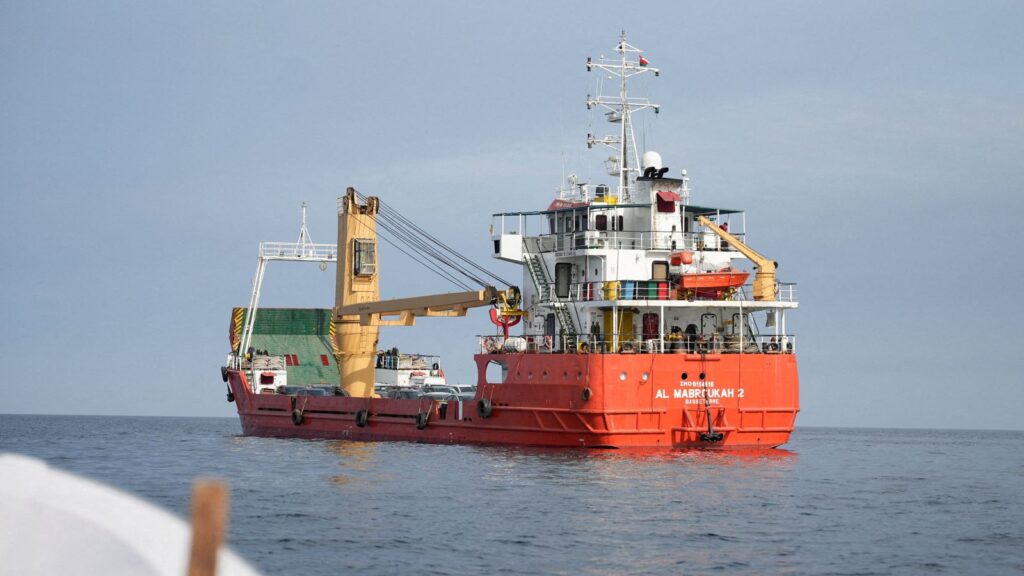
The Hormuz reopens US blockade Iran scenario is shaping a fragile turning point in the Middle East conflict, where signs of de-escalation coexist with ongoing military pressure.
Iran announced Friday that the Strait of Hormuz is fully open to commercial traffic again. Minutes later, Donald Trump made clear the United States is not stepping back.
The U.S. naval blockade on Iranian ships and ports, he said, will remain “in full force” until a comprehensive agreement is reached—particularly on Tehran’s nuclear program.
A reopening that doesn’t mean relief
Iran’s foreign minister, Abbas Araghchi, framed the move as a commitment to keep global shipping flowing during a 10-day ceasefire linked to the conflict in Lebanon.
The waterway is critical. Roughly 20% of the world’s oil supply passes through it. Its closure had rattled markets, driven up fuel prices, and intensified fears of a global economic shock.
Now reopened, it offers short-term relief—but not certainty.
Trump’s decision to keep the blockade in place signals Washington is still leveraging military pressure to extract concessions from Iran.
Ceasefire in Lebanon reshapes the diplomatic landscape
The reopening comes as a ceasefire between Israel and Hezbollah appears to be holding, at least for now.
In Beirut, celebrations erupted overnight. Displaced families began returning to their homes, even as officials warned the situation remains volatile.
Israel, however, is not signaling a full withdrawal. Prime Minister Benjamin Netanyahu said military operations against Hezbollah are not finished, despite agreeing to the truce at Washington’s request.
That tension underscores the uncertainty surrounding the ceasefire—and its role in broader negotiations.
Negotiations hinge on nuclear and security demands
Behind the scenes, diplomacy continues. Talks mediated by regional actors, including Pakistan, are focused on three key issues:
- Iran’s nuclear program
- Long-term security in the Strait of Hormuz
- Compensation for war-related damages
Trump suggested Iran may be ready to concede on enriched uranium, a core U.S. demand. However, no independent confirmation has emerged.
For now, the blockade remains a bargaining tool.
Markets react, but risks remain elevated
The reopening of the Strait of Hormuz has already impacted global markets, helping push oil prices lower and easing immediate inflation fears.
Still, the situation remains fluid.
The U.S. maintains military pressure. Iran retains leverage over one of the world’s most vital energy routes. And the ceasefire in Lebanon—central to the current pause—has yet to prove durable.
A conflict paused, not resolved
The war has already left thousands dead across the region, including in Iran, Lebanon, and Israel. Millions have been displaced, and critical infrastructure has been damaged.
While the reopening of Hormuz marks progress, it does not signal the end of the crisis.
Instead, it highlights a delicate balance: diplomacy advancing cautiously, while military pressure remains firmly in place.
Author: Staff Writer | Edited for WTFwire.com | SOURCE: AP News
: 7