Hormuz Strait shipping stalls despite Iran ceasefire

Hormuz Strait shipping remains near a standstill despite the Iran ceasefire, with only a handful of vessels moving through one of the world’s most critical energy routes.
The slowdown has pushed oil prices back above $100 per barrel, underscoring how fragile the situation remains even after the truce.
Traffic drops sharply after ceasefire
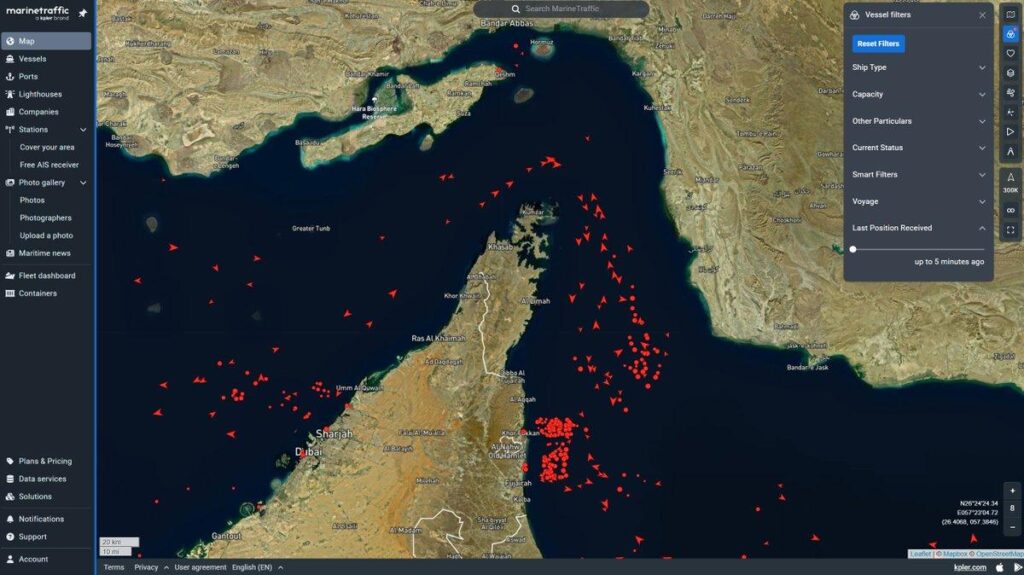
Data from shipping trackers shows that only a small number of vessels crossed the Strait of Hormuz in the first 24 hours after the ceasefire.
That figure contrasts sharply with prewar levels, when more than 100 ships passed through the strait each day.
Some vessels have also turned off tracking systems, making the full extent of disruption difficult to measure.
Oil prices rise as uncertainty grows
The lack of normal Hormuz Strait shipping has quickly impacted global markets.
Oil prices climbed again above $100 per barrel as initial optimism over the ceasefire faded.
Traders are now focused on how quickly shipping can safely resume—and whether restrictions will remain in place.
Iran signals continued control of passage
Iran has indicated that ships may need permission to transit the strait and could face fees for passage.
Officials have also released maps suggesting new shipping routes and warning of hazardous zones, possibly linked to sea mines.
This stance conflicts with U.S. and European expectations that the waterway should reopen without conditions.
Global tensions complicate reopening
Leaders across Europe and the Gulf have rejected any restrictions on navigation.
They argue that free passage through the strait is essential for global trade and energy stability.
At the same time, uncertainty over payments, routes, and legal risks continues to delay ship movements.
Shipping industry faces growing risk
Shipping companies remain cautious as safety concerns persist.
Many vessels are waiting for clearer guidance from both the U.S. and Iran before resuming transit.
The situation has also raised legal questions about tolls and compliance with international maritime law.
The future of Hormuz Strait shipping will depend on how quickly clear rules and security guarantees emerge.
Until then, the bottleneck is likely to continue disrupting global energy flows and keeping markets volatile.
For now, the ceasefire has paused the conflict—but not the uncertainty.
Author: Staff Writer | Edited for WTFwire.com | SOURCE: ABC News
: 13