Oil prices surge above $110 amid Iran war tensions


Oil prices surge past $110 per barrel as geopolitical tensions escalate following Donald Trump’s latest address on the Iran war. The spike is already translating into higher fuel costs and renewed inflation concerns worldwide.
U.S. crude jumped more than 10%, while Brent crude climbed above $108. The surge reflects growing uncertainty about the conflict’s duration and its impact on global energy supply.
Markets react with volatility and uncertainty
The S&P 500 and Nasdaq posted minor declines, while the Dow Jones Industrial Average fell slightly. Meanwhile, smaller-cap stocks showed modest gains.
Despite temporary optimism tied to Iran’s comments about a future shipping framework, oil markets remained largely unaffected, continuing their upward trajectory.
Strait of Hormuz remains central to the crisis
A major factor behind the spike is uncertainty surrounding the Strait of Hormuz. This key waterway typically handles more than 20% of global oil supply.
Trump offered no concrete plan to reopen the strait, stating instead that it would “open up naturally.” However, analysts remain skeptical, warning that continued conflict could disrupt infrastructure and prolong supply constraints.
International discussions are underway. British officials have led talks with dozens of countries on how to secure the route once hostilities ease.
Gas prices jump as consumers feel the impact
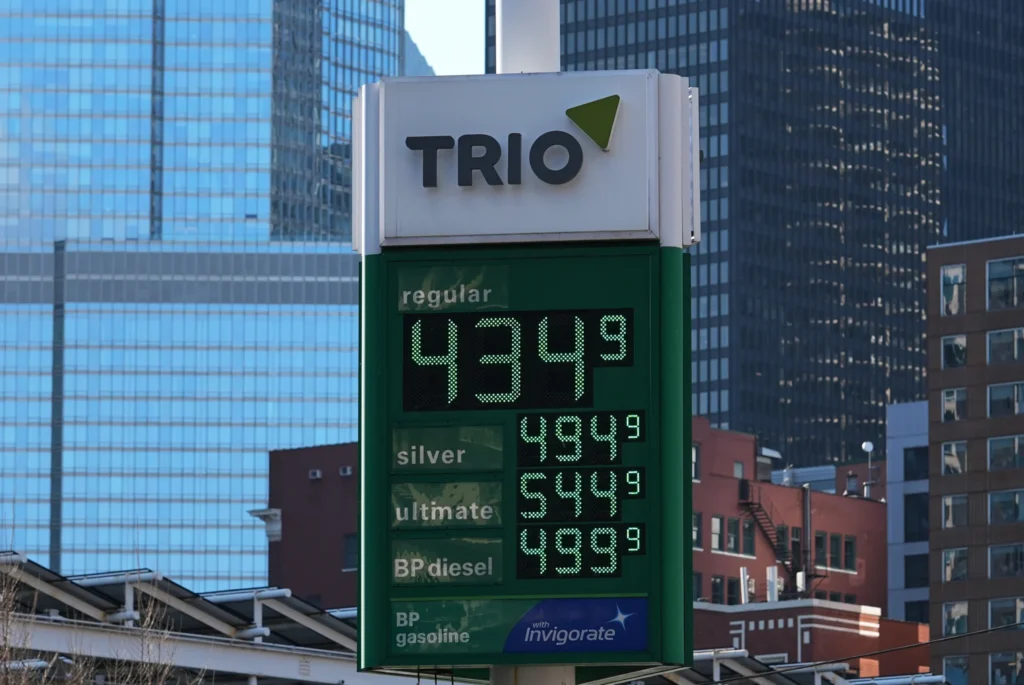
The rise in oil prices is already affecting consumers. The national average for gasoline reached $4.08 per gallon, up sharply from $2.98 before the conflict began.
Diesel prices have climbed even higher, hitting $5.51 per gallon. Analysts warn that increases at the pump could accelerate quickly as higher oil costs filter through the supply chain.
Inflation fears intensify across global markets
The surge in energy prices is fueling broader inflation concerns. U.S. Treasury yields rose as investors priced in the risk of sustained price increases.
The benchmark 10-year yield climbed to around 4.37%, while mortgage rates rose to approximately 6.45%.
Economists now expect inflation to spike in the coming months. Analysts at Bank of America forecast that the Federal Reserve’s preferred inflation measure could approach 4% this quarter.
Global ripple effects extend beyond the U.S.
The impact is not limited to the United States. Inflation in the eurozone has already increased, rising to 2.5% in March.
Meanwhile, disruptions in fuel supply are affecting aviation and transportation costs worldwide. This could lead to higher prices for goods, including food and consumer products.
Outlook: more volatility ahead
The continuation of the Iran conflict suggests that oil prices surge may persist in the near term. Trump signaled that military operations will continue for several weeks, adding to market uncertainty.
Without a clear path to a ceasefire or a plan to stabilize key supply routes, investors are bracing for continued volatility across energy and financial markets.
Author: Staff Writer | Edited for WTFwire.com | SOURCE: NBC News
: 94