Wall Street Stocks Cool After Hot Start to 2026

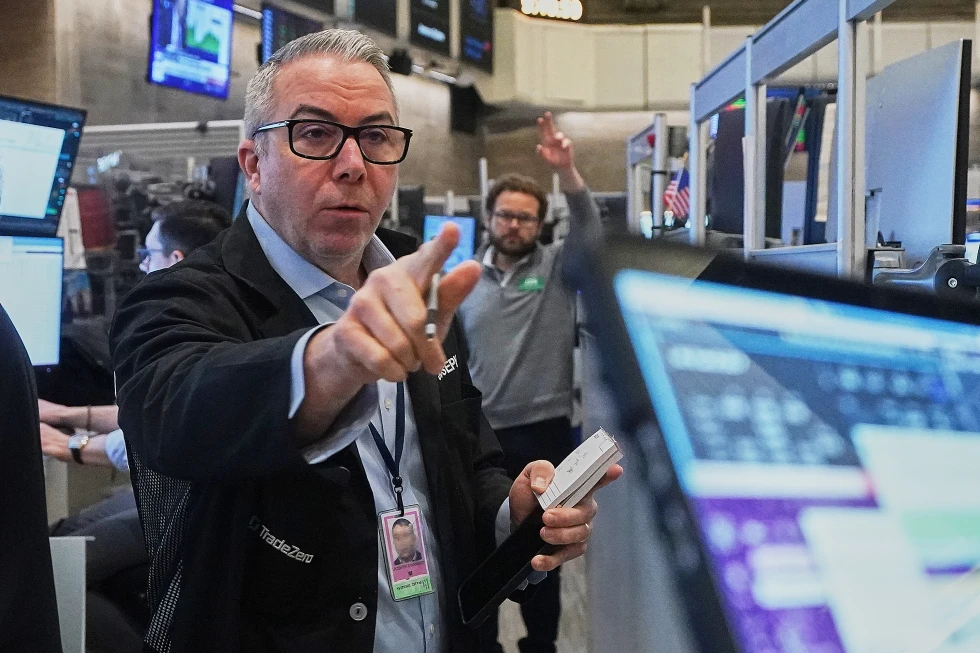
NEW YORK — Wall Street’s hot start to the year is cooling a bit on Wednesday.
The S&P 500 rose 0.3%, adding to its latest all-time high. Roughly 70% of stocks within the benchmark index were losing ground though, and the gains were coming mainly from several influential technology companies.
The Dow Jones Industrial Average dropped 68 points, or 0.1%, from its own record set the day before, while the technology-heavy Nasdaq composite was up 0.7%, as of 12:05 p.m. Eastern time.
Nvidia rose 1.6% and Microsoft jumped 1.9%. They were among several technology stocks with outsized valuations that helped counter broader losses throughout the market.
U.S. stocks are drifting. The AP’s Seth Sutel has more.
Cal-Maine Foods fell 3.9% for one of the stock market’s bigger losses, even though the egg company reported a stronger profit for the latest quarter than analysts expected. Lower prices for eggs dragged the company’s revenue down by more than expected.
But moves were quiet across much of the rest of the U.S. stock market, including for Warner Bros. Discovery after it again rejected a buyout bid from Paramount and told its shareholders to stick with a rival offer from Netflix.
Warner Bros. Discovery rose 0.7%, while Paramount Skydance slipped 0.7% and Netflix edged up by 0.6%.
In the oil market, crude prices fell after President Donald Trump said that Venezuela would provide 30 million to 50 million barrels of oil to the United States. A barrel of benchmark U.S. crude dropped 1.5% to $56.24. Brent crude, the international standard, fell a more modest 0.9% to $60.15 per barrel.
Any additional oil flowing from Venezuela into the global system would push down on crude prices by increasing their supplies. Prices for oil have swung this week following Trump’s weekend ouster of the president of Venezuela, which is likely sitting on some of the largest deposits of oil in the world.
Oil prices had already fallen back to where they were in 2021, before Trump’s move against Venezuela, because of expectations of plentiful supplies. To pull much more oil from Venezuela’s ground, though, would likely require big investments to improve aging infrastructure.
In the bond market, Treasury yields swung following several mixed reports on the U.S. economy. One of the most impactful said that growth for U.S. retailers, finance companies and other businesses in the services sectors accelerated by more last month than economists expected.
Not only that, the report from the Institute for Supply Management also said that a measure of inflation eased to its lowest level since March.
To be sure, company executives are still saying they’re feeling pressures from inflation and an uncertain economy. “In general, business is flat,” one business in the agriculture, forestry, fishing and hunting industry told the ISM. “Value brands are still experiencing higher demand. But premium brands struggle to maintain market share.”
But any improvements will nevertheless sound good to officials at the Federal Reserve, who are trying to shore up the job market while pushing down on inflation, which has stubbornly remained above the Fed’s 2% target.
Separate reports Thursday on the job market offered a mixed view. One said that employers cut back on the number of job openings they were advertising, while a second suggested that employers outside of the government added 41,000 more jobs last month than they cut.
A much more comprehensive look at the health of the U.S. job market will arrive on Friday.
The yield on the 10-year Treasury fell to 4.14% from 4.18% late Tuesday following Wednesday’s economic reports. But the two-year yield, which more closely tracks expectations for what the Fed will do, slipped to 3.46% from 3.47% late Tuesday.
The hope on Wall Street is that the economy remains solid enough to avoid a recession but not so strong that it keeps the Federal Reserve from cutting interest rates. The Fed cut its main interest rate three times last year to shore up the slowing job market, but it’s indicated fewer cuts may be ahead because inflation remains high.
In stock markets abroad, indexes were mixed among some sharp moves across Europe and Asia.
Indexes dropped 0.7% in London, 0.9% in Hong Kong and 1.1% in Tokyo, while rising 0.6% in Seoul.
Author: Staff Writer | Edited for WTFwire.com | SOURCE: AP News
: 195