Artemis II astronauts capture Earthset moon photo

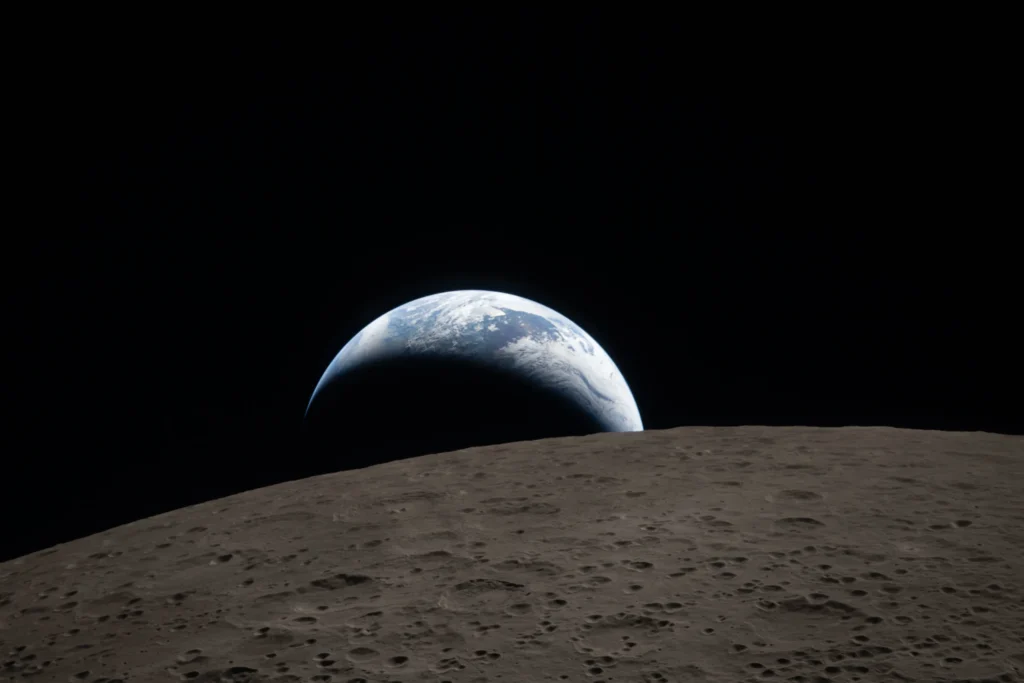
The Artemis II Earthset image is already drawing comparisons to one of the most iconic moments in space history, as NASA astronauts recreated the spirit of Apollo-era exploration with a modern twist.
Aboard Artemis II, the four-member crew captured a striking image of Earth appearing to “set” behind the Moon—an inversion of the famous Earthrise photo taken during Apollo 8.
A modern echo of a historic moment
The newly released images also include a rare view of a total solar eclipse as seen from lunar orbit, when the Moon briefly blocked the Sun from the crew’s vantage point.
Scientists at NASA’s mission control in Houston are now analyzing the data and imagery being transmitted back to Earth.
A key step in NASA’s return to the Moon
The mission marks a milestone for NASA, representing the agency’s first crewed journey around the Moon in more than five decades.
Artemis II is part of a broader program aimed at returning humans to the lunar surface, with a landing mission planned in the coming years.
The crew—three Americans and one Canadian—has completed its lunar flyby and is now en route back to Earth, with a Pacific Ocean splashdown expected soon.
Why the Artemis II Earthset matters
Beyond its visual impact, the Artemis II Earthset photo reinforces the symbolic power of space exploration.
Like its Apollo predecessor, the image offers a perspective that connects science, exploration and environmental awareness—reminding viewers of Earth’s fragility and isolation in space.
As NASA pushes toward a new era of lunar exploration, moments like this highlight both technological progress and the enduring emotional resonance of seeing our planet from afar.
Author: Staff Writer | Edited for WTFwire.com | SOURCE: AP News
: 55