Iran attacks Israel as Trump claims threat nearly gone

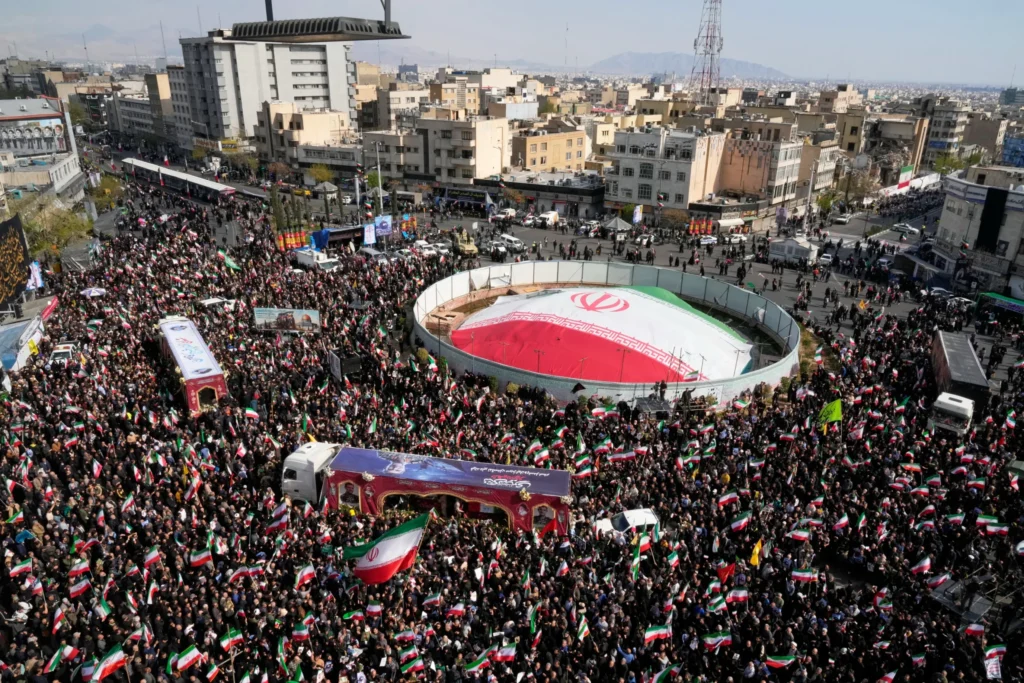
Iran attacks Israel and Gulf countries continue to escalate tensions in the Middle East, even as Donald Trump insists the threat from Tehran is close to being eliminated.
Missile strikes targeted Israel and key Gulf locations on Thursday, highlighting Iran’s ongoing military capacity. At the same time, U.S. officials maintain that strategic objectives in the conflict are nearly complete.
Iran continues strikes despite U.S. claims
Iran’s military signaled defiance following Trump’s remarks. Officials said the country retains hidden weapons stockpiles and operational capabilities, dismissing U.S. strikes as targeting only “insignificant” facilities.
Explosions were reported in Dubai as air defense systems intercepted incoming missiles. Meanwhile, sirens sounded across Israel and in Bahrain, home to the U.S. Navy’s Fifth Fleet.
Despite claims of progress, the ongoing attacks suggest the conflict remains far from contained.
Strait of Hormuz disruption shakes global energy markets
A key element of the conflict is Iran’s control over the Strait of Hormuz, a critical route for global oil shipments.
Before the war began on Feb. 28, about 20% of the world’s traded oil passed through the strait. Now, maritime traffic has dropped by roughly 94%, according to shipping data.
As a result, global energy markets are under pressure. Oil prices have surged, with Brent crude rising to around $108 per barrel—about 50% higher than pre-conflict levels.
Countries dependent on the route are now exploring alternatives. Saudi Arabia has rerouted oil pipelines, while Iraq has begun transporting oil across Syria to bypass the strait.
International response grows, but no military action yet
Nearly 35 countries, including most members of the G7, have begun coordinating efforts to secure the Strait of Hormuz once fighting subsides.
However, no nation appears willing to intervene militarily while hostilities continue. Emmanuel Macron described such an operation as “unrealistic” under current conditions.
Instead, discussions have focused on diplomatic strategies and future security planning, including mine-clearing operations and protecting commercial shipping.
The human toll continues to rise across the region. More than 1,900 people have been killed in Iran, while Israel has reported 19 deaths. Additional casualties have been recorded in Gulf states and the occupied West Bank.
In Lebanon, Israeli strikes and ground operations against Hezbollah have killed over 1,300 people and displaced more than 1 million.
Even amid the violence, daily life persists in parts of Iran. Families gathered in parks to celebrate Nowruz traditions, underscoring the contrast between war and civilian resilience.
Trump signals continued military pressure
Trump stated that U.S. forces would intensify operations in the coming weeks. He also suggested that countries reliant on oil from the Strait of Hormuz should take action themselves to secure the route.
At the same time, the president indicated that the war could end soon, creating mixed signals about the trajectory of the conflict.
Beyond the battlefield, the war is driving broader economic consequences. Rising oil and gas prices are increasing transportation and production costs worldwide.
Supply disruptions are also affecting aviation fuel, with potential impacts on global travel. In turn, consumers may face higher prices for goods, including food and energy.
An unstable path forward
The continuation of Iran attacks Israel underscores the fragility of the current situation. While U.S. officials point to progress, ongoing strikes and economic disruptions reveal a conflict still unfolding.
For now, both military escalation and diplomatic uncertainty define the region’s future.
Author: Staff Writer | Edited for WTFwire.com | SOURCE: AP News
: 16


