Russia Ukraine War 4 Years With No End in Sight

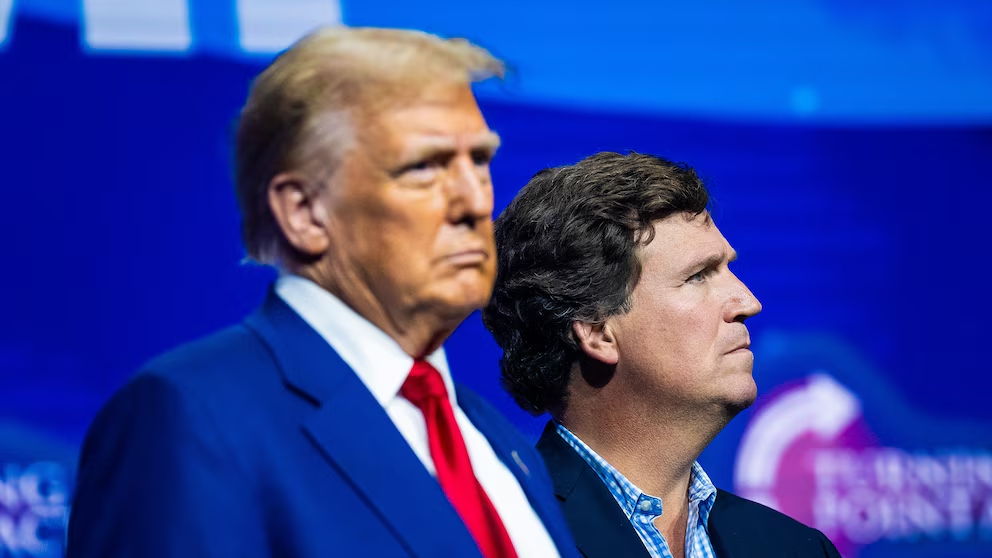
LONDON — Ukrainian President Volodymyr Zelenskyy sat almost a year ago in the Oval Office, listening with his arms crossed as President Donald Trump and Vice President JD Vance castigated him.
That remarkable and confrontational meeting included a threat from Trump, who said, “You’re either going to make a deal or we’re out.”
What has followed that conversation, which recast U.S. support for Ukraine as a nicety and not a necessity, as it had been under the Biden administration, has been a year of high-stakes negotiations backed by the Trump administration.
Zelenskyy and Trump have since met and seemingly mended their relationship, but Trump at times in the last year has publicly wavered in his already tepid support for Ukraine. He’s pushed both Zelenskyy and Russian President Vladimir Putin to make concessions for a deal to end Moscow’s brutal war on its neighbor, which began four years ago on Tuesday.
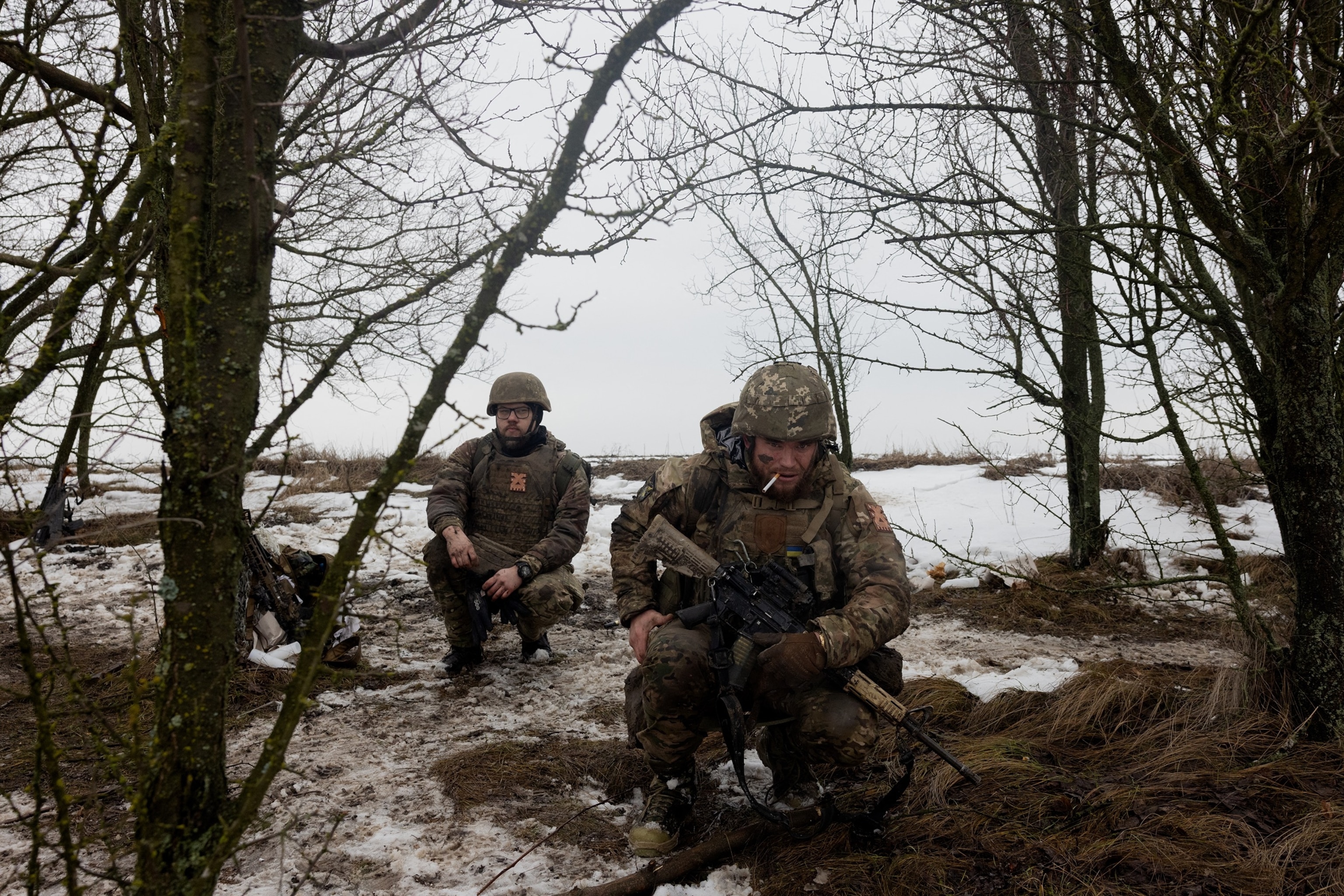
Ukrainian servicemen of the 33rd seperate assault regiment participate in a training at an undisclosed location in Zaporizhzhia region on Jan. 30, 2026, amid the Russian invasion of Ukraine. Tetiana Dzhafarova/AFP via Getty Images
Neither has been willing to make adequate concessions, and the Trump administration has largely put the onus on Kyiv, rather than Moscow, to make the sacrifices needed to secure a deal.
Even after another year of Trump-backed talks — including a face-to-face summit between the Russian and American presidents in Alaska — a deal remains frustratingly elusive, according to observers who spoke with ABC News.
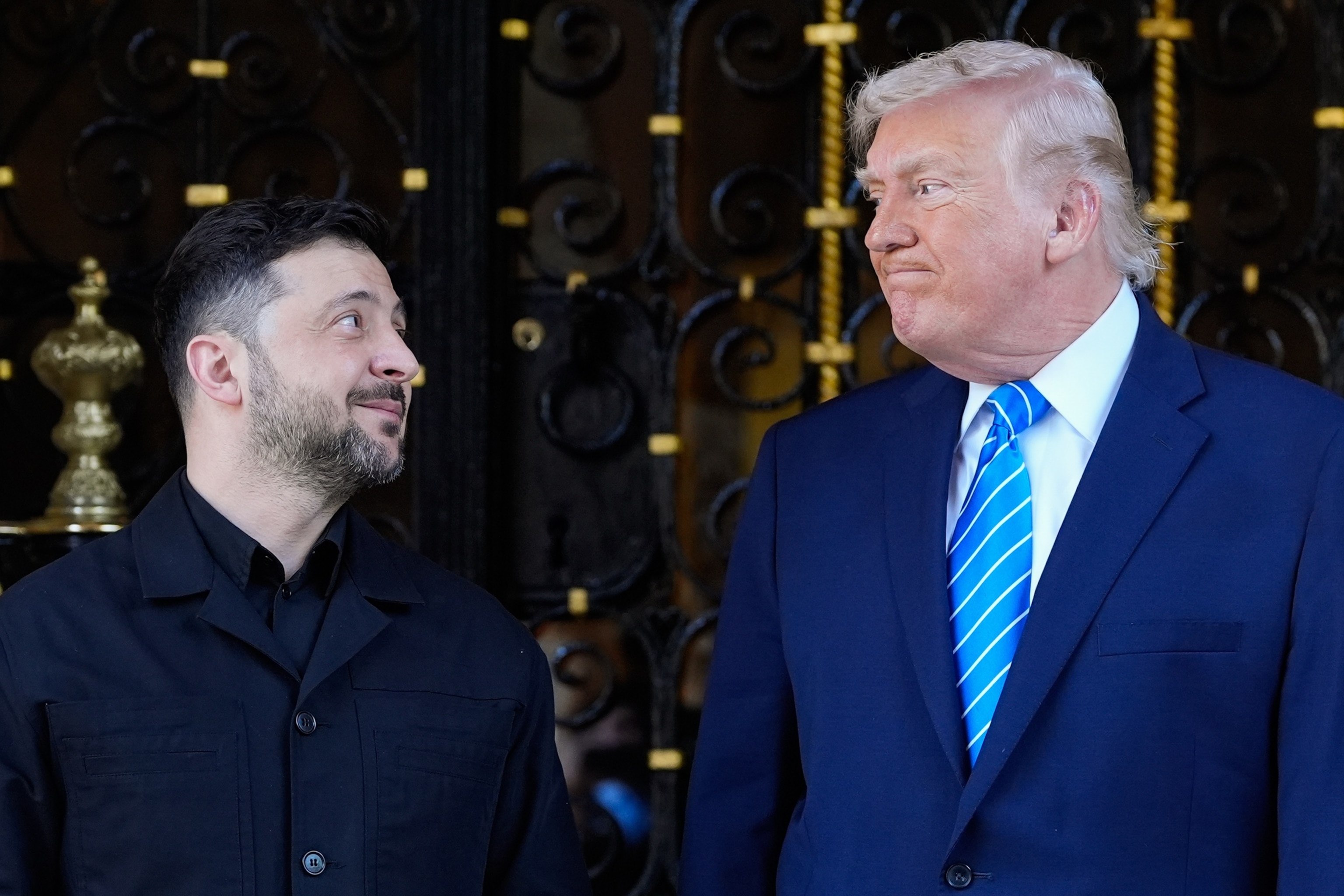
In this file photo, President Donald Trump greets Ukraine’s President Volodymyr Zelenskyy at his Mar-a-Lago club, Dec. 28, 2025, in Palm Beach, Florida. Alex Brandon/AP
Trump-Putin Alaska summit looms large in Kremlin’s Ukraine negotiating strategy
“I think that is exactly Putin’s strategy — to hope that both Ukraine and the West will tire of the war and that he can get a ceasefire along the lines he desires,” Arne Westad, a professor of international and global history at Yale University, told ABC News.
A waiting game has been the Kremlin’s plan all along, Westad said, but the risks for Putin are higher now than they’ve been throughout the war.
“His battlefield losses have been astonishingly high and the economy is suffering more than it has before,” Westad said on Sunday. “I don’t expect that the latter will lead him to real negotiations just yet. But the time-frame on the Russian side is narrowing.”
US stands back, Europe steps up
America’s abdication has left Europe shouldering an increasing share of the burden. The European Union is by far Ukraine’s largest economic and military backer, with Germany the largest individual contributor of arms.
The U.S. is no longer underwriting weapons for Ukraine, but is instead selling them to Kyiv and its other partners via NATO’s PURL — Prioritised Ukraine Requirements List — initiative.
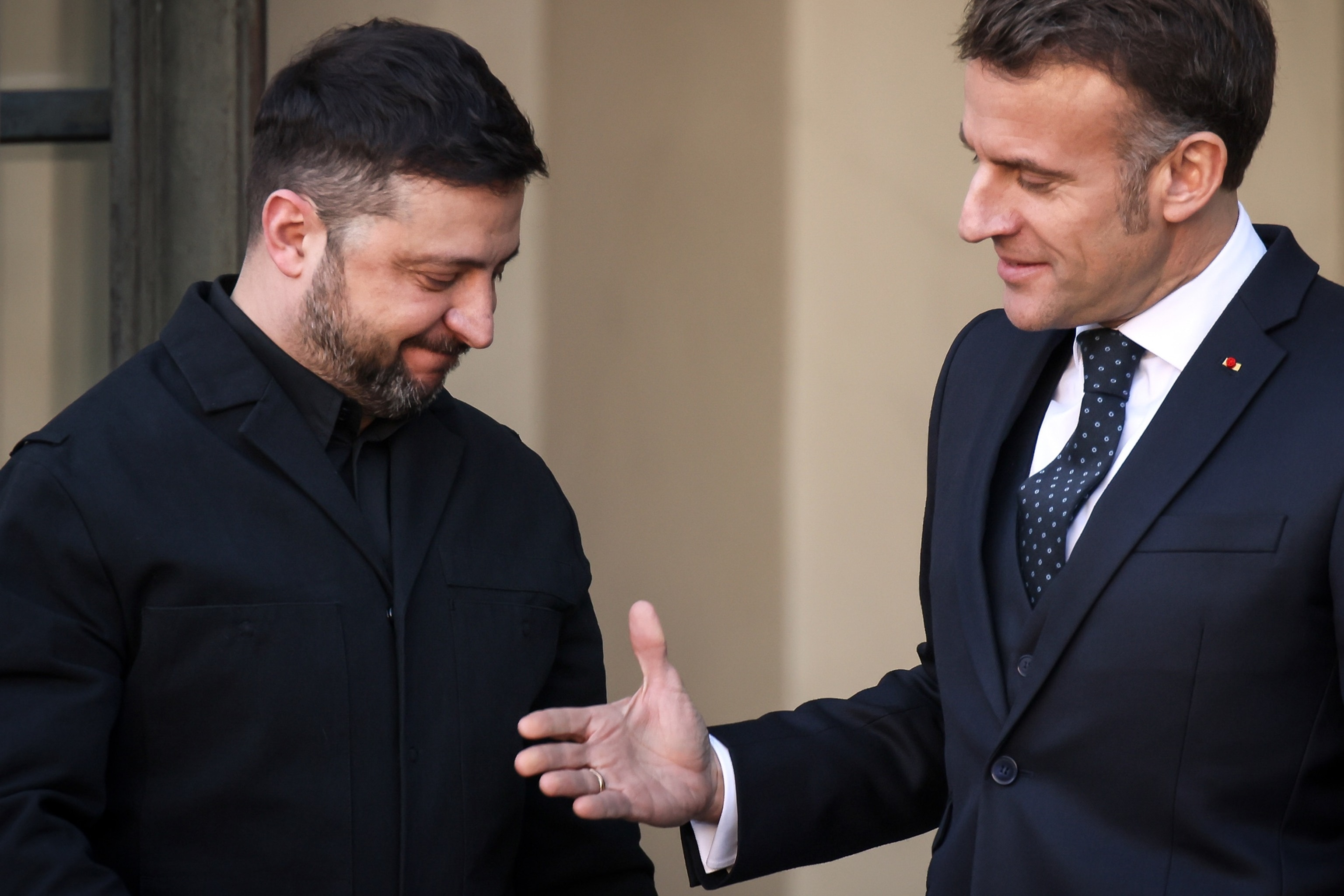
Ukraine’s President Volodymyr Zelenskyy, left, is greeted by French President Emmanuel Macron as he arrives for a meeting of the ‘Coalition of the Willing’ on Ukraine at the Elysee Palace in Paris, France, Tuesday, Jan. 6, 2026. Thomas Padilla/AP
The Europe-dominated “Coalition of the Willing” has led the development of a multinational peacekeeping force to be deployed to Ukraine post-war. Trump and his administration are wary of putting American “boots on the ground,” though U.S. logistical, intelligence, surveillance and air support will be necessary to back any foreign force deployed to Ukraine as part of Western security guarantees.
European leaders have also acted as guarantors of Ukrainian interests in the tortuous peace talks process. In August, a group of European leaders accompanied Zelenskyy to crunch talks at the White House, an apparent guard against another browbeating of the Ukrainian leader by Trump and his team.
Europeans, NATO Secretary-General Mark Rutte said earlier this month, are “stepping up.”
Michael Kennedy, a professor of international affairs at Brown University, told ABC News of Kyiv’s European partners, “I am frankly surprised that they have met the challenge Trump brings to this struggle by declaring that they will stand by Ukraine even if Trump will not.”
“That gives Ukraine time even while they suffer now even more,” he added.
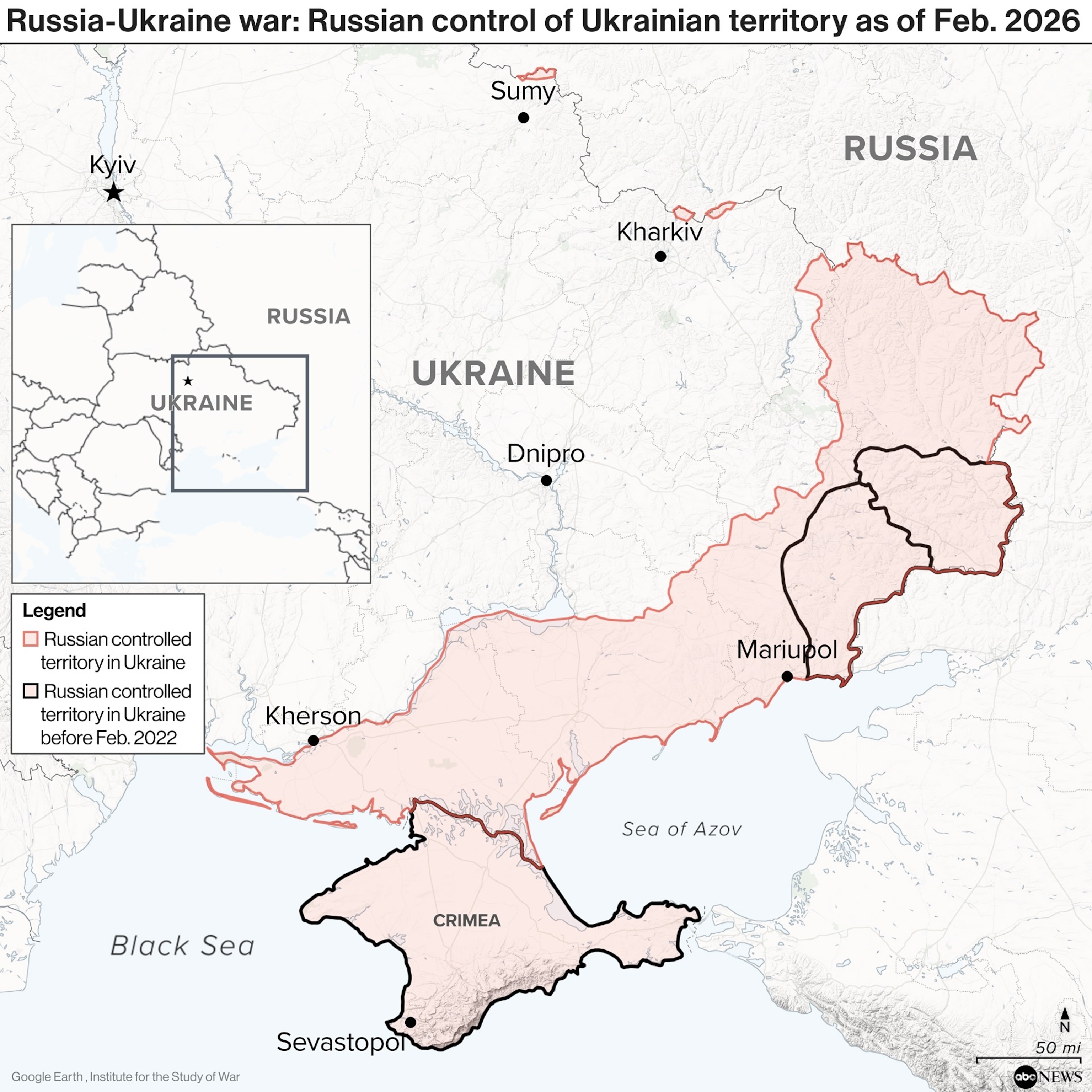
Russia-Ukraine war: Russian control of Ukrainian territory as of Feb. 2026 Google Earth , Institute for the Study of War
“I think that European unity will help Ukraine hold out, notwithstanding Russia’s brutal attacks on Ukraine’s energy grid this winter,” John Owen, a politics professor at the University of Virginia, told ABC News, “so long as the U.S. continues to sell military materiel to the Europeans to supply to Ukraine.”
He added, “Western help has been key to Ukraine’s maintaining the stalemate with Russia and I can’t see the Europeans — who are very worried about Russia in the near and medium term — reducing their aid.”
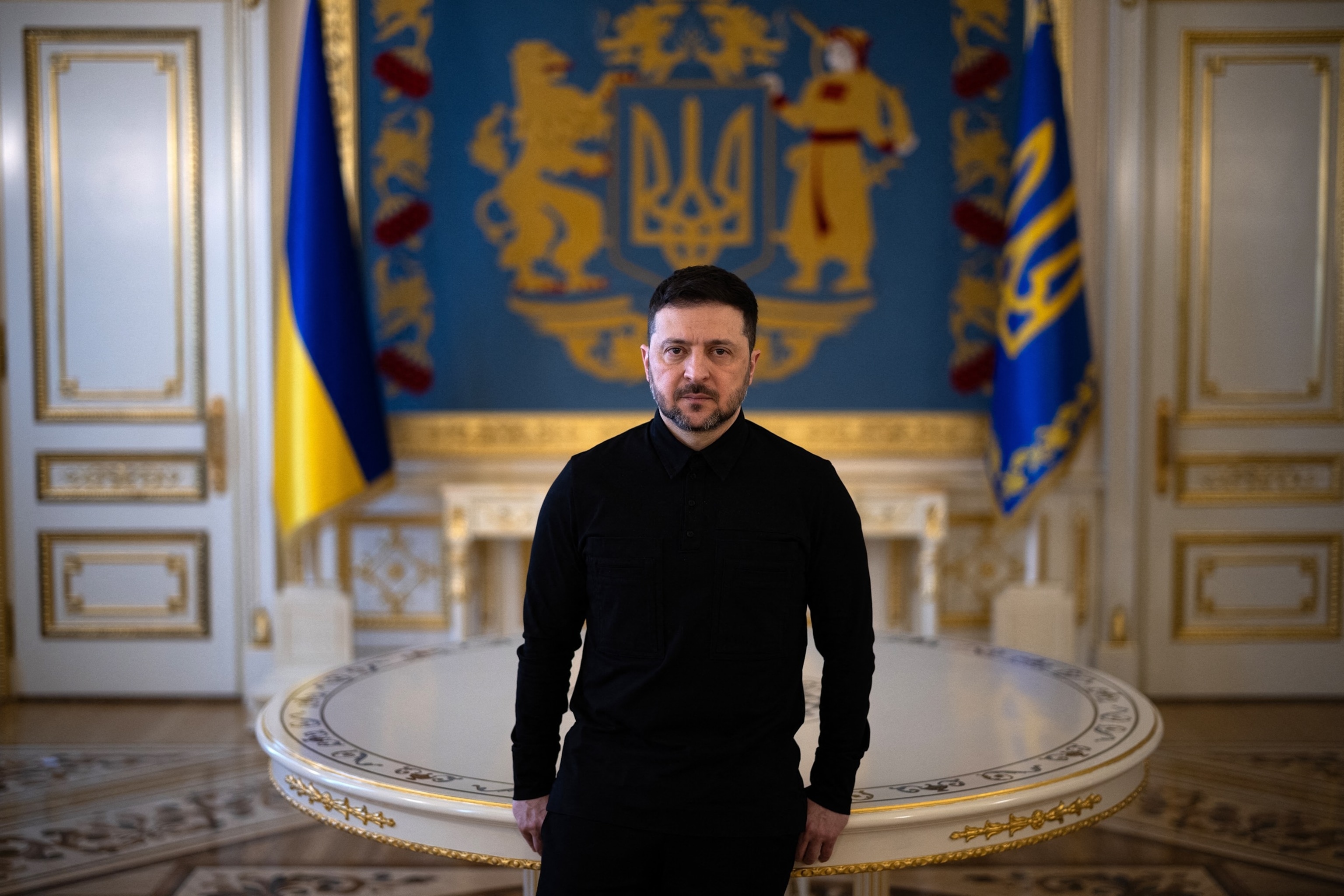
Ukraine’s President Volodymyr Zelensky poses during a photo session on the sidelines of an interview with AFP journalists in Kyiv on Feb. 20, 2026, amid the Russian invasion of Ukraine. Henry Nicholls/AFP via Getty Images
Europe’s sustained backing of Ukraine has been reflected in the Kremlin’s talking points. While Putin and his top officials tiptoe around Trump, the Kremlin has repeatedly framed European leaders as rogue actors “forcing” Ukraine to continue the war and fatally undermining White House peace efforts.
“Four years into its war, Moscow has failed to achieve any of its strategic objectives,” Kaja Kallas, the EU’s foreign policy chief, said on Monday. “The pressure in the peace talks seems to be falling on Ukraine. But if we want this war to stop and any peace to last, we need to see concessions from Russia. It’s not Ukraine’s army that is the obstacle to peace, Russia’s army is.”
Drones and death toll rise amid intense fighting
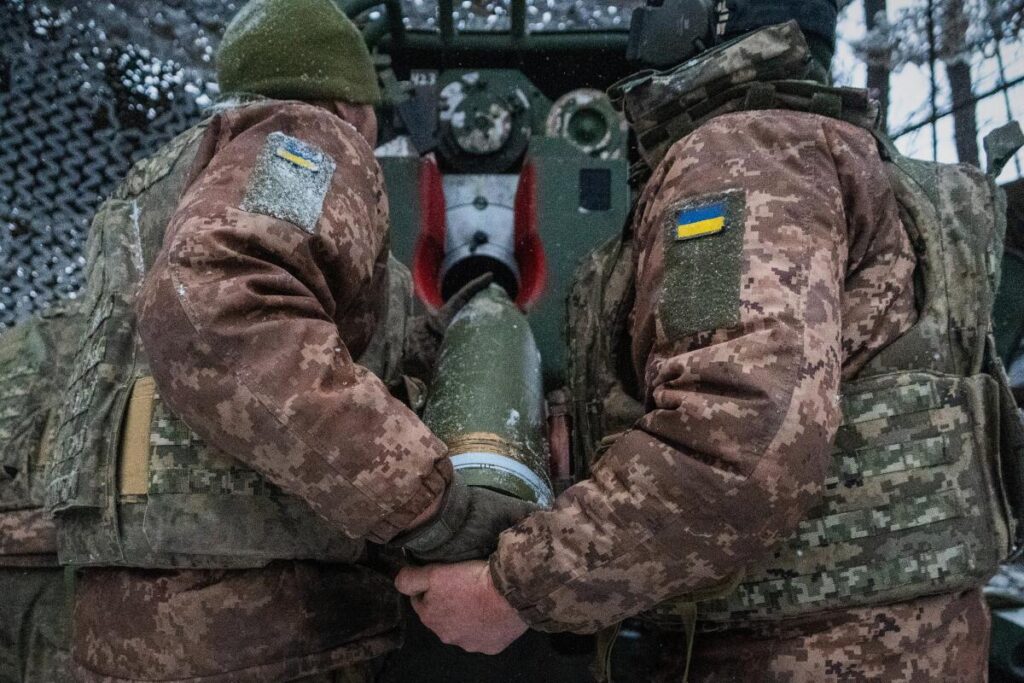
Putin unleashed Europe’s most destructive conflict since the Second World War in February 2022. What Moscow hoped, according to analysts, would be an elegant decapitation strike lasting mere days quickly became a protracted and bloody brawl.
The quagmire has sucked in hundreds of thousands of service members on both sides.
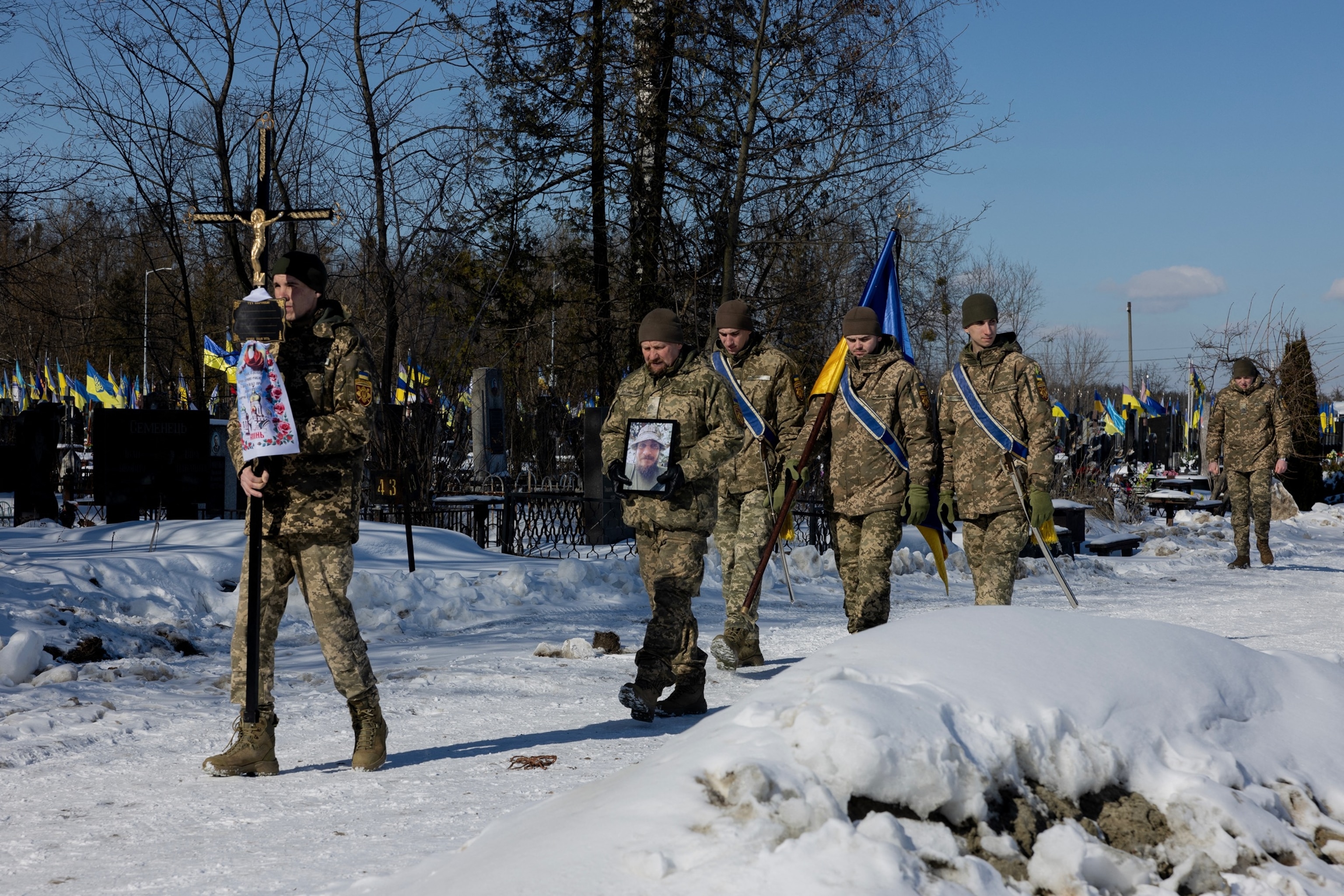
Ukrainian soldiers carry the portrait of Oleksandr Krasikov, callsign “Sambo,” a Ukrainian serviceman and ultras member of Football Club Dynamo Kyiv, who was killed in the battle during a funeral ceremony in Kyiv on Feb. 20, 2026, amid the Russian invasion of Ukraine. Tetiana Dzhafarova/AFP via Getty Images
‘Everything is covered with Russian bodies’: Ukraine’s frontline troops on 4 years of war
The true toll may never be known. Neither side regularly publishes casualty figures, and both have reason to distort them.
Zelenskyy said last month that 55,000 Ukrainian soldiers are known to have died, though added that many more are missing.
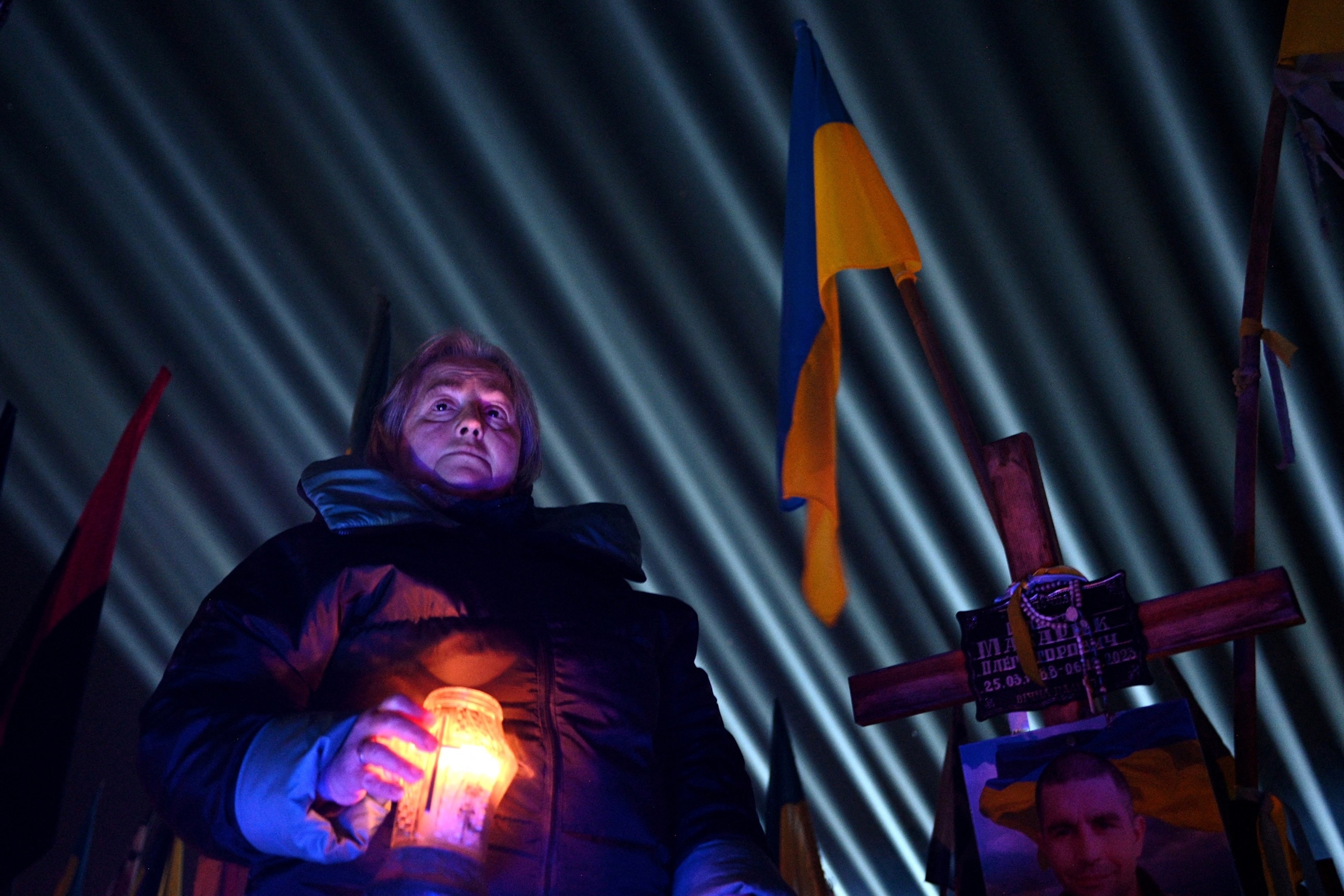
A woman holds a candle as a symbolic illumination entitled “Rays of Memory” is projected over the graves of Ukrainian soldiers who died in the war with Russia, at Lychakiv Military Cemetery in Lviv on Feb. 23, 2026, ahead of the fourth anniversary of Russia’s invasion of Ukraine. Yuriy Dyachyshyn/AFP via Getty Images
Ukraine has claimed to have “eliminated” more than 1.26 million Russian troops, an estimate that broadly chimes with the analysis of U.S. and European intelligence agencies.
The Office of the United Nations High Commissioner for Human Rights has verified at least 15,172 civilian deaths and 41,378 civilian injuries in Ukraine during the full-scale invasion to date.
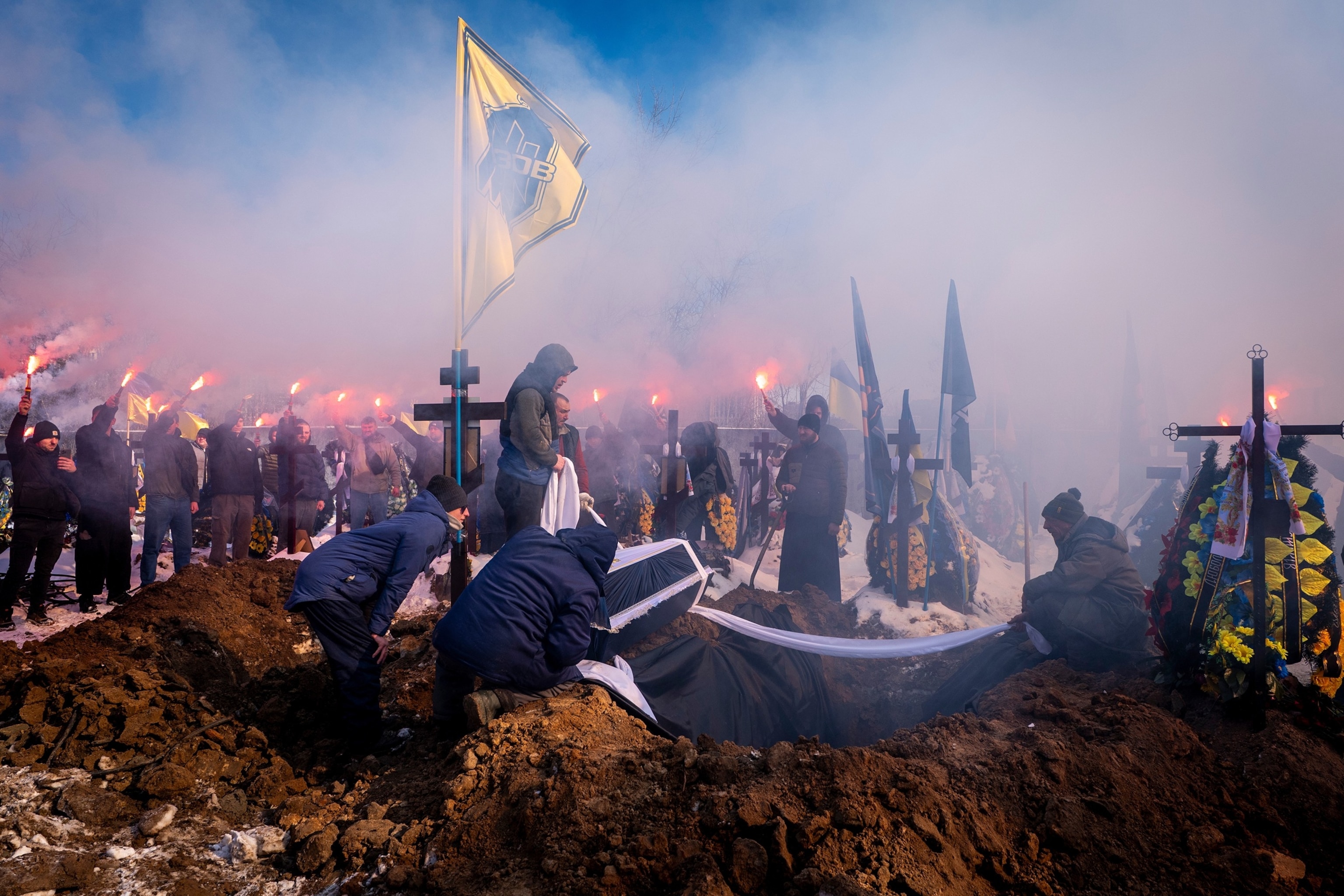
People burn flares during a funeral ceremony of Ukrainian soldier Alexander Krasikov, call sign “Sambo,” in a cemetery in Kyiv, Ukraine, Friday, Feb. 20, 2026. Dan Bashakov/AP
Russian authorities have reported more than 1,000 civilian deaths inside Russia, including in occupied Crimea.
Dragging down the Ukrainian and Russian economies
As the fighting has continued, the economies of Ukraine and Russia have dragged on, hurt in part by the spending necessary to sustain their militaries. And the West has levied tariff after tariff on Russia, turning it into a trading pariah for Western states but less so for nations of the so-called “Global South.”
Putin said earlier this year that the Russian economy grew just 1% last year, a figure ABC News is unable to verify. Inflation in Russia has been kept low, reported at 6%, but the base interest rate remains very high, at about 15.5%, said Peter Rutland, a professor at Wesleyan University.
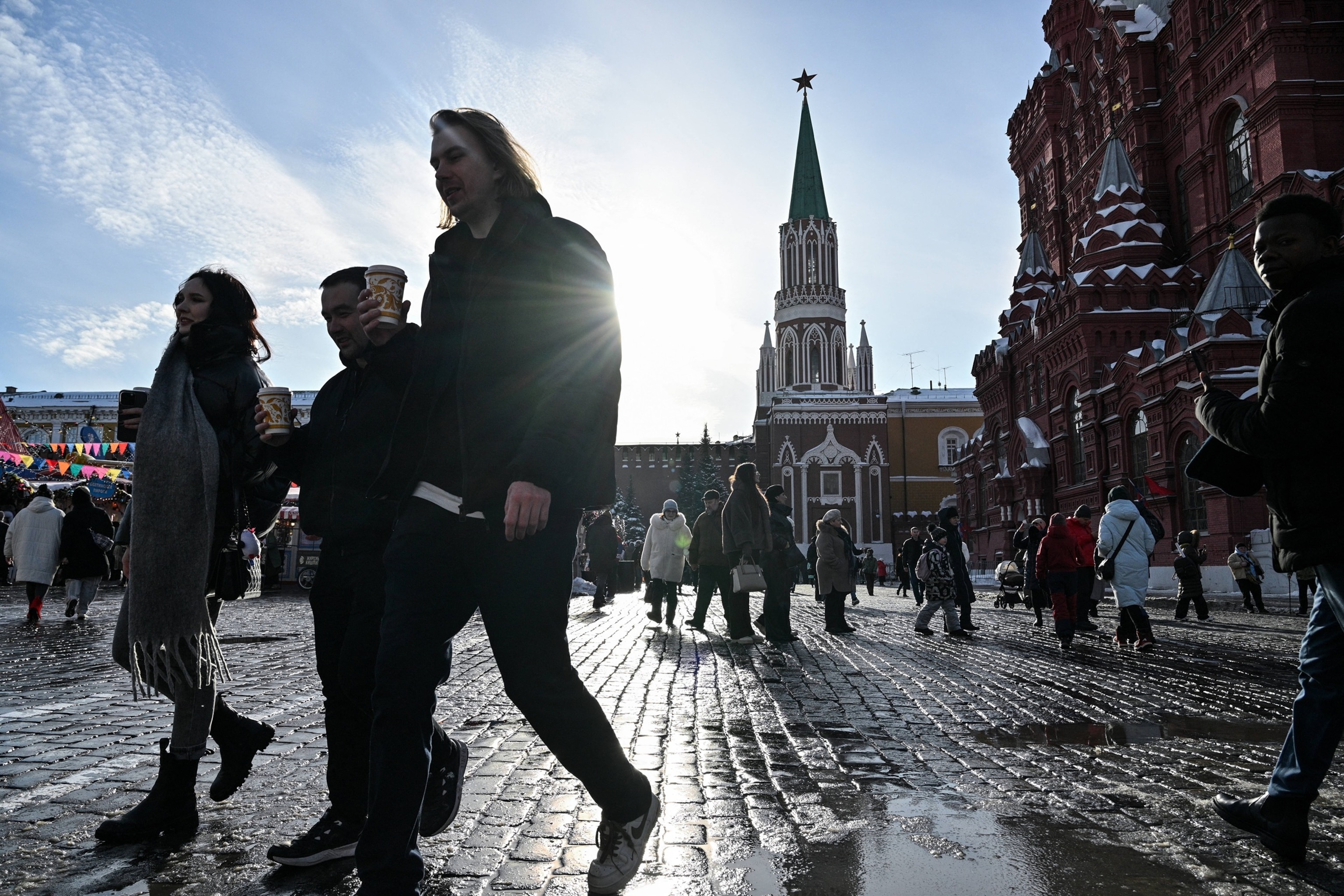
People walk near the State Historical Museum in central Moscow during the Defender of the Fatherland Day on Feb. 23, 2026. Hector Retamal/AFP via Getty Images
“What keeps the economy going is revenue from oil exports, which has been cut back by the low oil price plus stepped up U.S. and European efforts to curtail the shadow fleet carrying Russian crude to China and India,” Rutland said on Sunday.
He added, “The consensus is that the economy is far from ‘collapsing’ but the strains are increasing.”
Whether the strained economy would affect Putin’s negotiations to end the war are another question entirely. The Russian president has demonstrated little urgency in moving a deal forward, despite his country’s slowed economy.
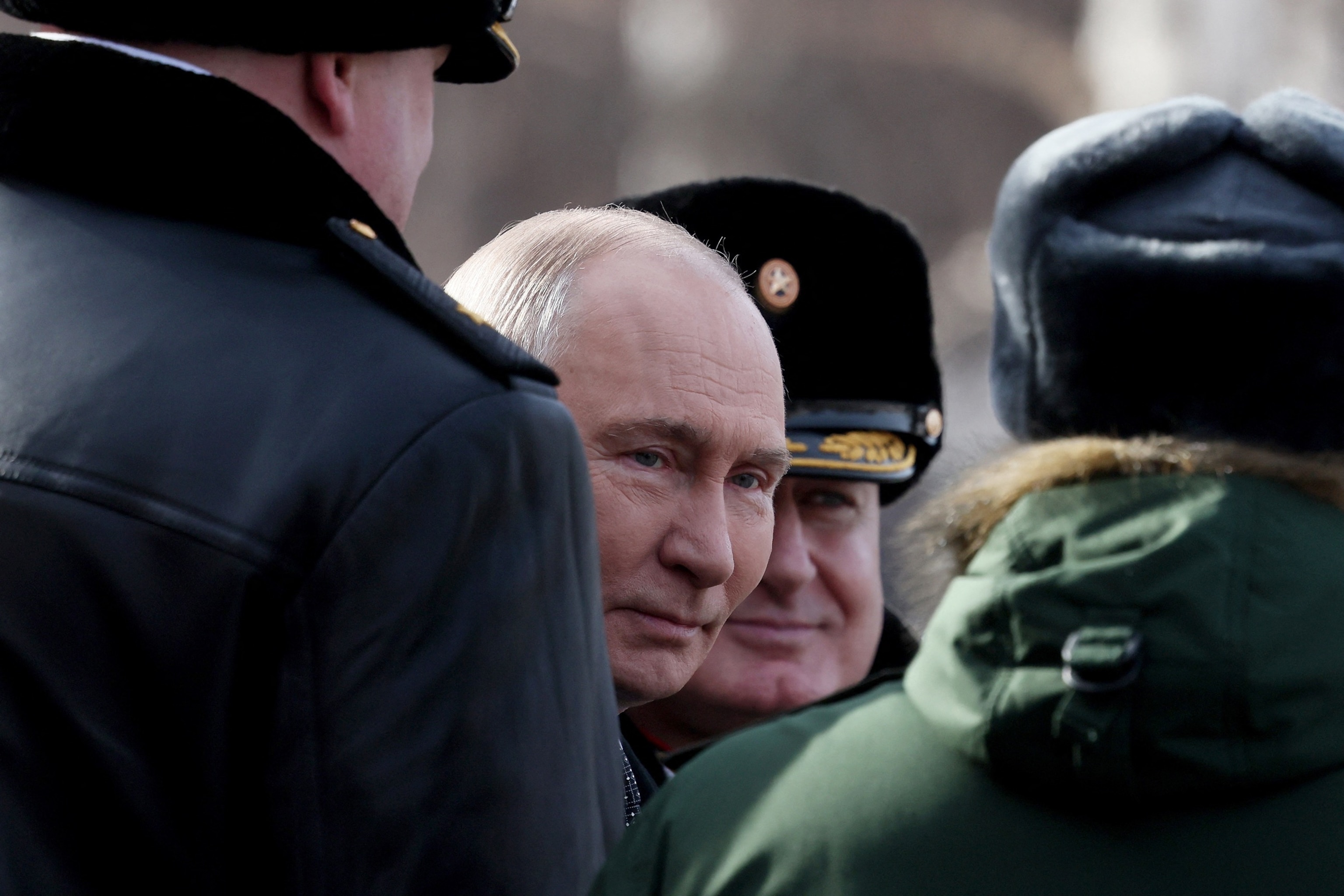
Russia’s President Vladimir Putin leaves after a wreath-laying ceremony at the Tomb of the Unknown Soldier by the Kremlin Wall to mark Defender of the Fatherland Day in Moscow on Feb. 23, 2026. Maxim Shipenkov/POOL/AFP via Getty Images
4 years into Russian invasion, fundamental sticking points on Ukraine peace deal remain
Ukraine, meanwhile, has pursued sanctions of its own – both economic and kinetic. Thousands of drones are now launched into Russia every month, according to data published by the Russian Defense Ministry, often targeting Russia’s lucrative energy production and export industries.
“We either build weapons and strike their weapons. Or we strike the source where their money is generated and multiplied. And that source is their energy sector,” Zelenskyy said earlier this month. “All of this is a legitimate target for us.”
Kyiv, though, is now largely reliant on financial support from abroad. The war prompted demographic and economic crises. More than 5 million of its citizens, have been scattered across Europe, while more than 10 million have been internally displaced, according to United Nations figures.
Loans from foreign creditors — prime among them the EU — grew from $30 billion in 2021 to just under $140 billion by the end of 2025, according to Ukrainian Finance Ministry data.
The national debt, meanwhile, ballooned to more than $213 billion to creditors by the end of 2025 — roughly equivalent with its national gross domestic product.
The figure does not include the planned $106 billion loan from the EU, which the bloc is currently working to finalize.
Putin, Zelenskyy and Trump’s ‘good graces’
As negotiations have continued, it’s become clear that Putin is operating in bad faith, said Owen, the UVA professor.
Then why negotiate at all?
“Because Putin needs to stay in Trump’s good graces,” Owen said.
If Putin were to tip his true hand — the fact that he has little or no intention of making a true deal — then Trump might actually turn against Putin. If that happened, Trump “could restore U.S. aid to Ukraine or perhaps even go further in helping Ukraine and hurting Russia and Russian interests,” he said.
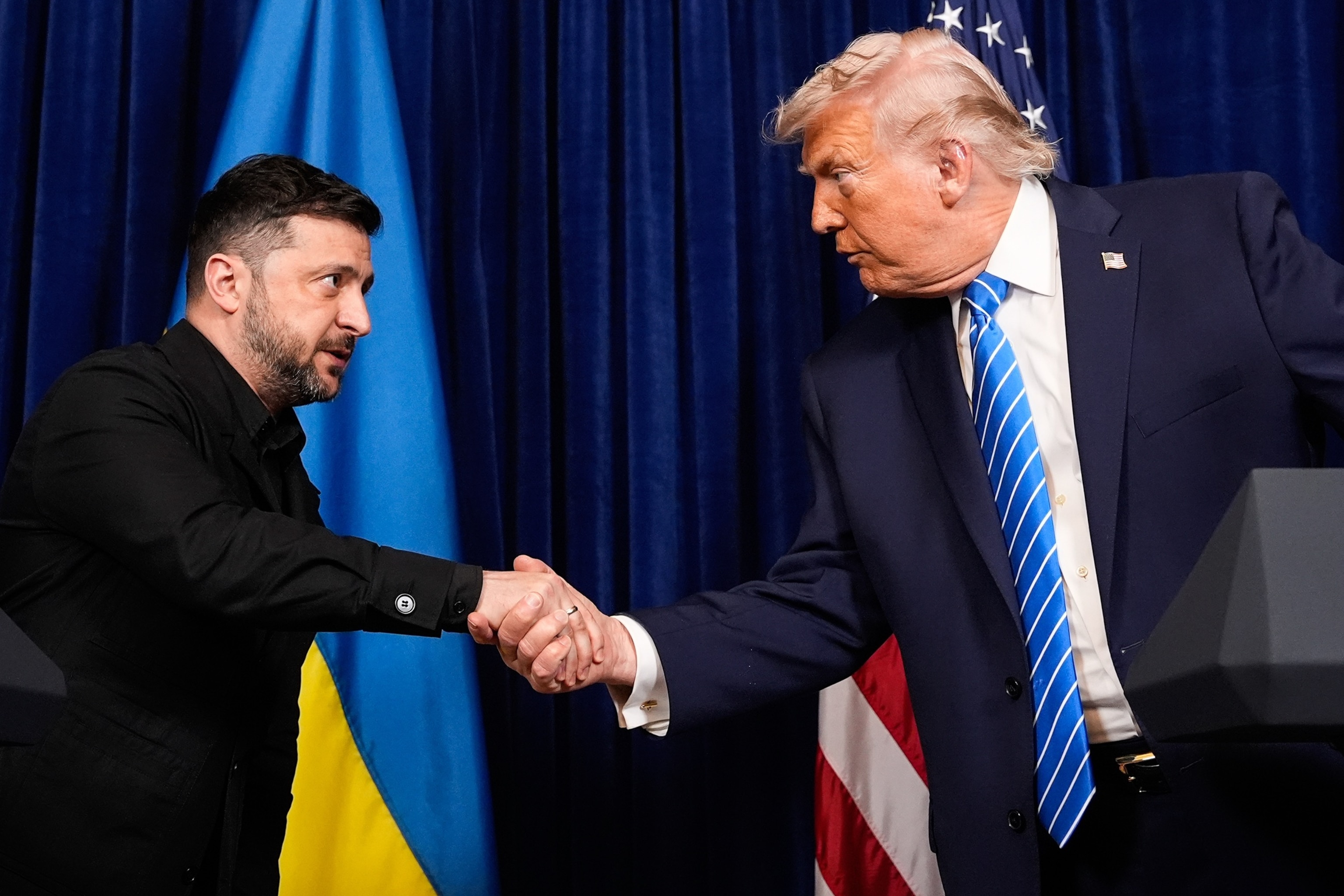
In this file photo, President Donald Trump, right, and Ukraine’s President Volodymyr Zelenskyy shake hands at the start of a joint news conference following a meeting at Trump’s Mar-a-Lago club, Dec. 28, 2025, in Palm Beach, Fla. Alex Brandon/AP
“If Trump turned decisively against Zelensky, on the other hand, the U.S. could stop selling materiel to the Europeans for delivery to Ukraine –which could well break the long stalemate and help Russia to victory,” the professor said.
Putin bet his legacy on the gambit in Ukraine.
Recent years have seen the Russian leader increasingly indulge in ahistorical musings on Russian history, its pantheon of imperial heroes and his own potential place among them.
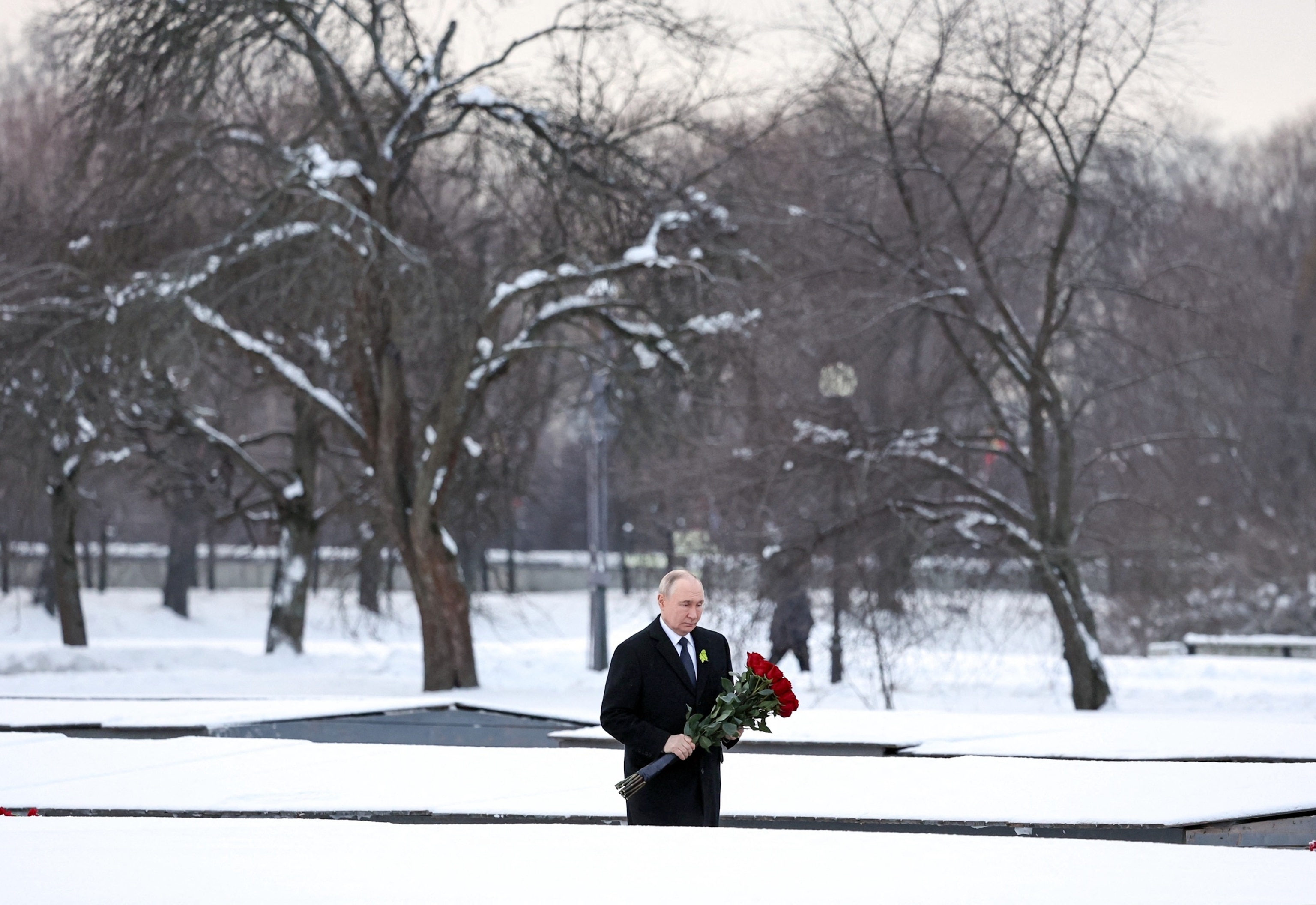
In this pool photograph distributed by the Russian state agency Sputnik, Russia’s President Vladimir Putin lays flowers at the grave of his brother, who died as a child during the siege of Leningrad, during a ceremony at the Piskaryovskoye Memorial Cemetery in Saint Petersburg on January 27, 2026, marking the 82nd anniversary of the liberation of Leningrad from Nazi blockade in World War Two. POOL/AFP via Getty Images
Just four months after he launched his “special military operation” — as the Kremlin insisted on terming the full-scale invasion — Putin likened himself to 18th century Russian Emperor Peter the Great.
Peter fought the Great Northern War against Sweden for 21 years to “reclaim” Russian territory, Putin said while visiting an exhibition dedicated to the influential tsar.
“It seems it has fallen to us, too, to reclaim and strengthen,” Putin told the audience.
Win or lose, the invasion of Ukraine will define the 73-year-old’s legacy.
“He can’t give up his quest for victory against Ukraine,” said Kennedy, the Brown professor, “his legitimacy before Russians — to the extent you can call it that — depends on his ability to call Ukraine beaten.”
Author: Staff Writer | Edited for WTFwire.com | SOURCE: ABC News
: 101