Senate Democrats Block $1.15 Trillion Defense Bill Over Iran War

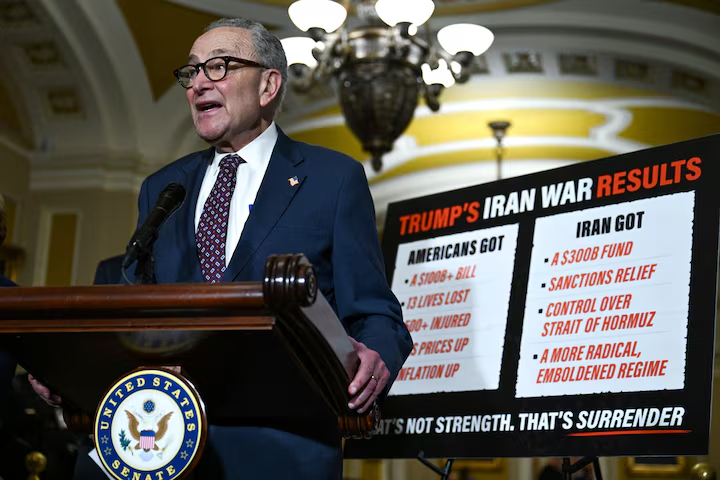
Senate Democrats blocked the annual National Defense Authorization Act on Tuesday in a rare partisan break with decades of tradition, citing President Donald Trump’s decision to launch the war with Iran without congressional authorization and opposing what they described as an unprecedented surge in military spending.
Vote Fails to Reach 60-Vote Threshold
The procedural vote on the $1.15 trillion NDAA fell along party lines, with yes votes outnumbering no votes 50-46 but falling short of the 60 votes required to advance in the 100-member Senate. Every Republican voted in favor except Majority Leader John Thune of South Dakota, who voted no under Senate procedure in order to preserve the option to bring the bill back for reconsideration.
The outcome had been widely anticipated after nine Democratic members of the Armed Services Committee voted against the bill when the panel considered it last month — an unusual defection on legislation that has historically attracted strong bipartisan support and has been signed into law every year for more than six decades.
Democrats Cite Iran War, Lack of Congressional Oversight
Senate Minority Leader Chuck Schumer was direct in explaining his vote. “Trump started this war without authorization, without a strategy, and without an exit,” he said on the Senate floor. Democrats argue that approving a massive Pentagon budget would be interpreted as tacit endorsement of a conflict they say Congress never sanctioned.
The Senate Democrats block defense bill Iran war NDAA vote came as the Trump administration simultaneously announced it had reimposed a naval blockade of all Iranian ports and launched a fresh round of strikes against Iran — the latest escalation in a conflict that has already killed thousands and disrupted global energy markets.
Size of the Defense Budget Also Draws Objections
Democrats also pushed back against the scale of Trump’s overall military spending request. The NDAA’s $1.15 trillion already represents an unprecedented authorization level, but the administration is separately seeking an additional $350 billion through the budget reconciliation process — a procedural mechanism that would allow the funding to pass without Democratic votes. Democrats have objected to the total $1.5 trillion military package at a time when domestic social programs are being cut.
In floor remarks urging passage, Thune accused Democrats of putting politics ahead of national security. “It’s the bill that helps ensure our military is ready today and prepared for tomorrow,” he said.
What the NDAA Covers and What Happens Next
The NDAA determines how many ships, aircraft, and missile systems the military purchases, sets pay raises for troops, and shapes policy responses to geopolitical threats. Its passage every year since 1961 has been one of the few constants in an often-gridlocked Congress.
Despite Tuesday’s setback, the process is far from over. The House and Senate each pass their own versions of the NDAA before Armed Services Committee negotiators broker a compromise. If a compromise version passes both chambers, it would be sent to Trump to sign or veto. Lawmakers on both sides have signaled they expect negotiations to continue, with Republicans determined to move a final defense authorization before the end of the year.
Author: Staff Writer | Edited for WTFwire.com | SOURCE: Reuters
: 9