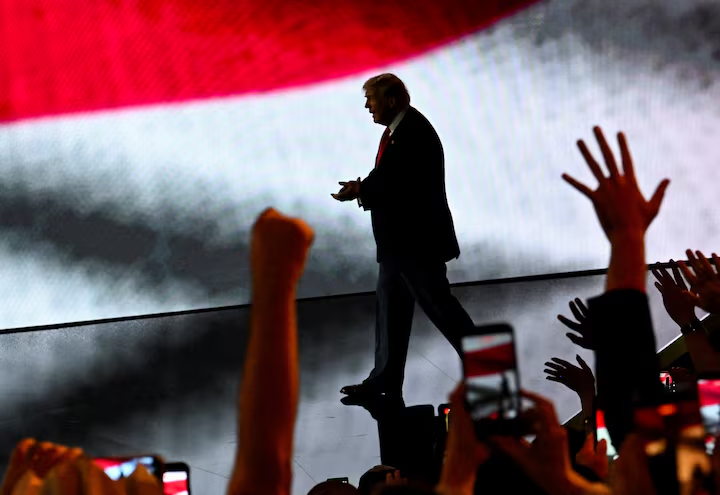
Trump eases marijuana rules in major policy shift


Trump marijuana reclassification policy marks a significant shift in U.S. drug regulation, as the federal government moves to treat state-licensed medical cannabis as a less dangerous substance.
The decision, implemented by the Justice Department, reclassifies medical marijuana from Schedule I to Schedule III—changing how it is regulated, researched, and taxed.
A historic shift in federal policy
The order, signed by Acting Attorney General Todd Blanche under the administration of Donald Trump, stops short of fully legalizing marijuana at the federal level.
However, it represents one of the most consequential changes to U.S. cannabis policy in decades.
Schedule I drugs are considered to have no accepted medical use and a high potential for abuse. Moving medical marijuana to Schedule III places it alongside substances with recognized medical value and lower risk.
What changes under the new rule
The Trump marijuana reclassification policy introduces several key changes:
- Eases restrictions on scientific research involving cannabis
- Allows state-licensed businesses to deduct expenses on federal taxes
- Creates a clearer pathway for companies to register with federal authorities
- Aligns federal policy more closely with state-level medical marijuana programs
Currently, around 40 U.S. states have legalized medical marijuana in some form.
Impact on industry and research
The shift is expected to benefit both researchers and businesses.
Scientists will face fewer barriers when studying cannabis, potentially accelerating medical discoveries. At the same time, companies operating within state-regulated systems could see significant financial relief through tax changes.
Supporters say the move reflects a long-overdue recognition of cannabis as a medical treatment.
Criticism and political divide
Despite broad support from the cannabis industry, critics argue the policy sends mixed signals.
Opponents warn that easing restrictions could downplay potential health risks, particularly as cannabis products become more potent.
Some lawmakers, including Republicans, have also expressed concern about loosening federal drug standards.
What remains unchanged
Importantly, the reclassification applies only to state-licensed medical marijuana.
Cannabis outside those systems remains classified under Schedule I, and recreational marijuana is still illegal at the federal level.
At the same time, the administration has launched a broader process to reconsider marijuana classification, with hearings expected in the coming months.
A turning point for U.S. cannabis policy
The Trump marijuana reclassification policy highlights a growing shift in how the U.S. approaches cannabis regulation.
While not full legalization, the move narrows the gap between federal law and state policies, which have increasingly embraced medical and recreational use.
As the debate continues, the decision could reshape research, business, and healthcare—while setting the stage for further changes in federal drug policy.
Author: Staff Writer | Edited for WTFwire.com | SOURCE: AP News
: 329