Netanyahu and Trump Clash After US-Iran Deal Over Gaza War and Hormuz Strait

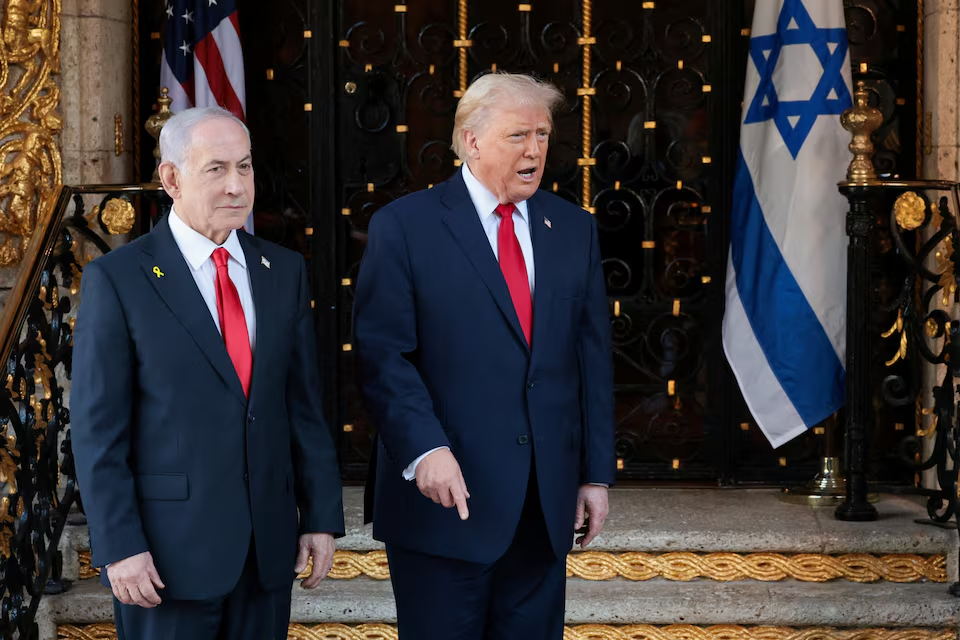
JERUSALEM / WASHINGTON — Tensions are emerging between Israeli Prime Minister Benjamin Netanyahu and US President Donald Trump following a tentative US-Iran agreement aimed at ending hostilities and reopening the strategic Strait of Hormuz.
The deal, which includes a temporary ceasefire and a 60-day negotiation window on Iran’s nuclear program and regional activities, has triggered political friction among key allies who were once closely aligned during the escalation of the conflict.
Israeli officials say the agreement could significantly limit Israel’s operational freedom in Lebanon and weaken its broader strategic goals in confronting Iran-backed groups. Privately, senior figures within Netanyahu’s government have described the pact as highly unfavorable to Israel’s interests.
While the United States frames the agreement as a step toward stabilizing global energy markets and reducing inflationary pressure caused by disrupted oil flows, Israel has signaled it does not consider itself bound by the terms of the deal.
Netanyahu, who is facing growing domestic political pressure ahead of upcoming elections, acknowledged differences with Washington but reaffirmed that Israel will continue to prioritize its own security strategy.
“I am in charge of Israel’s security interests,” Netanyahu said during a press briefing in Jerusalem, emphasizing that operational decisions in southern Lebanon remain under Israeli control.
Strategic Divide Deepens
The US-Iran memorandum of understanding—expected to be formally signed in Switzerland later this week—has exposed growing divergence between Washington and Jerusalem over the future of regional security policy.
Under the framework, military operations are expected to pause across multiple fronts, including Lebanon, while diplomatic negotiations continue on Iran’s nuclear program and regional influence.
However, Israeli officials argue the agreement does not adequately address Iranian missile development or Tehran’s support for proxy groups, issues that were central to the initial justification for military escalation.
Sources within the Israeli government also say there is concern the 60-day negotiation window could be extended, potentially freezing Israel’s military options without resolving core security threats.
Energy and Political Fallout
The agreement has already had immediate global effects. Oil prices have fallen sharply on expectations that shipping through the Strait of Hormuz—through which roughly 20% of global crude flows—may resume gradually.
However, analysts warn that full normalization of energy markets could take months, as tankers remain stranded in the Persian Gulf and shipping insurers reassess security risks.
Even if the strait reopens, logistical delays, cautious navigation decisions, and production restart timelines across Gulf states are expected to slow recovery.
A Fracturing Alliance
The evolving disagreement marks a notable shift in the Trump-Netanyahu relationship, which has historically been defined by close coordination on Iran and broader Middle East policy.
Trump previously aligned with Israel on major strategic decisions, including the relocation of the US embassy to Jerusalem and the withdrawal from the Iran nuclear deal during his first term. However, the latest agreement signals a recalibration of US priorities toward de-escalation and energy stabilization.
Political analysts in Israel say Netanyahu now faces a delicate balancing act: maintaining the US alliance while responding to domestic expectations for a tougher stance on Iran and its regional allies.
“This is a moment of divergence in strategic interests,” said one Middle East analyst, noting that Israel’s ability to influence ongoing negotiations appears limited.
What Comes Next
The agreement remains provisional, with implementation dependent on the formal signing expected later this week and subsequent compliance from all parties involved.
Meanwhile, uncertainty persists over whether the ceasefire will hold beyond the initial negotiation window—or whether renewed escalation could again disrupt one of the world’s most critical energy corridors.
For now, both markets and governments are watching closely as diplomacy attempts to replace months of regional conflict with a fragile framework for de-escalation.
: 64


