Israel, Lebanon Sign US-Mediated Framework Agreement to Begin Ending Border Conflict

Israel and Lebanon signed a framework agreement on Friday in Washington, marking the first formal step toward ending months of cross-border fighting between Israel and the Iran-backed militant group Hezbollah. Brokered by the United States, the deal establishes a roadmap for future negotiations but leaves several major disputes unresolved.
U.S. Secretary of State Marco Rubio described the agreement as “the first step” in what he acknowledged would be a long and difficult process. Officials from all three countries emphasized that the framework is designed to launch negotiations rather than deliver a final peace settlement.
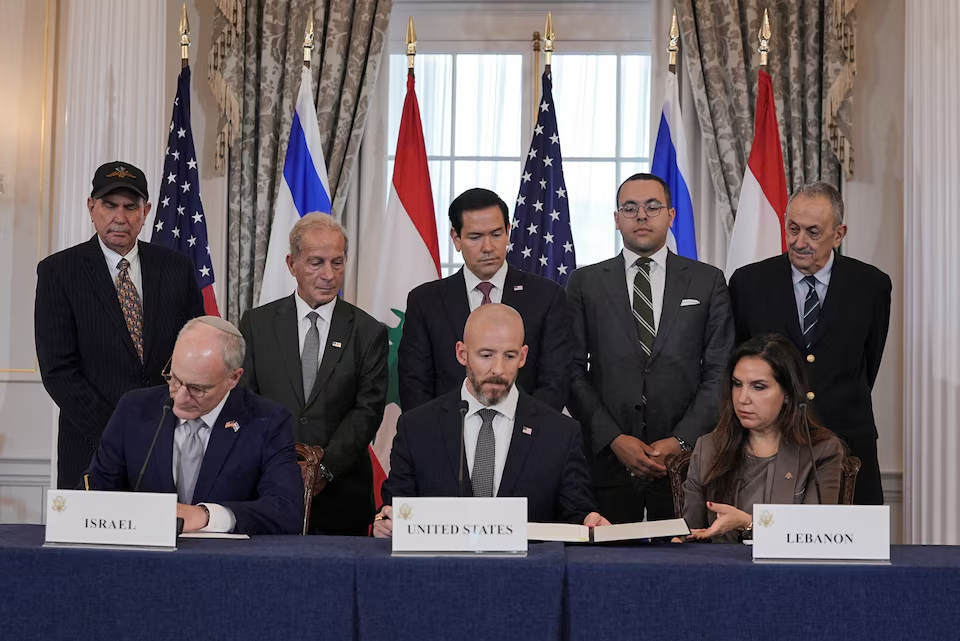
Initial Israel Lebanon framework agreement signed in Washington
The agreement was signed at the U.S. State Department by Israeli Ambassador Yechiel Leiter, Lebanese Ambassador Nada Hamadeh, and U.S. officials after several days of intensive negotiations.
According to Rubio, Washington will oversee implementation through a new Military Coordination Group for Lebanon, while immediately providing $100 million in humanitarian assistance coordinated with the United Nations.
The United States also pledged more than $30 million to strengthen the Lebanese Armed Forces, aiming to help the country’s military establish greater control over its territory.
Israel links troop withdrawals to Hezbollah disarmament
Israeli Prime Minister Benjamin Netanyahu said the framework permits Israeli forces to remain in parts of southern Lebanon until Hezbollah is disarmed.
Under the proposal, the Lebanese army would gradually assume control of designated “pilot zones” where Israeli troops would begin phased withdrawals.
Israel has maintained a security zone in southern Lebanon following months of hostilities, arguing that the military presence is necessary to prevent future Hezbollah attacks.
Lebanon calls agreement a first step toward sovereignty
Lebanese President Joseph Aoun welcomed the agreement, saying it should eventually allow displaced residents to return home and help restore the country’s full sovereignty.
Lebanese Ambassador Nada Hamadeh also characterized the deal as only the beginning of a broader diplomatic process.
However, Hezbollah quickly rejected key elements of the agreement.
Senior Hezbollah lawmaker Hassan Fadlallah warned that the group would resist any effort by Lebanese authorities to disarm it, arguing such moves could spark internal conflict. He insisted Hezbollah would retain its weapons despite the framework.
Fighting continues despite diplomatic progress
Although negotiations are underway, violence has not completely stopped.
Israel said its military killed seven Hezbollah members operating near territory it currently occupies in southern Lebanon. Reuters could not independently verify the claim.
Separately, Israeli forces dropped warning leaflets over the Lebanese town of Mansouri, instructing residents to leave because the area falls within Israel’s security zone. Lebanese officials said civilians had largely stopped living there, although farmers continued accessing the area.
These incidents underscore how fragile the situation remains even as diplomatic efforts move forward.
Conflict has caused heavy casualties
The latest conflict began after Hezbollah launched attacks against Israel on March 2, shortly after U.S. and Israeli military operations against Iran.
Since then:
- More than 4,000 people have been killed in Lebanon.
- Over 1 million Lebanese residents have been displaced.
- Israel has reported 32 military deaths and four civilian fatalities.
- Hezbollah has not released official casualty figures, though previous reports suggest thousands of its fighters may have been killed.
What comes next?
The Israel Lebanon framework agreement establishes a process rather than resolving the underlying conflict.
Future progress will largely depend on whether:
- The Lebanese Armed Forces can expand control over southern Lebanon.
- Hezbollah accepts or resists disarmament efforts.
- Israel proceeds with additional troop withdrawals.
- U.S.-led monitoring mechanisms maintain both sides’ commitments.
While officials from Washington, Jerusalem and Beirut described the signing as a significant diplomatic milestone, implementation is expected to face substantial political and security challenges in the coming months.
Author: Staff Writer | Edited for WTFwire.com | SOURCE: Reuters
: 91