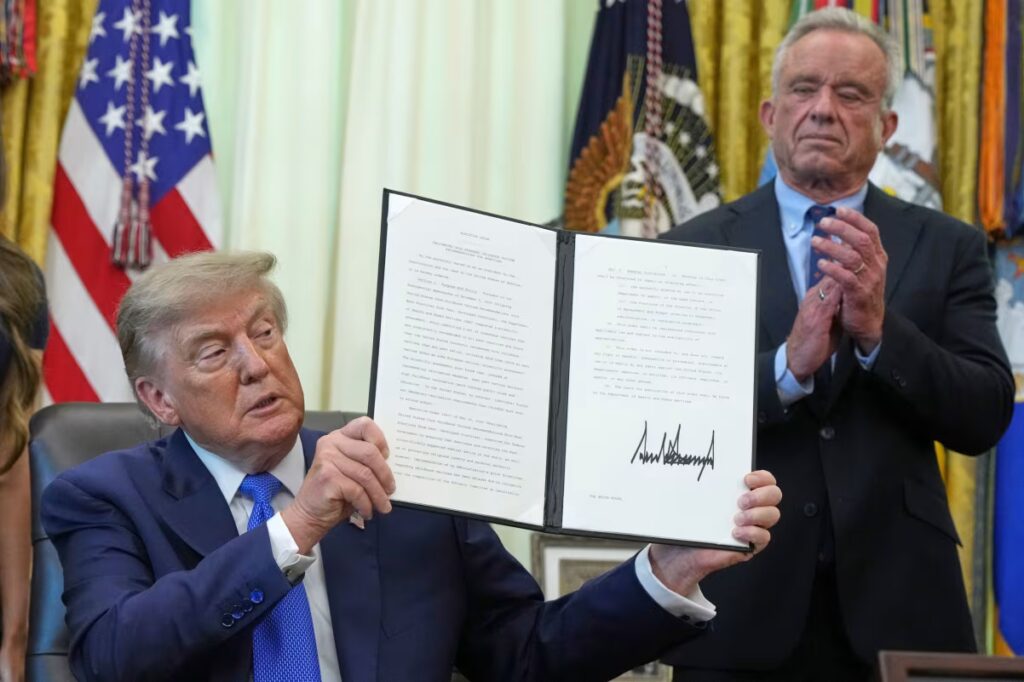
Roundup Supreme Court ruling sparks MAHA backlash against Trump

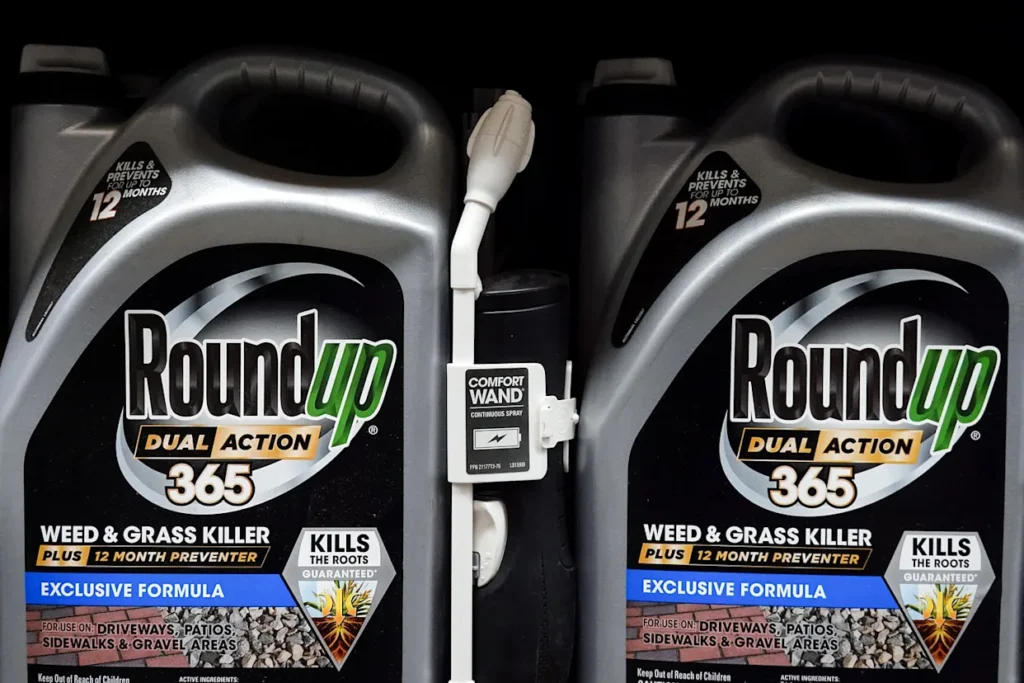
The Roundup Supreme Court ruling has triggered fierce backlash from influential figures within the Make America Healthy Again (MAHA) movement, who accuse the Trump administration of siding with corporate interests over public health.
In a 7-2 decision, the U.S. Supreme Court ruled Thursday that Bayer, the manufacturer of Roundup weed killer, cannot be sued under state law for failing to include cancer warnings on its product. The ruling effectively blocks thousands of similar lawsuits and represents a major legal victory for Bayer.
For many MAHA supporters, however, the decision feels like a betrayal of the movement’s promise to reduce Americans’ exposure to harmful chemicals.
MAHA leaders condemn the ruling
Several high-profile advocates immediately criticized the decision, arguing that the administration abandoned its commitment to healthier food and environmental policies.
Vani Hari, widely known as “Food Babe,” called the ruling “sickening” and blamed the Trump administration for supporting Bayer before the Supreme Court.
“The decision is sickening and would have never happened had the administration not given Bayer Monsanto a favor,” Hari said, adding that Congress should now intervene.
Kelly Ryerson, better known online as “Glyphosate Girl,” warned that the decision could cost Republicans support among MAHA voters.
“Never in history has an administration so blatantly and willingly sold out our fertility, vitality, and health to corporate interests,” she wrote on social media.
Why the case matters
The lawsuit centered on John Durnell, a Missouri man who alleged that decades of using Roundup caused him to develop non-Hodgkin lymphoma.
A Missouri jury awarded him $1.25 million in damages in 2023. Bayer appealed, arguing that federal pesticide regulations preempt state-level warning requirements.
The Supreme Court agreed.
The majority ruled that because the Environmental Protection Agency (EPA) has not required Roundup to carry a cancer warning, Bayer cannot be held liable under state law for failing to provide one.
The ruling significantly limits future lawsuits against the company involving warning labels.
The science remains disputed
The controversy surrounding glyphosate continues because scientific organizations have reached different conclusions.
The EPA concluded in 2020 that glyphosate is “unlikely to be carcinogenic to humans.” That assessment remains under review after a federal appeals court ordered the agency to revisit its analysis.
Meanwhile, the International Agency for Research on Cancer (IARC), part of the World Health Organization, classified glyphosate as “probably carcinogenic to humans” in 2015.
Many researchers argue that newer evidence has strengthened concerns about a possible link between glyphosate exposure and non-Hodgkin lymphoma.
Environmental health scientist Lianne Sheppard said recent research continues to support IARC’s earlier conclusion.
Trump administration faces criticism from allies
The decision adds to growing frustration among MAHA supporters, who have increasingly criticized several Trump administration policies.
Earlier this year, Trump invoked the Defense Production Act to boost glyphosate supplies, arguing the move would support domestic agriculture.
Although Health Secretary Robert F. Kennedy Jr. has publicly described pesticides as “toxic by design” and previously represented plaintiffs suing Monsanto before joining the administration, the Justice Department backed Bayer’s appeal in the Supreme Court.
Some MAHA activists have also criticized recent regulatory decisions involving flavored e-cigarettes, mercury emissions and PFAS drinking water standards.
Nutritionist Michaela Bardossas, who works with Moms Across America, previously warned that many MAHA supporters feel their priorities have been ignored.
Dissenting justices warn consumers lose legal protections
Justices Ketanji Brown Jackson and Neil Gorsuch dissented from the ruling.
Jackson argued that the decision “unjustifiably closes the courthouse doors” to people seeking compensation after alleging harm from Roundup.
Bayer welcomed the outcome, calling it “good for science, farmers, and industries that depend on regulatory clarity for innovation.”
Congress may become the next battleground
Attention is now shifting to Capitol Hill.
Rep. Anna Paulina Luna announced plans to introduce legislation that would remove liability protections for pesticide manufacturers.
She argued that companies should not be shielded from lawsuits if they knowingly fail to disclose potential health risks.
Whether Congress takes up the issue remains uncertain, but the Roundup Supreme Court ruling has intensified divisions between the Trump administration and one of its most vocal health-focused political movements.
Author: Staff Writer | Edited for WTFwire.com | SOURCE: CNN
: 260