US job openings rise to 7.6M in April despite Iran war economic pressure

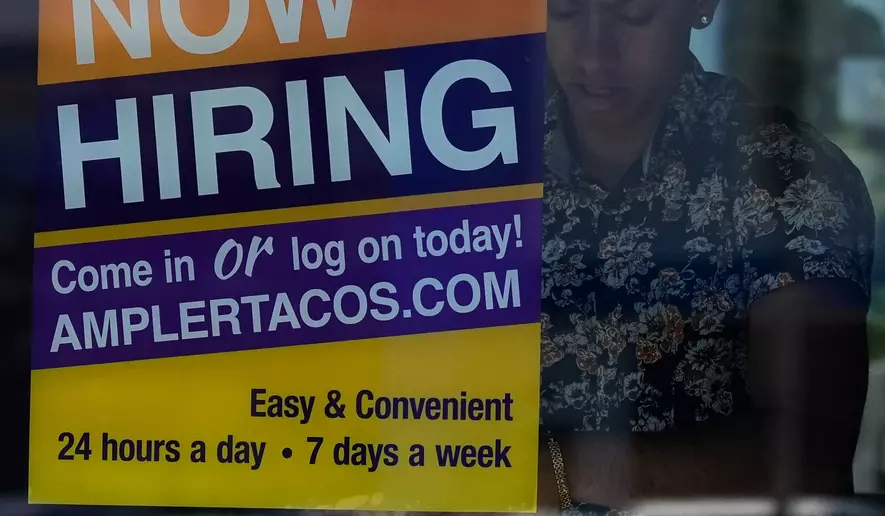
US job openings April 2026 increased sharply in April, signaling unexpected resilience in the American labor market despite ongoing economic pressure linked to the Iran war and higher energy prices.
The Labor Department reported that employers posted 7.6 million job vacancies in April, up from 6.9 million in March. The figure also beat economists’ expectations of 6.8 million openings, reaching its highest level since May 2024.
The increase suggests that companies across the United States continue to hire even as geopolitical tensions and inflation concerns weigh on the broader economy.
Hiring demand stays strong despite economic uncertainty
The US job openings April 2026 data shows that hiring demand remains stable even amid uncertainty caused by the Iran war, which has driven up energy costs and created volatility in financial markets.
At the same time, layoffs declined in April, signaling that companies are not aggressively cutting jobs. However, the number of Americans voluntarily quitting their jobs also fell, which is typically seen as a sign that workers feel less confident about finding new opportunities.
Economists say this mixed signal reflects a labor market that is cooling slightly but not weakening sharply.
Job growth continues but at a slower pace
The broader labor market has been recovering from a weak 2025, when job creation averaged fewer than 10,000 new positions per month—one of the weakest periods outside a recession since 2002.
So far in 2026, job growth has improved modestly, averaging around 76,000 jobs per month from January through April.
Fiscal stimulus in the form of tax refunds from President Donald Trump’s tax package helped support consumer spending earlier this year. However, analysts note that this boost is fading as households face higher energy and borrowing costs linked to the Iran conflict.
Structural shifts reshape the labor market
Economists also point to structural changes in the US economy that are lowering the number of jobs needed to keep unemployment stable.
A combination of stricter immigration policies and Baby Boomer retirements has reduced labor supply. According to Federal Reserve economists Seth Murray and Ivan Vidangos, the “break-even” level of monthly job growth has dropped dramatically from about 155,000 jobs a few years ago to near zero today.
This means the economy can maintain stability even with weaker monthly job gains than in the past.
Eyes on upcoming jobs report
Attention now turns to the upcoming official employment report for May, which is expected to show roughly 100,000 new jobs added, according to a survey of economists.
That report will help determine whether the labor market continues its gradual slowdown or if hiring strength is stabilizing despite inflation pressures and global geopolitical risks.
For now, the US job openings April 2026 data suggests a labor market that is still holding up—but under increasing strain from external shocks and long-term structural changes.
: 14