Iran Pushes Diplomatic Solution as Trump Rejects Peace Plan

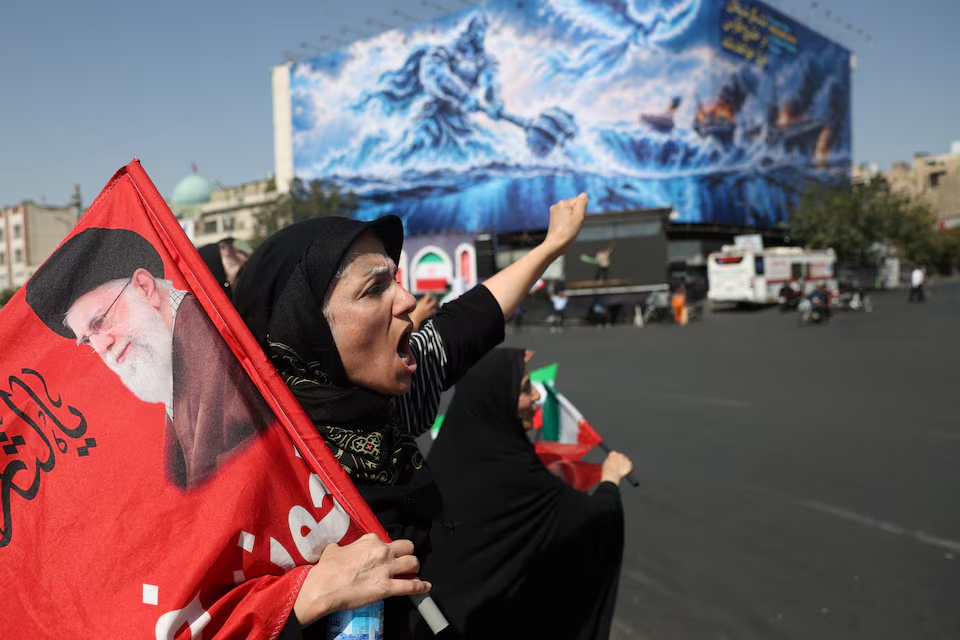
Iran insisted Sunday that only an Iran diplomatic solution can resolve its conflict with the United States and Israel, after President Donald Trump said he had rejected an Iranian proposal to reopen the Strait of Hormuz and end the fighting.
Araqchi says conditions still stand
“Our conditions are clear, and any move toward reopening the Strait of Hormuz is contingent on these conditions being met,” Iranian Foreign Minister Abbas Araqchi wrote on social media. “Only a negotiated solution can get them out of this deadlock.”
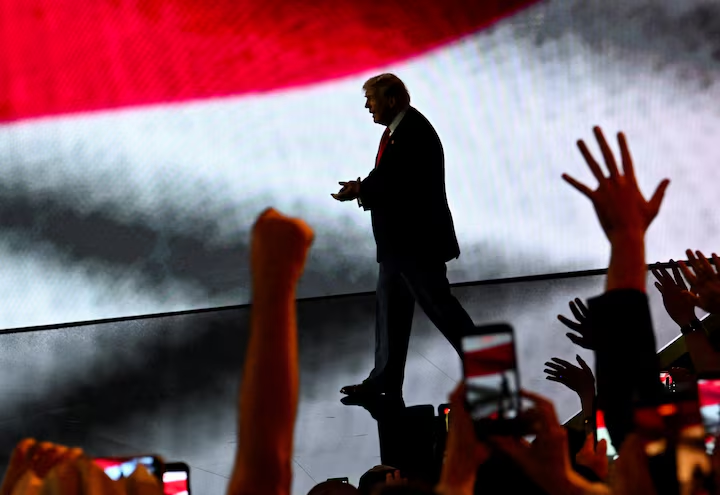
Iran unveiled a peace proposal last week at the UN General Assembly in New York, saying it had been passed to Washington through Qatari mediators. Trump said Saturday he rejected the plan, arguing desperation was driving Iran’s push for a deal on the waterway. “They want to make a deal to open the Hormuz Strait immediately because they’re losing so badly,” Trump told reporters at the White House.
Araqchi said mediators have not officially relayed a U.S. rejection despite Trump’s public comments. “We are waiting for the mediators to convey the definitive views to us, and we will make a decision based on them,” he wrote.
Iran’s military warns the war has reached a turning point
The U.S. has imposed an economic blockade on Iran to pressure Tehran into halting attacks on vessels in the Strait of Hormuz, attacks that have sharply reduced shipping through the waterway even as Trump repeatedly asserts the U.S. controls it. Iranian army commander-in-chief Amir Hatam said the war has reached a critical and decisive stage, adding that Tehran won’t accept being unable to trade while foreign powers control the region’s strategic waterways. “If Iran cannot trade, if Iran cannot live, no one will be able to trade or live,” he said, according to state media.
Saudi Arabia pulled deeper into the conflict
Previous diplomatic efforts have failed to end the war, which began February 28 with U.S. and Israeli strikes on Iran and has since alternated between pauses and renewed fighting, killing thousands while degrading Iran’s conventional forces and further damaging its economy. Iran and its allies have widened the conflict across the region, striking U.S. Gulf allies with drones and missiles while Houthi forces in Yemen have targeted Saudi interests.
Saudi Arabia, the largest Gulf state, has been drawn deeper into the war this month as Houthi fighters advanced in Yemen, routing Saudi-backed government forces and threatening Saudi oil exports through the Red Sea. In a possible sign of further escalation, parents in Riyadh received notices Sunday that schools would shift to remote learning for the week, though no reason was given and Saudi authorities did not immediately comment.
Yemen’s Houthi-run health ministry said seven people were killed and 40 wounded, including children, in a strike on shops at a market in Taiz province. Yemen’s internationally recognized government later said its forces had targeted a Houthi military camp and vehicles at the same location.
A conflict that has rattled global oil markets
Iran also engaged its Saudi rivals over the Strait of Hormuz during the brief diplomatic push in New York, underscoring the stakes of a seven-month conflict that has disrupted oil flows through a critical shipping lane and weighed on the global economy. Araqchi told reporters at the UN on Friday that the proposed deal would trigger a seven-day countdown to reopening the strait and a pause in regional fighting. “If there is seriousness on the US side to come to a deal and reopen the Strait of Hormuz, everything is now prepared,” he said, adding that wider talks, potentially including Iran’s nuclear program, could follow.
Trump has cited preventing Iran from acquiring a nuclear weapon, ending its ability to attack neighbors, and creating conditions for Iranians to topple their leadership as key goals. U.S. Ambassador to the UN Mike Waltz said Sunday on CNN’s “State of the Union” that Trump rejected the Iranian proposal because it demanded an immediate lifting of sanctions and release of frozen assets. “So the bottom line is they were asking for everything up front with a promise that they would then talk,” Waltz said. “The president’s just not confident that the Iranians are coming in good faith and that they will truly negotiate the end of their nuclear program.”
Iranian President Masoud Pezeshkian, in an interview with CBS’s “Face the Nation,” said Tehran is ready for talks on its nuclear program and other issues but won’t accept “bullying or coercion.” “Iran is not seeking war, but will defend itself against pressure, threats and attacks,” Pezeshkian said, adding that Iran has already agreed it is “not supposed to develop nuclear weapons.”
Author: Staff Writer | Edited for WTFwire.com | SOURCE: Reuters
: 7