Iran seizes ships as Strait of Hormuz tensions rise

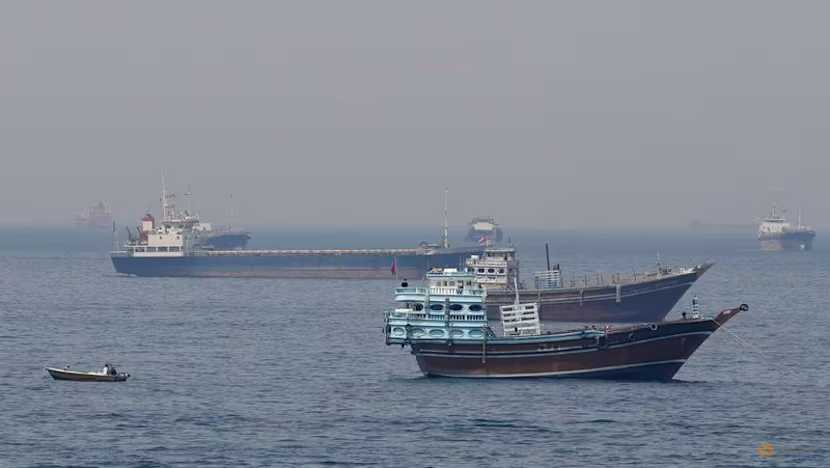
Iran seizes ships Strait Hormuz as tensions escalate in one of the world’s most critical energy corridors, following a fragile ceasefire extension announced by the United States.
The latest move signals a renewed show of force by Tehran and raises fresh concerns over global oil supply routes.
Escalation in a strategic waterway
Iran’s Revolutionary Guard seized two vessels in the Strait of Hormuz, marking the first such action since the conflict began in late February. Authorities said the ships violated maritime regulations and were escorted to Iranian territory.
The Strait of Hormuz is a key global chokepoint, handling roughly one-fifth of the world’s oil and liquefied natural gas shipments.
Because of this, any disruption in the area has immediate global economic consequences.
Ceasefire without resolution
The escalation comes shortly after Donald Trump extended a ceasefire, pausing planned U.S. attacks on Iran. However, the truce remains fragile.
Iranian officials rejected the idea of a full ceasefire while a U.S. naval blockade remains in place. Mohammad Baqer Qalibaf stated that reopening the strait would be impossible under current conditions, calling the blockade a violation of the agreement.
At the same time, Washington has not set a clear timeline for negotiations, adding uncertainty to an already volatile situation.
Military signals and rising pressure
In a show of defiance, Iran displayed ballistic missiles during a military parade in Tehran. State media broadcast images reinforcing the message that control over the strait remains firmly in Iranian hands.
Meanwhile, Iranian forces warned that any attempt to challenge security in the waterway would cross a “red line.”
These developments suggest that, despite the ceasefire, both sides continue to prepare for further escalation.
Mediation efforts face setbacks
Pakistan has been acting as a mediator between the two sides. However, recent talks failed to materialize, dealing a setback to diplomatic efforts.
According to officials, both parties had initially signaled willingness to participate. Yet the absence of formal negotiations highlights the deep divisions that remain.
Key disagreements include Iran’s nuclear program, economic sanctions, and control over the Strait of Hormuz.
Impact on global markets
The renewed tensions quickly affected global energy markets. Oil prices rose sharply, with Brent crude climbing as investors reacted to the shipping incidents.
The disruption underscores how closely global markets are tied to stability in the region.
Additionally, maritime security sources reported further attacks on commercial vessels. One ship sustained damage after being fired upon, while another avoided serious impact and continued its route.
A fragile path forward
Despite the ceasefire extension, the situation remains highly unstable. The United States is pushing for limits on Iran’s nuclear capabilities, while Iran demands sanctions relief and recognition of its regional authority.
At the same time, broader regional tensions continue to simmer, including clashes involving Iran-backed groups.
As a result, the Iran seizes ships Strait Hormuz crisis reflects a deeper geopolitical standoff with no immediate resolution in sight.
Author: Staff Writer | Edited for WTFwire.com | SOURCE: Reuters.
: 291