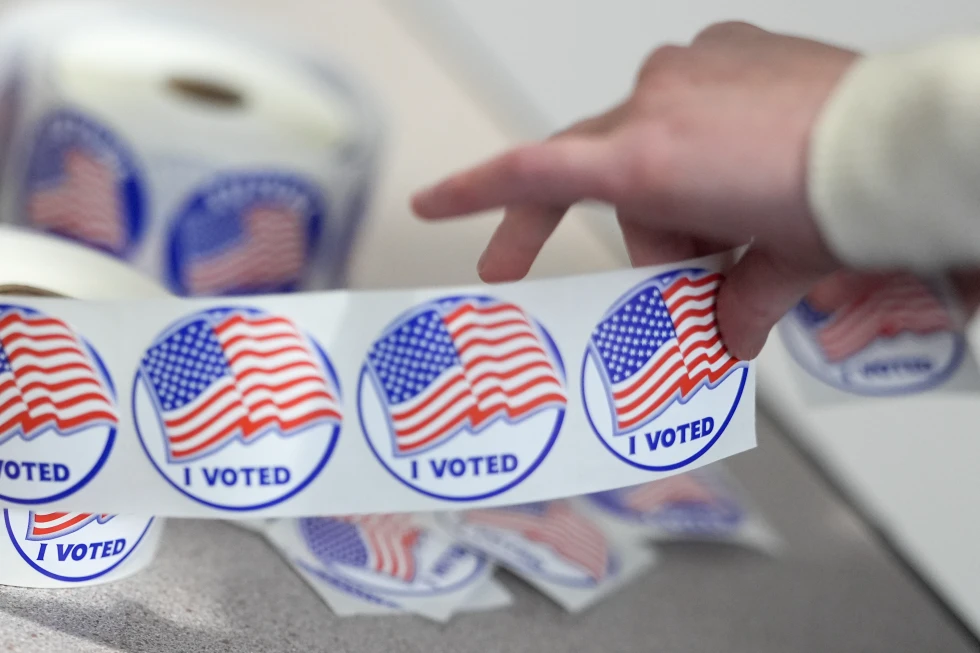
Gas prices hit Republicans as Democrats flip narrative

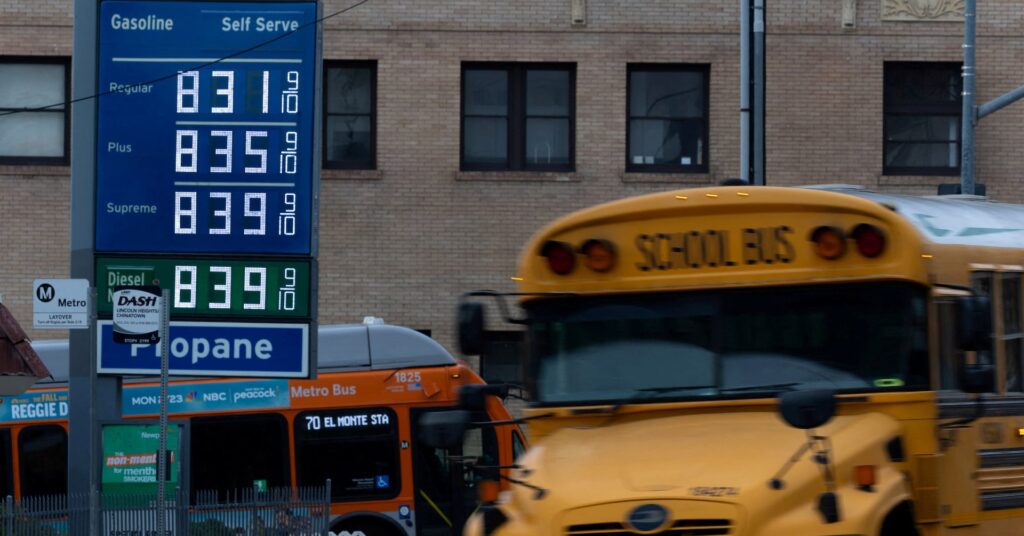
Gas prices Republicans Democrats narrative is reshaping the political battleground in the United States, as rising fuel costs put Republican candidates on the defensive ahead of key midterm elections.
What was once a central Republican attack line against Democrats has now become a vulnerability within the GOP itself.
A campaign issue turns against Republicans
During his 2024 congressional run, Tom Barrett leaned heavily on voter frustration over rising fuel prices. At the time, he blamed Democratic energy policies and promised cheaper gas through increased domestic production.
However, nearly three years later, gasoline prices in Michigan have returned to similar levels. After briefly surpassing $4 per gallon earlier this month, prices remain elevated, rising significantly since the start of the Iran conflict.
As a result, Democrats are now using the same argument Republicans once deployed—linking high fuel costs to political decisions.
War, energy, and political pressure
The current price surge is closely tied to geopolitical tensions, particularly the Iran war. While Barrett acknowledges the financial strain on voters, he continues to support the conflict on national security grounds.
At the same time, Donald Trump and his administration have signaled that fuel prices may remain high in the near term. This complicates messaging for Republican candidates trying to balance party loyalty with voter concerns.
Consequently, many GOP strategists now face a dilemma: defend the administration’s policies or distance themselves to appeal to moderate voters.
Democrats seize the opportunity
Democrats have quickly moved to capitalize on this shift in the gas prices Republicans Democrats narrative.
Bridget Brink, a leading Democratic contender in Michigan, has already made fuel prices a central campaign issue. She argues that any tax relief promoted by Republicans is being offset by rising living costs, including gas, healthcare, and housing.
Meanwhile, local protests have reinforced this message. Demonstrators have directly linked higher fuel and fertilizer prices to political support for the war, increasing pressure on Republican incumbents.
A broader economic frustration
Importantly, gas prices are not the only concern for voters. Inflation across essential sectors—food, housing, and healthcare—continues to weigh heavily on households.
Because of this, fuel costs have become a visible symbol of broader economic anxiety. Even some Republican voters acknowledge the issue, though many still support their candidates based on ideological alignment.
This tension highlights a key challenge: voters may blame politicians for prices, even when those prices are influenced by global markets.
A risky strategy ahead of elections
Looking ahead, Republicans are attempting to shift focus toward economic policies such as the 2025 tax bill. Yet rising gas prices make it harder to deliver a clear message of financial relief.
At the same time, campaign strategists suggest that candidates may need to adjust their tone. While strong support for the administration plays well in primaries, general elections could require a more critical stance.
The political cost of fuel prices
Ultimately, the gas prices Republicans Democrats narrative reflects a broader political reality: economic issues can quickly change sides.
What once benefited Republicans is now being used against them, particularly in competitive districts like Michigan. With control of Congress at stake, even small shifts in voter sentiment could have major consequences.
As one voter noted, the issue goes beyond politics. It is about everyday costs—and those are becoming harder to ignore.
Author: Staff Writer | Edited for WTFwire.com | SOURCE: Reuters.
: 13