Ukrainian Drones Hit Russian Oil Facilities and Tankers in Sea of Azov


Ukrainian drones struck oil depots and infrastructure across Russia and set two tankers on fire in the Sea of Azov on Thursday, extending Kyiv’s campaign of deep strikes on Russian energy targets — a day after President Donald Trump pledged to grant Ukraine a license to manufacture Patriot air defense systems.
Strikes Hit Depots in Tver, Stavropol, and Beyond
A drone strike ignited an oil depot in the western Russian city of Tver, according to the region’s acting governor. In the southern Stavropol region, drones set oil reservoirs ablaze, prompting the evacuation of apartment buildings near the affected facility. Ukrainian forces also struck fuel infrastructure in Ufa, deep inside Russia, and an oil-loading terminal in the Rostov region closer to the front lines, President Volodymyr Zelenskyy confirmed.
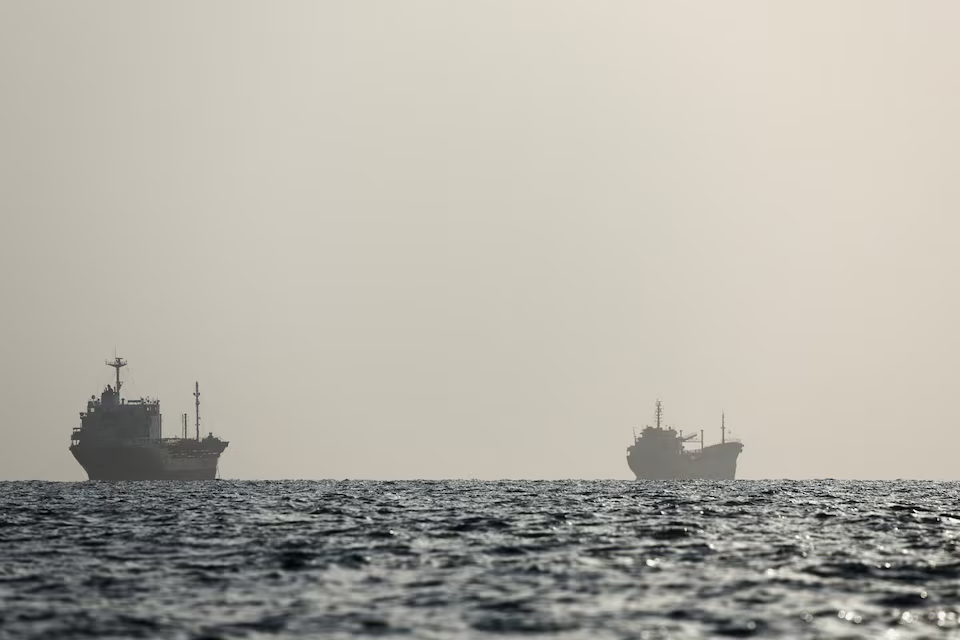
In the Sea of Azov, two oil tankers were set on fire, with one still burning and its crew evacuated, according to regional authorities. The attacks are part of a sustained Ukrainian effort to disrupt fuel supplies to Crimea, which Russia illegally annexed in 2014.
Russia’s Defense Ministry said its systems intercepted or jammed 73 Ukrainian drones during the overnight operation. Ukraine’s air force reported that Russia launched 94 long-range drones and two ballistic missiles in retaliation — of which 19 drones and both missiles struck 13 locations across Ukraine.
Ukraine’s “Long-Range Sanctions” Campaign
Zelenskyy framed the strikes as deliberate economic pressure on Russia. “We have long proposed that Russia end this war, and every day of delay should bring the feeling of war to where it all began — to Russia,” he said.
Ukraine’s drone campaign against Russian oil refineries and infrastructure has already triggered a widespread fuel crisis inside Russia, with gasoline shortages and rationing reported across multiple regions and motorists waiting hours to fill their tanks. Moscow has responded by intensifying its bombardment of Kyiv and other Ukrainian cities, exposing the country’s vulnerability to ballistic missile attacks for which it lacks sufficient interceptors.
Trump Pledges Patriot Production License
On Wednesday, on the sidelines of the NATO summit in Ankara, Trump met with Zelenskyy and announced that the United States would grant Ukraine a license to domestically manufacture Patriot air defense systems — fulfilling a longstanding Ukrainian request. Trump also praised Zelenskyy for doing “an amazing job,” a notably warmer tone than his previous criticisms of the Ukrainian leader.
However, a senior Ukrainian defense official cautioned that the path from license to production will be long. Serhii Beskrestnov, an adviser to Ukraine’s defense minister, said setting up domestic manufacturing of the mobile surface-to-air systems would take many months at minimum, and could stretch to a year or more.
The main bottlenecks, he said, are the long production cycles for key subcontracted components — some of which take 12 to 24 months to procure — and limited global output of critical parts supplied by Boeing and L3Harris. While the Pentagon has signed contracts to expand production capacity, the timeline for those commitments to translate into increased output remains unclear.
Kremlin: Strikes Won’t Accelerate Peace
Kremlin spokesman Dmitry Peskov offered a measured response to Trump’s Patriot announcement, describing the US position as “somewhat ambivalent” but acknowledging Washington’s declared desire to help end the conflict. “Unlike the Europeans, the United States maintains a desire to facilitate a move toward a peace process,” Peskov said. “We see that desire as sincere. We welcome it.”
On the question of whether Ukrainian strikes deep inside Russia could hasten a peace settlement — as Trump has suggested — Peskov was dismissive. He said further escalation would only force Moscow to seek a larger buffer zone inside Ukraine. “It’s a mistake to think that escalation and military pressure could pave the way to a peaceful settlement,” he said. “Further escalation may prolong the special military operation.”
Peskov added that President Vladimir Putin remains “open to dialogue” and ready for another phone call with Trump.
Author: Staff Writer | Edited for WTFwire.com | SOURCE: AP News
: 218