Missouri Votes on Nation’s Toughest Ballot Initiative Standard

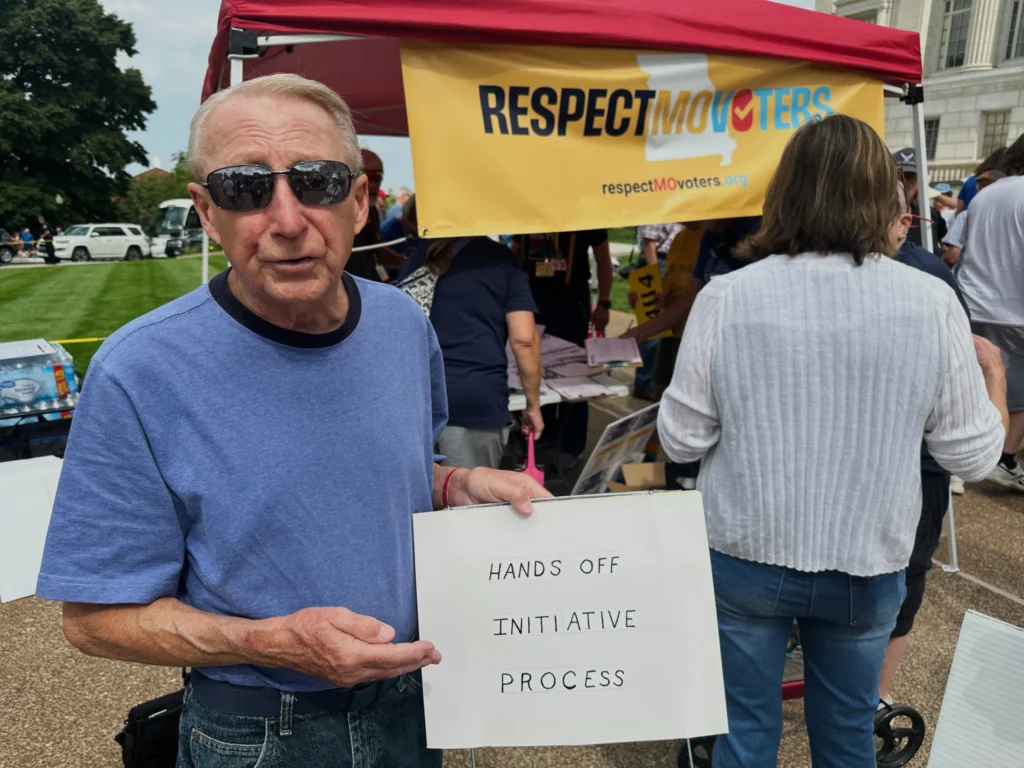
Missouri voters are deciding Tuesday on a proposed constitutional amendment that would make it significantly harder for citizens to amend the state constitution — a measure that, if passed, would establish the strictest requirement for citizen initiatives anywhere in the United States.
What Amendment 4 Would Do
Missouri’s Amendment 4 ballot initiative standard direct democracy proposal would require citizen-initiated constitutional amendments to win a majority vote in all eight of the state’s congressional districts, rather than a simple statewide majority. No other state has adopted or even put to a vote such a geographically distributed threshold.
Under the current system, constitutional amendments need only win statewide majority support. In recent years, Missouri voters have used that process to enshrine abortion rights, legalize marijuana and sports betting, and expand Medicaid coverage for low-income adults. All four of those measures passed with 53% or less of the statewide vote and, under Amendment 4, none would have succeeded.
Critically, the proposal would apply only to citizen initiatives — constitutional amendments referred to the ballot by the Legislature would still require only a simple statewide majority. That dual standard is unique to Missouri.
The Case For and Against
Republican state Representative Ed Lewis, who sponsored the measure, argues the geographic requirement ensures statewide consensus rather than allowing large urban centers to impose outcomes on the rest of Missouri. “Requiring 50% in each of our congressional districts is not a difficult barrier for anything that has a consensus,” Lewis said. “If you’re going to change the constitution, shouldn’t it be broadly accepted?”
Critics call the proposal fundamentally unfair. “It is an astonishing level of unfairness, and it crushes our notion of one person, one vote and majority rule,” said Scott Charton, spokesperson for the Missouri Realtors campaign committees. Opponents note that an initiative backed by large margins in seven of eight districts would still fail if opposed by even a slim margin in the eighth — effectively giving a small geographic minority veto power over a statewide majority.
Kelly Hall, executive director of the Fairness Project, a group that backs progressive ballot initiatives, called the proposal “a first-of-its-kind” and warned it “would be nearly impossible for citizens to participate meaningfully in any sort of direct democracy.” Hall also expressed concern that other Republican-led states could attempt to copy the model.
A National Pattern of Initiative Restrictions
Missouri’s measure fits into a broader national trend. Republican lawmakers in multiple states have worked in recent years to raise the bar for citizen petitions to qualify for the ballot and win voter approval. Voters in Arkansas, Ohio, and South Dakota have previously rejected proposals to increase the approval threshold for constitutional amendments, though South Dakota voters are again being asked to consider a 60% threshold on the November ballot. North Dakota and Utah will also weigh similar measures.
Missouri’s proposal is more restrictive than any of those, and its dual standard — applying only to citizen initiatives while preserving simple majority thresholds for legislative referrals — has drawn particular criticism as structurally designed to limit voter-driven lawmaking while preserving legislative power.
A Counter-Initiative Already in the Works
Regardless of Tuesday’s outcome, a citizen coalition called Respect Missouri Voters has submitted more than 300,000 petition signatures — currently being verified — to place a competing amendment on November’s ballot. That measure would protect the citizen initiative process by requiring only a statewide majority for voter-approved constitutional changes, barring the Legislature from making the petition process harder, and requiring an 80% legislative supermajority to overturn voter-approved initiatives.
That last provision responds directly to the Legislature’s decision last year to repeal a voter-approved paid sick leave law and to refer a new constitutional amendment to November’s ballot that would reverse the voter-approved abortion rights measure.
“Politicians in power want all the power in their hands,” said Benjamin Singer, co-founder of Respect Missouri Voters. “They don’t want citizens to have a check on their power.”
Author: Staff Writer | Edited for WTFwire.com | SOURCE: AP News
: 219