Lebanon truce holds as displaced families return to shattered homes

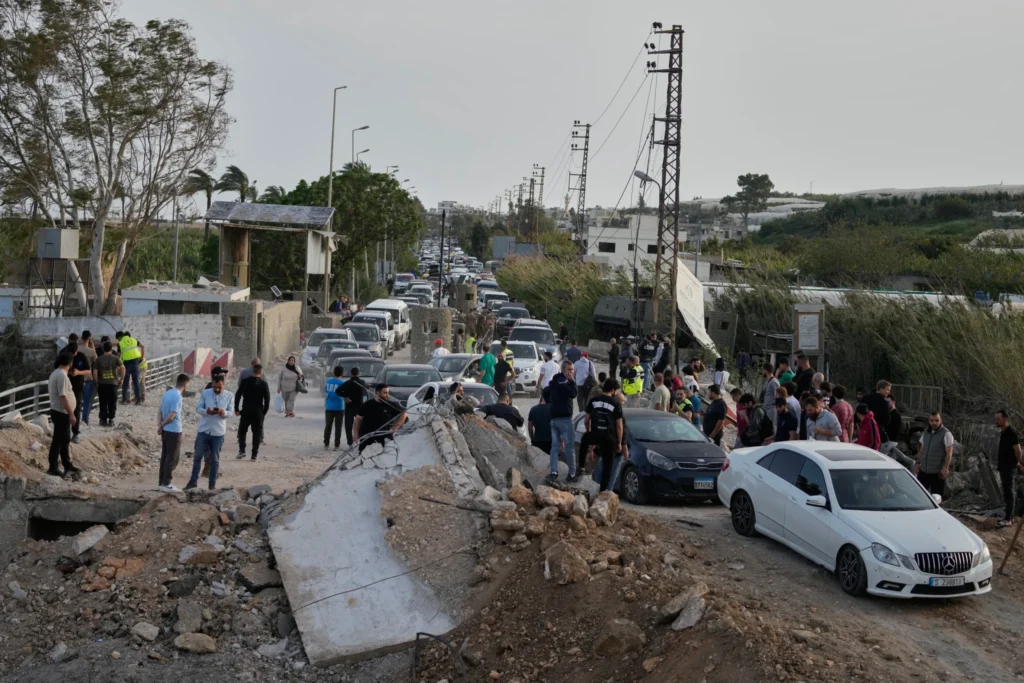
The Lebanon truce families return home moment is unfolding in scenes of both relief and devastation, as thousands begin the journey back after weeks of war.
At dawn, traffic stretched for miles near the Litani River. Cars overloaded with mattresses, suitcases and salvaged belongings crept toward southern villages. Many had waited weeks for this moment.
Now, under a fragile ceasefire, they are going back — even if what awaits them is uncertain.
A fragile calm settles over Lebanon
The truce between Israel and Hezbollah, brokered by the United States, appeared to hold through the night.
In Beirut, gunfire and fireworks marked the pause in fighting. For many, it felt like the first moment to breathe after weeks of airstrikes and displacement.
But the calm remains fragile.
Israeli warnings not to return to parts of southern Lebanon, along with continued military positioning, have cast doubt on how long the ceasefire will last.
Lebanon truce families return home to destruction
In towns like Jibsheet and areas south of Tyre, residents found entire neighborhoods reduced to rubble.
Collapsed buildings, broken roads and exposed wires now define what used to be homes.
“I feel free being back,” one resident said. “But everything is destroyed.”
Others were more cautious. Some returned only briefly to assess damage. Others refused to go back at all, fearing the violence could resume at any moment.
Displacement on a massive scale
The conflict displaced more than a million people across Lebanon.
Now, that movement is reversing — slowly and unevenly.
Highways heading south remain gridlocked. Aid workers distribute water to families stuck in traffic for hours. In parts of Beirut, temporary camps are beginning to empty, though many still hesitate.
For some, returning is not yet an option.
“Our homes are gone,” said one father of six. “We need to wait until it’s safer.”
War wounds still visible
Even as the ceasefire took effect, hospitals continued receiving casualties from late airstrikes.
In Nabatiyeh, one of the hardest-hit areas, doctors described one of the heaviest bombardment days just hours before the truce began.
Survivors now face a different reality: rebuilding their lives from ruins.
Entire families have been left homeless. Critical infrastructure — from bridges to emergency facilities — has been severely damaged.
Uncertainty clouds the path forward
Despite the pause in fighting, deeper tensions remain unresolved.
Israel has signaled it will maintain a military presence in parts of southern Lebanon. Hezbollah, meanwhile, has not committed to any long-term settlement.
The ceasefire may have stopped the immediate violence. But it has not resolved the conflict.
A return driven by hope — and doubt
For many families, the decision to return is not about certainty, but necessity.
They want to see what remains. They want answers.
Some plan to go back only briefly. Others are determined to rebuild, no matter the risks.
As one resident stuck in traffic said, “Even if we wait for hours, we need to know what happened to our home.”
Author: Staff Writer | Edited for WTFwire.com | SOURCE: AP News
: 16