Gerrymandering in the US: legal but controversial

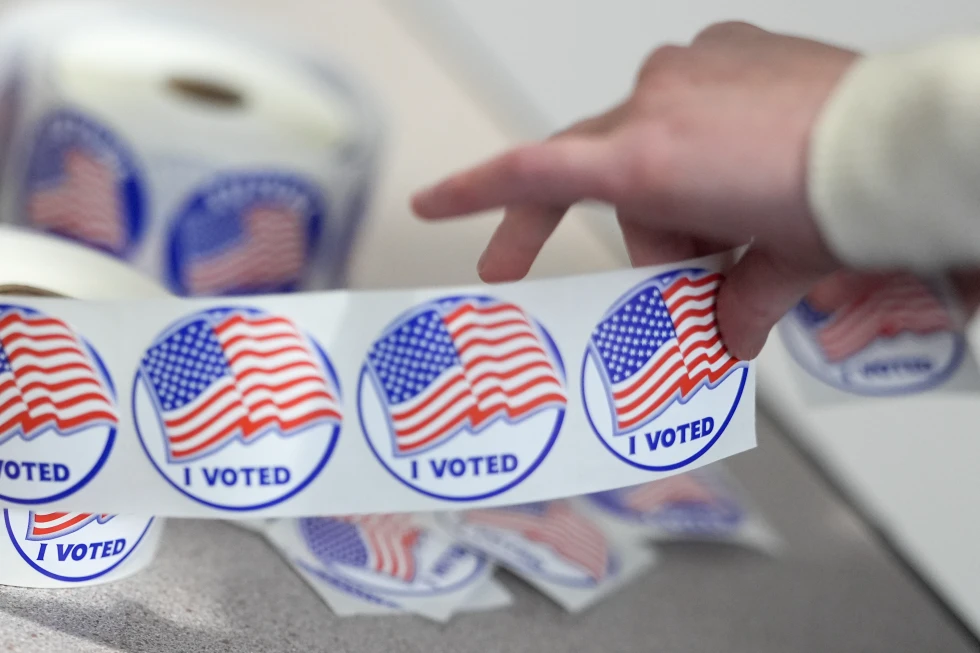
Gerrymandering US legal explained remains a central question in American politics, as states increasingly redraw voting districts ahead of critical elections.
Despite growing criticism, the practice is largely legal under current U.S. law.
What is gerrymandering?
Gerrymandering refers to the manipulation of electoral district boundaries to favor a political party.
The term dates back to 1812, when Elbridge Gerry approved a district map in Massachusetts that resembled a salamander. Since then, the concept has evolved into a key political strategy.
Today, advances in data and mapping technology have made it easier for lawmakers to design districts with precise political advantages.
How districts are drawn
In most states, legislatures control the redistricting process, often with approval from the governor.
Districts must be updated every 10 years following the census to ensure equal population representation. However, some states allow maps to be redrawn more frequently.
Others attempt to limit political influence by assigning the process to independent or bipartisan commissions.
How gerrymandering works
There are two primary tactics:
- Cracking: spreading opposition voters across multiple districts to dilute their influence
- Packing: concentrating opposition voters into a few districts to reduce their impact elsewhere
When one party controls both the legislature and governor’s office, it can often implement these strategies with little resistance.
As a result, electoral outcomes can be shaped long before voters cast their ballots.
Is gerrymandering legal?
Under federal law, partisan gerrymandering is not considered unconstitutional.
In a landmark 2019 ruling, the U.S. Supreme Court determined that federal courts cannot rule on whether district maps are unfairly partisan.
The decision effectively left the issue to state courts and legislatures.
Some states have attempted to challenge gerrymandering under their own constitutions. However, results have been mixed, with several courts declining to intervene.
Why the issue is intensifying
The gerrymandering US legal explained debate has gained urgency as political control of Congress remains tightly contested.
Following the 2024 elections, Republicans secured a narrow majority in the House. In response, Donald Trump encouraged redistricting efforts in states like Texas to strengthen that advantage.
At the same time, Democrats in states such as California have pursued their own redistricting strategies.
This back-and-forth has triggered a broader national trend, with more states revisiting district maps to gain political leverage.
What the data shows
Analysts have developed methods to measure the political impact of gerrymandering.
Historically, Republicans gained a significant advantage after the 2010 census. However, Democrats have since narrowed that gap through their own redistricting efforts.
Recent data suggests that while many districts show partisan bias, overall election results still broadly reflect national vote totals.
This indicates that gerrymandering influences outcomes—but does not fully determine them.
A legal practice with political consequences
Ultimately, the gerrymandering US legal explained issue highlights a tension at the heart of American democracy.
The practice is legal and widely used. Yet it raises ongoing concerns about fairness, representation, and voter influence.
As the 2026 elections approach, redistricting battles are likely to intensify—shaping not just political maps, but the balance of power in Washington.
Author: Staff Writer | Edited for WTFwire.com | SOURCE: AP News
: 65