El-Sayed Leads Stevens in Too-Close-to-Call Michigan Senate Primary

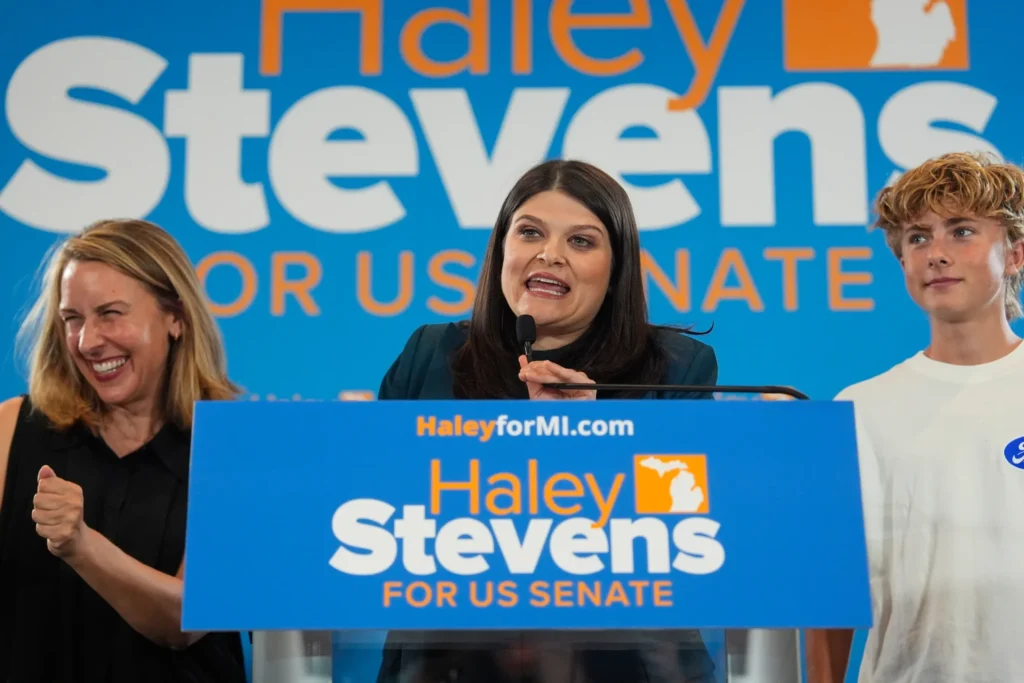
Progressive candidate Abdul El-Sayed held a narrow lead over moderate Representative Haley Stevens on Wednesday morning in Michigan’s Democratic Senate primary, with the contest still too close to call hours after polls closed in what became the highest-turnout non-presidential Democratic primary in Michigan in at least three decades.
A Historic Night for Turnout
More than 1.5 million ballots had been counted by 6:30 a.m. ET Wednesday — shattering the previous turnout record for any non-presidential Democratic primary in Michigan going back to at least 1998. El-Sayed held a lead of approximately 19,400 votes over Stevens at that point, with the Michigan Senate primary El-Sayed Stevens 2026 result hinging on outstanding ballots concentrated in Wayne County, home to Detroit and the state’s largest but slowest-counting county.
Stevens won more than 60% of the Wayne County ballots counted after 4:45 a.m. ET, giving her a narrow mathematical path to close the gap. A third candidate, state Senator Mallory McMorrow — who dropped out of the race July 5 but remained on the ballot — was drawing approximately 4% of the vote.
What the Early Returns Showed
El-Sayed led in Kent County, Macomb County, and Washtenaw County — his home county and home to the University of Michigan. Stevens led in Oakland County, Wayne County, Saginaw County, and Genesee County based on early data. The split reflected the race’s fundamental dynamic: El-Sayed performing strongly in college-educated and younger communities, Stevens holding her ground in the blue-collar industrial corridor and traditional Democratic strongholds around Detroit.
What the Race Represents
The Michigan contest is the most expensive Democratic Senate primary in US history, with outside spending — including nearly $30 million from AIPAC-affiliated groups supporting Stevens — dwarfing previous primary spending records. It has been widely watched as a test of whether the progressive movement can win a competitive swing state Senate nomination against the full weight of the Democratic establishment.
El-Sayed, a physician and former public health official, ran on Medicare for All, campaign finance reform, and abolishing ICE, drawing endorsements from Senator Bernie Sanders, Representative Alexandria Ocasio-Cortez, and the United Auto Workers union. He raised his own formidable small-dollar fundraising operation and drew packed rallies across the state.
Stevens, a four-term congresswoman from the Detroit suburbs, had the backing of Senate Minority Leader Chuck Schumer, former Senator Debbie Stabenow, and much of Michigan’s Democratic establishment. She ran on her record of winning difficult races and argued she was the strongest candidate to defeat Republican Mike Rogers in November — in a state that went for Trump in 2024 and where Democrats have not won a Senate race since 1994.
What Comes Next
The winner will face a compressed sprint to November 3 against Rogers, who came within 20,000 votes of winning Michigan’s Senate seat in 2024. Democrats view Michigan as essential to any path back to a Senate majority. A prolonged primary fight, particularly one that ends without a clear early winner, risks leaving the eventual nominee with less time and a divided coalition to unify heading into the general election.
Stevens addressed supporters at her hotel Tuesday night, urging them to “get some sleep — or some coffee” as the count continued. El-Sayed spoke to his supporters at his watch party in Detroit early Wednesday, addressing the crowd while votes remained outstanding statewide.
Author: Staff Writer | Edited for WTFwire.com | SOURCE: AP News
: 326