Takeaways From Tuesday’s Elections: Democratic Division on Display

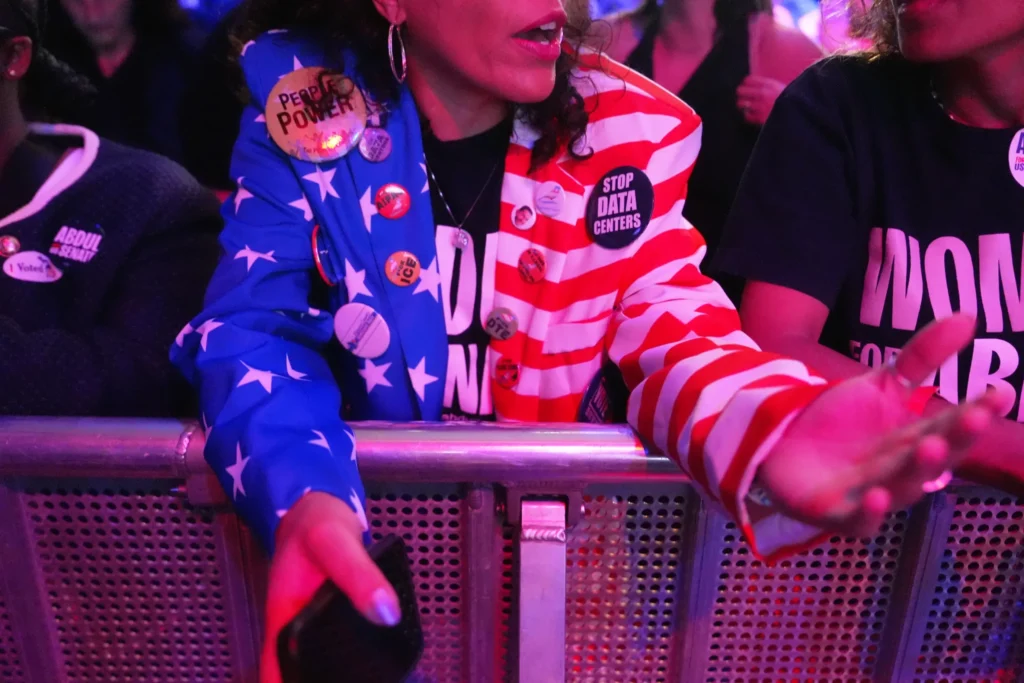
Abdul El-Sayed won Michigan’s Democratic Senate primary Tuesday night, defeating Representative Haley Stevens in one of the most expensive and closely watched Democratic primaries in US history — a result that will reshape the party’s midterm strategy and test whether the progressive left can win in a state that went for Donald Trump in 2024.
A Landmark Win for the Progressive Movement
El-Sayed wins Michigan Senate primary 2026 takeaways begin with the sheer scale of what he overcame. He defeated a well-funded establishment candidate backed by Senate Minority Leader Chuck Schumer, popular Governor Gretchen Whitmer, retiring Senator Gary Peters, and much of Michigan’s Democratic apparatus — while facing nearly $65 million in outside spending, including more than $30 million from AIPAC-affiliated groups backing Stevens.
The result follows a string of progressive primary victories earlier this cycle that have ousted incumbent-backed candidates, but Michigan — a battleground state Trump carried in 2024 — represents a qualitatively different test. El-Sayed argued throughout the campaign that his margin of victory proves the progressive playbook can work in purple terrain, not just safe blue districts.
“If you need a $60 million crutch, you probably can’t be elected on your own terms,” El-Sayed said at a debate last week in Detroit.
Massive Turnout Rewrote the Playbook
More than 1.5 million ballots were cast in the Democratic primary — a record for any non-presidential Democratic primary in Michigan in at least 28 years. The turnout surge is a significant data point heading into November, suggesting elevated Democratic engagement in a state the party must hold to have any path to a Senate majority.
El-Sayed drove outsized turnout among younger voters, college-educated precincts, and Arab-American communities — groups that had expressed frustration with the Democratic establishment over its handling of the Gaza war. His strong showing in Macomb County, a traditional blue-collar Democratic stronghold, also suggested he built a broader coalition than his critics anticipated.
AIPAC’s Spending Did Not Deliver
United Democracy Project, the AIPAC-affiliated super PAC, spent more than $30 million backing Stevens and reserved an additional $50 million before the primary — making the race the most expensive in primary spending history for a Senate contest at this stage. The investment failed to prevent El-Sayed’s nomination.
The result will intensify debate within the Democratic Party about the role of pro-Israel money in party primaries, particularly in Michigan, which has a significant Arab-American and Muslim population. El-Sayed had campaigned explicitly on rejecting corporate PAC money and described Israel’s military campaign in Gaza as a genocide — a position the Stevens campaign and AIPAC vigorously opposed.
McMorrow’s 4% Mattered — And She United Behind El-Sayed Quickly
State Senator Mallory McMorrow, who dropped out of the race July 5 but remained on the ballot, drew approximately 4% of the vote. McMorrow issued her endorsement for El-Sayed in the early hours of Wednesday morning, calling for party unity ahead of November.
“Take it from me — this was a brutal primary. But whatever differences there were between the candidates, we are united,” McMorrow said.
Republicans Like Their Chances in November
The Republican National Senatorial Committee made no secret of its preference for El-Sayed as the general election opponent, going so far as to produce a digital ad during the primary highlighting his progressive credentials and Bernie Sanders endorsement — widely interpreted as an attempt to elevate a candidate Republicans believed would be easier to defeat.
El-Sayed will face former Representative Mike Rogers, who came within 20,000 votes of winning Michigan’s Senate seat in 2024. Pre-primary polling showed El-Sayed trailing Rogers in a hypothetical general election matchup, while Stevens ran closer to even. The winner in November will help determine whether Republicans retain their narrow Senate majority.
Author: Staff Writer | Edited for WTFwire.com | SOURCE: AP News
: 275