RFK Jr. Extends Hantavirus Quarantine Despite CDC Recommendation

A woman exposed to a rare hantavirus outbreak aboard a cruise ship remains under federal quarantine in Nebraska after U.S. Health and Human Services Secretary Robert F. Kennedy Jr. overruled a recommendation from a federal health reviewer that she be allowed to complete monitoring at home.
Angela Perryman, a passenger on the MV Hondius cruise ship, says she feels trapped in what she describes as a political dispute between federal and state authorities. Her quarantine is scheduled to continue through June 21.
Passenger Remains in Federal Quarantine
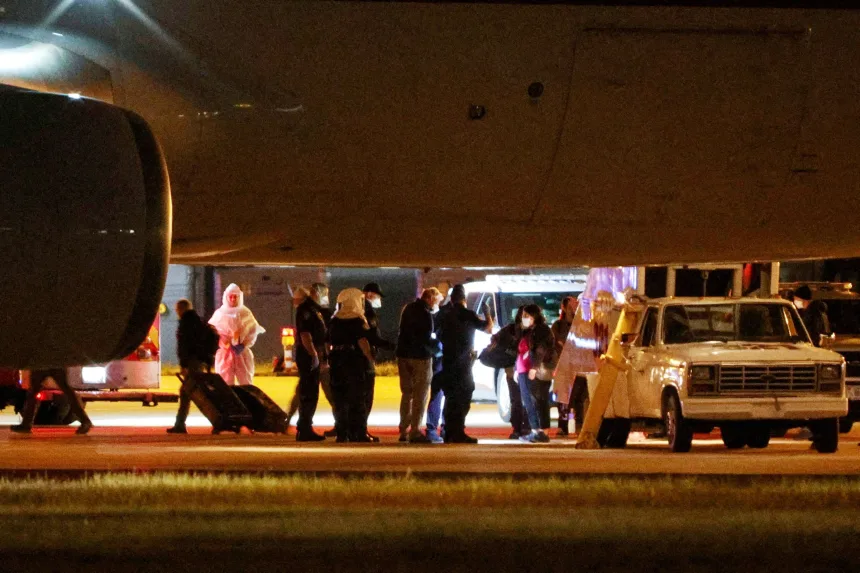
Perryman is one of 18 American passengers who were transferred to the National Quarantine Unit at Nebraska Medical Center in early May after exposure to a rare strain of hantavirus aboard the expedition vessel.
While some passengers chose to remain voluntarily at the facility, most were allowed to return home after state health departments agreed to conduct daily monitoring and maintain continuous oversight through the end of the quarantine period.
Ten passengers have already left the Nebraska facility under those arrangements.
Perryman, however, has not been granted the same option because Florida, her home state, declined to meet federal monitoring requirements.
On Monday, Kennedy signed an order extending her federal quarantine despite a CDC review that recommended she be permitted to finish isolation at home.
“At this point, it’s just a state-federal spat, and I’m just a hostage,” Perryman told CNN.
CDC Reviewer Recommended Home Monitoring
The extended quarantine order underwent a medical review led by Dr. Michael Bell, a quarantine medical reviewer with the Centers for Disease Control and Prevention.
Bell’s assessment included testimony from senior CDC officials responsible for emerging infectious diseases and global migration health.
In his report, Bell concluded that Perryman should be allowed to return to Florida as long as state authorities accepted responsibility for monitoring her health and ensuring access to medical care if needed.
Florida proposed once-daily telehealth check-ins rather than the continuous monitoring requested by federal officials.
Bell determined that this alternative would still satisfy public health goals.
“In my professional judgment, this less restrictive alternative is adequate to protect public health,” Bell wrote in his findings.
He also concluded that federal restrictions imposed on Perryman were not the least restrictive measures available.
Kennedy Rejects CDC Recommendation
Despite the review, Kennedy ruled that federal quarantine requirements should remain in place.
“Having considered the medical reviewer’s findings and recommendation and the evidence in the administrative record, I find that the requirements for Federal quarantine continue to be met,” Kennedy wrote in the order.
He further stated that maintaining the quarantine remained necessary to protect public health.
The order did not directly address Bell’s detailed recommendations.
A spokesperson for the Department of Health and Human Services said Kennedy considered the medical review before making his decision and emphasized concerns about the absence of what federal officials consider adequate home monitoring arrangements.
“In the absence of proper home monitoring by state authorities, the Administration’s quarantine order is necessary to ensure both Ms. Perryman’s and her community’s wellbeing,” HHS spokesperson Courtney Spencer said.
Passenger Says Trust Has Been Broken
Perryman says the experience has left her with little confidence in public health authorities.
She claims officials initially indicated she would likely be able to return home after several weeks of voluntary quarantine and says she spent approximately $4,000 renting a private home in Florida where she planned to complete the remainder of the monitoring period.
According to Perryman, the repeated changes in expectations have damaged her trust in federal health agencies.
“If there was a scientific reason for this, if I could see that, yes, this actually does further public health, I would have agreed,” she said.
She described conditions at the quarantine facility as highly restrictive, with daily temperature checks, meal deliveries by staff wearing protective equipment and approximately one hour of outdoor access each day.
“I can check my temperature in a living room just as easily as I can check my temperature in whatever you call this room,” Perryman said. “It’s like solitary confinement.”
Hantavirus Outbreak Triggered Federal Response
The quarantine stems from a hantavirus outbreak linked to the MV Hondius cruise ship earlier this year.
Hantaviruses are rare but potentially serious viruses typically spread through contact with infected rodents or their droppings. Some strains can cause severe respiratory illness.
Federal officials established the quarantine measures after concerns that passengers exposed during the voyage could develop symptoms after returning to the United States.
The quarantine period for exposed passengers is set to end on June 21, when remaining restrictions are expected to expire unless additional action is taken by health authorities.
Author: Staff Writer | Edited for WTFwire.com | SOURCE: CNN
: 32