Spain Deploys Military to Ceuta as Thousands Cross From Morocco

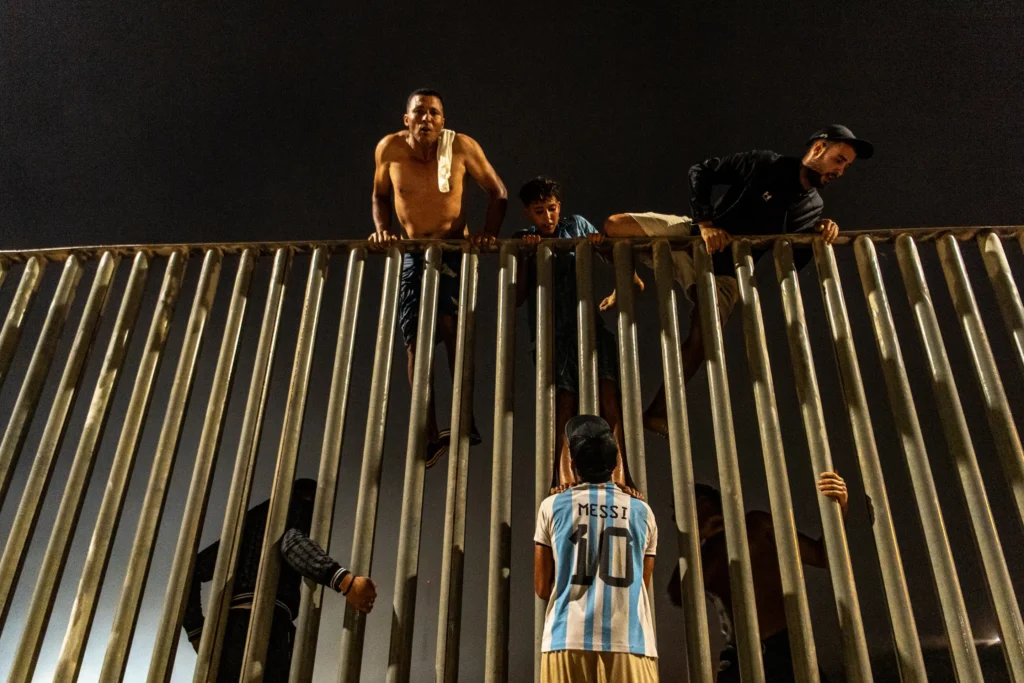
Spain deployed its military to the North African enclave of Ceuta on Thursday after thousands of migrants swam or used inflatable devices to cross from Morocco, overwhelming Civil Guard officers and prompting Prime Minister Pedro Sánchez to vow an immediate response. Spain and Morocco subsequently agreed to expedite the return of those who entered illegally.
Scale of the Crossing
Migrants entered Ceuta through Tarajal beach, with most swimming around the breakwater at the border’s edge. Left on the sand afterward were flippers, wetsuits, and flotation devices. Most of those arriving are young men, though women and children have also been among recent crossings. Ceuta’s regional president, Juan Jesús Vivas, said the average has been around 300 sea arrivals per day, with the figure continuing to rise. More than 60 people have died attempting the crossing over the past 12 months.
A Guardia Civil spokesperson told Reuters the surge followed a recent Spanish Supreme Court ruling that people who enter by swimming — without breaking through a physical border fence — cannot be immediately returned without an individual case being opened. “It has been a slow trickle since the Supreme Court’s ruling, but today has been an explosion,” the spokesperson said.
Sánchez Vows Response, Emergency Declaration Denied
Sánchez said his government was “fully committed to providing an immediate response to the situation in Ceuta” and pledged to work with Moroccan authorities to restore normalcy as quickly as possible. Interior Minister Fernando Grande-Marlaska traveled to Ceuta to meet local officials and assess the situation firsthand.
Ceuta’s regional president Vivas, however, demanded the Spanish government take more drastic action — declaring a national emergency and assuming direct control of the crisis response, along with additional resources and funding to address what he described as a collapse of local services. The Interior Ministry rejected the emergency declaration request, citing Spanish civil protection regulations that do not classify migration flows as a risk covered under the National Civil Protection System.
Spain and Morocco Agree on Returns, Morocco Denies Complicity
Spain and Morocco reached an agreement Thursday to step up coordination between both governments and review border procedures in order to accelerate the return of migrants who entered Ceuta illegally. No specific timetable was set for implementing the measures.
Morocco’s embassy in Madrid attributed the mass arrivals to criminal human trafficking networks and described cooperation with Spain on migration as exemplary. Moroccan diplomatic sources insisted the crossings did not reflect any intentional relaxation of border controls by Rabat.
Civil Guard sources in Ceuta told a different story. They said assistance from the Moroccan Gendarmerie on the ground had been limited and insufficient to contain the border pressure, despite the Spanish government’s assertion that active Moroccan cooperation was underway.
EU Offers Support, Italy Floats Schengen Suspension
The Ceuta migrants Morocco Spain military deployment crisis drew immediate reaction from European partners. The European Commission said it had offered operational support through Frontex, the EU border agency. EU Migration Commissioner Magnus Brunner said he was in constant contact with Spanish authorities, stressing that protecting the EU’s external borders remained “a crucial part of our efforts to fight illegal migration.”
Italian Prime Minister Giorgia Meloni and Foreign Minister Antonio Tajani both called for extraordinary measures, with Rome floating the possibility of suspending the Schengen free movement agreement with Spain — a move that would effectively reimpose internal EU border controls. The scenes drew widespread attention on social media, including comments from Elon Musk, who described the surge as “absolutely an invasion.”
Ceuta and its fellow Spanish enclave Melilla represent the European Union’s only land borders with Africa and have historically been focal points for migration pressure from sub-Saharan Africa and Morocco.
Author: Staff Writer | Edited for WTFwire.com | SOURCE: AP News
: 310