EU sanctions Iran over Strait of Hormuz disruptions amid rising maritime tensions


The EU sanctions Iran Hormuz Strait policy has escalated tensions after the European Union imposed new measures targeting Iranian individuals and a Revolutionary Guard Corps naval unit over alleged interference with maritime traffic in one of the world’s most critical shipping lanes.
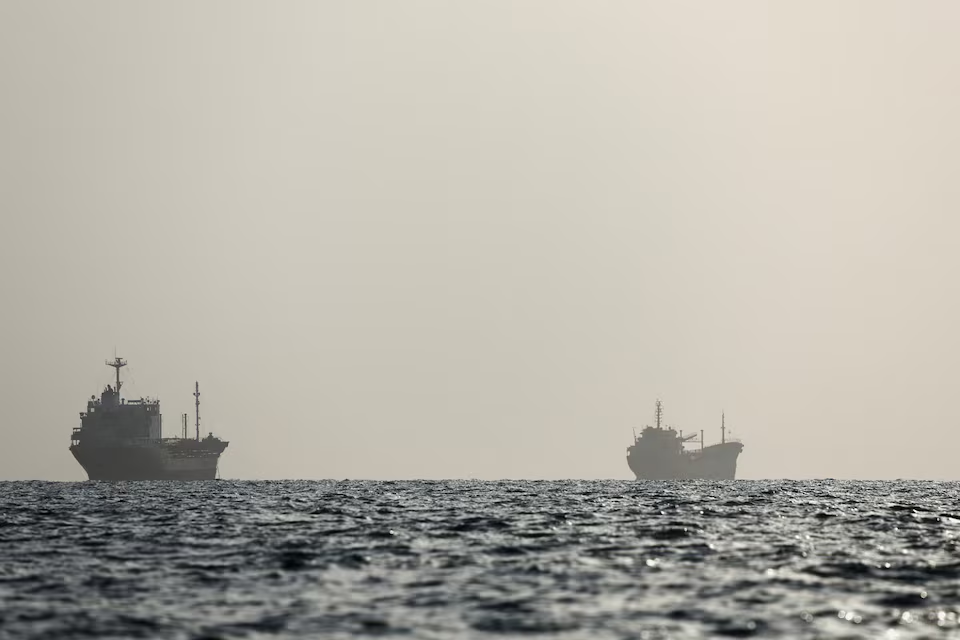
The Strait of Hormuz handles roughly one-fifth of global oil shipments, making it a key strategic chokepoint for global energy security.
First use of new EU maritime sanctions powers
The European Union confirmed on Monday that it has sanctioned two Iranian individuals and a unit of the Islamic Revolutionary Guard Corps (IRGC) Navy.
This marks the first time the EU has used its newly established “freedom of navigation” sanctions framework.
Entities added to the sanctions list include:
- The Hormozgan Provincial Command of the IRGC Navy
- Mohammad Akbarzadeh, IRGC Navy deputy commander for political affairs
- Hamid Hosseini, linked to Iran’s oil and petrochemical export sector
EU officials said the measures were taken in response to actions that threaten safe and open maritime passage through the Strait of Hormuz.
Strategic importance of the Strait of Hormuz
The Strait of Hormuz is one of the most important global energy corridors, with a significant portion of global oil and liquefied natural gas passing through it daily.
Any disruption to traffic in the region can have immediate consequences for:
- Global oil prices
- Shipping insurance costs
- Energy supply stability
- International trade flows
EU officials warned that continued interference in maritime navigation could trigger additional sanctions.
Iran rejects sanctions as “political”
Iran strongly criticized the EU decision, calling it politically motivated.
Iran’s Deputy Foreign Minister Kazem Gharibabadi said the bloc’s move had “no value” and accused European leaders of hypocrisy. He reaffirmed Tehran’s stance that it would continue asserting control over its territorial waters and strategic interests.
Iran has previously taken a hard line on the Strait of Hormuz, especially following heightened regional tensions linked to U.S. and Israeli military actions.
EU signals readiness for further action
EU foreign policy chief Kaja Kallas said the sanctions reflect growing concern over maritime security in the region.
She emphasized that the EU is prepared to apply its new sanctions framework again if freedom of navigation continues to be threatened.
Officials framed the decision as part of a broader effort to protect global trade routes and energy supply stability amid rising geopolitical instability in the Middle East.
The EU sanctions Iran Hormuz Strait decision marks a new phase in Western pressure on Tehran, signaling that disruptions to global shipping lanes will now trigger coordinated economic penalties from the European Union.
Author: Staff Writer | Edited for WTFwire.com | SOURCE: Reuters
: 387