Strait of Hormuz Talks Advance as Iran Slams Sanctions

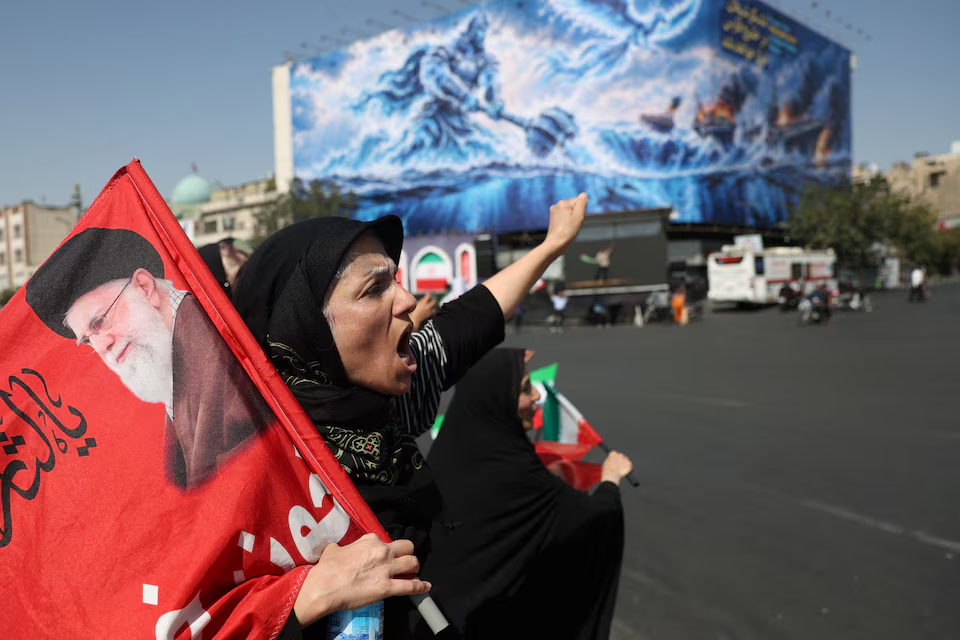
Strait of Hormuz diplomacy gained momentum Friday, as mediators pressed to reopen the vital shipping route even as Iran branded new U.S. sanctions “state terrorism” amid fears of domestic unrest.
Iran condemns new US sanctions
With the war at the six-month mark and negotiations stalled, President Donald Trump’s administration has stepped up efforts to cripple Iran financially in what it has called an “economic D-Day.” The sanctions drive adds to the toll on Iran’s economy, where annual inflation hit 66% last month, while the standoff over the Strait of Hormuz remains the conflict’s biggest unresolved flashpoint.
Washington has warned countries to cut business ties with Iran or face secondary sanctions, though the Treasury Department stopped short of imposing penalties on those countries directly. Iran’s Foreign Ministry said all nations are obligated under international law to refrain from implementing U.S. sanctions against Tehran, adding that compliance would amount to complicity in imposing “one state’s unlawful will on independent states.” It called the new measures a “crime against humanity” that endangers the health and livelihoods of millions of civilians.
Khamenei warns against actions that weaken unity
Supreme Leader Ayatollah Mojtaba Khamenei, who has not appeared publicly since being injured in the February 28 attack that killed his father, said in a written statement that he had banned officials from “committing anything that harms social cohesion.” He urged authorities to avoid “discouraging statements that weaken national and public motivation,” reflecting concern among Iran’s leaders that mounting economic pressure could trigger unrest. Khamenei also called on the government to address economic and livelihood challenges, including inflation, unemployment and market management.
New US measures target an Egyptian bank
A U.S. official told Reuters the Trump administration plans to restrict Egypt’s Banque Misr from operating its United Arab Emirates branches with Tehran, a move that would strip the bank’s ability to process transactions through U.S. financial institutions if finalized. Separately, Treasury officials sanctioned one entity based in Hong Kong and one person linked to Iran’s Bank Melli.
Mediators push to reopen the strait
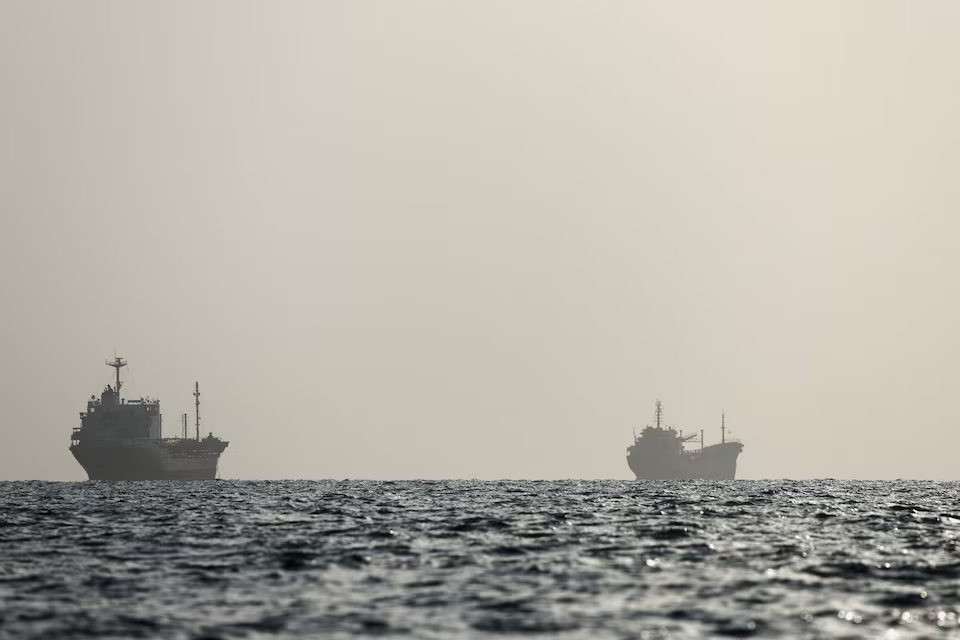
While Washington focuses on economic pressure, other parties are reviving diplomatic efforts to end the war. Mediators have pushed to reopen the Strait of Hormuz, which carried 20% of global oil supplies before the war began six months ago and remains the biggest obstacle to a peace deal.
Qatari Prime Minister Sheikh Mohammed bin Abdulrahman Al Thani said he stressed during talks with Iranian leaders in Tehran on Thursday the importance of restoring pre-war shipping conditions through the strait. Iranian Foreign Minister Abbas Araqchi called the talks with Al Thani “creative” and renewed his appeal for the U.S. to halt military and economic pressure and resume negotiations. “Putting diplomacy back on track isn’t impossible. It hinges on U.S. understanding of one simple fact: pressure doesn’t work,” Araqchi wrote on X.
Qatar and Pakistan had helped broker a memorandum of understanding in June that led to a ceasefire, but it unraveled quickly over disagreements between Iran and the U.S. regarding the strait.
Traffic remains a fraction of normal levels
After the U.S. and Israel launched the war on February 28, Iran threatened to strike any vessel transiting the strait without authorization, cutting traffic sharply and driving up oil prices. Washington insists the waterway must remain open to international shipping.
Mohsen Rezaei, secretary of Iran’s Supreme National Security Council, said Thursday that Iran is preparing a list of conditions for reopening the strait; past demands have included ending the U.S. blockade on Iranian ports, compensation and the removal of sanctions. U.S. military commanders say American forces have cleared sea mines that Iran’s Revolutionary Guard Corps had laid in the strait months earlier.
Trump has repeatedly said the strait is open, but many vessels have avoided the route due to Iranian threats, with tracking services estimating traffic at roughly 5% to 15% of normal volumes. Preliminary data released Friday showed only seven commodity vessels transited the strait Thursday, down from 17 the day before and below the 10-day average of 15.
Even so, oil prices fell Friday and were on track for a weekly drop, with analysts pointing to signs that more oil is flowing through the strait despite the diplomatic stalemate, as producers increasingly adapt to the new realities in the Gulf.
Author: Staff Writer | Edited for WTFwire.com | SOURCE: Reuters
: 317