Iran Sets Steep Conditions for Hormuz Reopening, Complicating US Deal


Iran said it is close to finalizing a new shipping lane agreement with Oman through the Strait of Hormuz — but warned the waterway will not reopen to full international traffic until the United States ends the war, withdraws its forces from the region, and compensates Tehran for the damage inflicted by five months of military strikes.
Iran-Oman Deal in Final Stages, But Not Sufficient
Iranian Foreign Minister Abbas Araghchi confirmed Sunday that negotiations with Oman on defining new navigation routes through the strait are in their “final stages,” and a US official separately told Reuters that the two countries are close to an agreement that could pave the way for restoring safe passage. The emerging framework would give Iran control over the inbound shipping lane into the Persian Gulf, with the outbound route managed through Omani waters.
But Araghchi was unequivocal that the Iran Hormuz reopening conditions US concessions Oman deal framework would not be enough on its own. “Until America corrects its behavior, the Strait of Hormuz will not be reopened,” he said. He also denied that any direct negotiations between Tehran and Washington are currently underway. “The intermediaries are still making efforts to find ways to resume negotiations,” Araghchi said.
Iran’s National Security Chief Issues Formal Demand List
Iran’s national security chief Mohammad Bagher Zolghadr spelled out Tehran’s conditions in a formal list published by state media. The demands include lifting the US naval blockade of Iranian ports, the complete and permanent cessation of military operations, withdrawal of US forces from the region, payment of financial compensation for war damages, and the release of frozen Iranian assets.
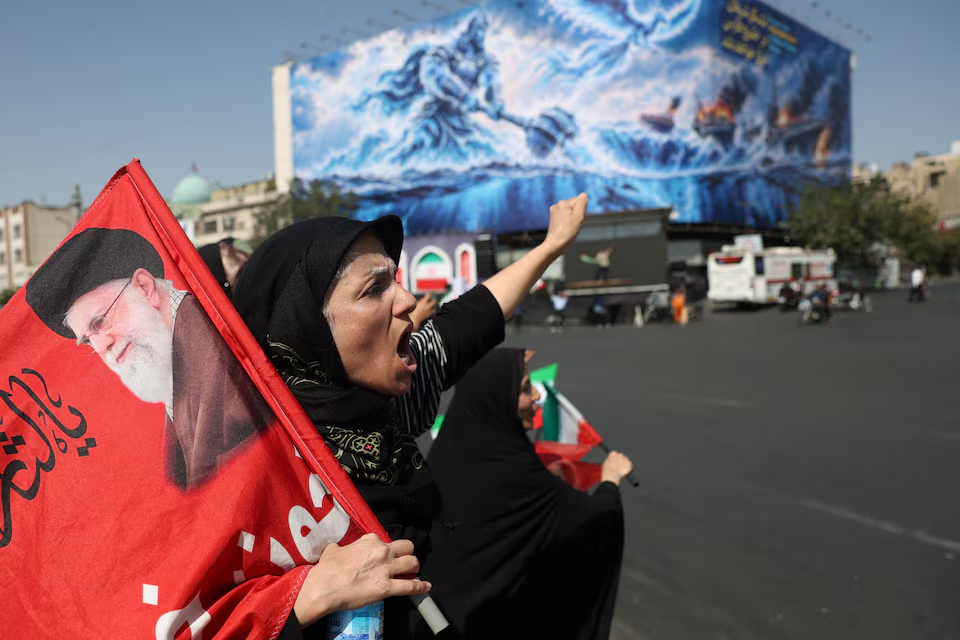
“These are the demands of the Iranian people, which they have loudly proclaimed during 160 days of steadfast presence in the field and in the streets,” Zolghadr said. The conditions amount to a comprehensive settlement of the conflict rather than a narrow technical arrangement for reopening shipping — a far more expansive ask than what Washington has indicated it is prepared to offer.
UAE Tanker Struck, Houthi Pressure Mounts
The diplomatic signals from Tehran arrived against a backdrop of continued military pressure. The United Arab Emirates said Saturday that Iran attacked a ship affiliated with its state oil company in the Strait of Hormuz. There was no immediate response from Iran, whose Revolutionary Guards have repeatedly struck vessels they said were attempting to transit the strait without Iranian authorization.
Iranian strikes on Hormuz shipping have also been coupled with increased pressure at Bab el-Mandeb, the second major energy chokepoint at the mouth of the Red Sea. Yemen’s Houthi rebels — Iran’s regional allies — declared a naval blockade on Saudi Arabia last month in retaliation for what they described as a Saudi siege on Yemen, a claim Riyadh denies.
A Deal Structure That Shippers Say Won’t Work
The proposed shipping arrangement — with Iran controlling the inbound lane into the Gulf — has already drawn skepticism from commercial operators. Shippers told Reuters the framework would not be easily workable in practice, raising questions about whether even a formal Iran-Oman agreement would restore meaningful commercial traffic to the waterway.
Before the war began February 28 with US and Israeli strikes on Iran, the Strait of Hormuz carried roughly 20 million barrels of oil per day — about one-fifth of global supply. That figure has fallen to a fraction of its prewar level, driving energy prices higher and keeping global inflation elevated.
Mojtaba Khamenei Appears in Video for the First Time
Also on Sunday, Iranian state media shared an undated video of Supreme Leader Mojtaba Khamenei — the first images of him since his appointment following the death of his father, Ayatollah Ali Khamenei, who was killed in the February 28 US-Israeli strikes that launched the conflict. The new supreme leader had not been seen publicly since reportedly being wounded in the same strike that killed his father.
Author: Staff Writer | Edited for WTFwire.com | SOURCE: Reuters
: 318