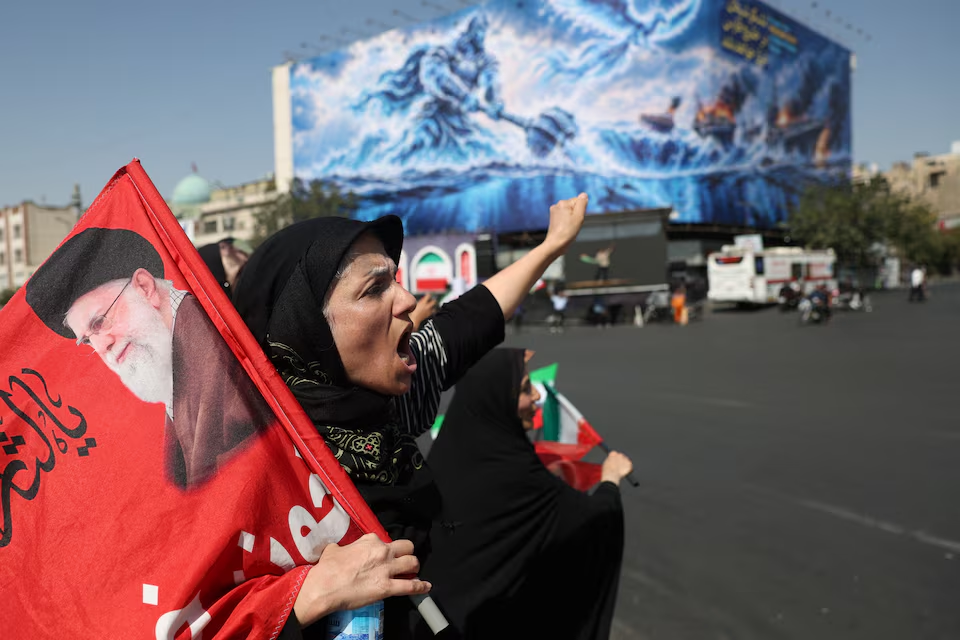
Iran leader vows to protect nuclear and missile program


DUBAI — Iran’s supreme leader vowed Thursday to defend the country’s nuclear and missile program, signaling a hardening stance as tensions with the United States persist despite a fragile ceasefire.
Mojtaba Khamenei, who assumed power after the killing of his father Ali Khamenei earlier in the war, said Iran would treat its military and nuclear capabilities as “national assets” that must be protected.
Hardline stance amid fragile ceasefire
In a statement broadcast on state television, Khamenei maintained a defiant tone, rejecting any suggestion that Iran would compromise on its strategic programs.
His remarks come as the United States, led by Donald Trump, pushes for a broader agreement aimed at stabilizing a ceasefire that has held for just three weeks.
At the same time, indirect talks continue, with Pakistan facilitating communication between the two sides.
Oil shock intensifies global pressure
The standoff is having significant global economic consequences.
Iran continues to restrict access through the Strait of Hormuz, a critical shipping route for energy supplies. Roughly one-fifth of global oil normally passes through the waterway.
Brent crude rose as high as $126 per barrel, reflecting tightening supply and ongoing uncertainty.
Meanwhile, a U.S. naval blockade has limited Iran’s ability to export oil, further escalating tensions.
US weighs new strategy
The Trump administration is considering new measures to reopen the strait.
According to officials, the proposal would:
- Maintain pressure on Iranian exports
- Coordinate with allies to secure shipping routes
- Increase costs for Iran’s attempts to control maritime traffic
The plan underscores Washington’s effort to restore energy flows without easing pressure on Tehran.
Nuclear issue remains central obstacle
Negotiations remain stalled over Iran’s nuclear program.
A recent Iranian proposal suggested postponing nuclear discussions until after the conflict ends — a position the U.S. has rejected.
Washington has insisted that any agreement must include limits on Iran’s nuclear capabilities, while Tehran maintains its program is peaceful despite enriching uranium to near weapons-grade levels.
Control of Hormuz remains key leverage
Khamenei’s comments also indicated Iran is unlikely to relinquish control over the Strait of Hormuz.
Tehran has argued that its oversight of the waterway enhances regional security, while critics — including Gulf states — view it as a direct threat to global trade.
The strait’s closure continues to impact:
- Global oil supply
- Shipping routes
- Energy prices worldwide
Tensions persist
Despite ongoing diplomatic efforts, both sides remain far apart on key issues.
Iran’s refusal to negotiate its nuclear and missile programs, combined with U.S. pressure to address them directly, suggests that a lasting agreement remains unlikely in the near term.
Iran’s leadership is signaling it will not compromise on core strategic capabilities, even as economic pressure mounts and global markets react to disruptions in energy supply.
Author: Staff Writer | Edited for WTFwire.com | SOURCE: AP News
: 327