Khamenei Lies in State as Iran Begins Week of Funeral Rites

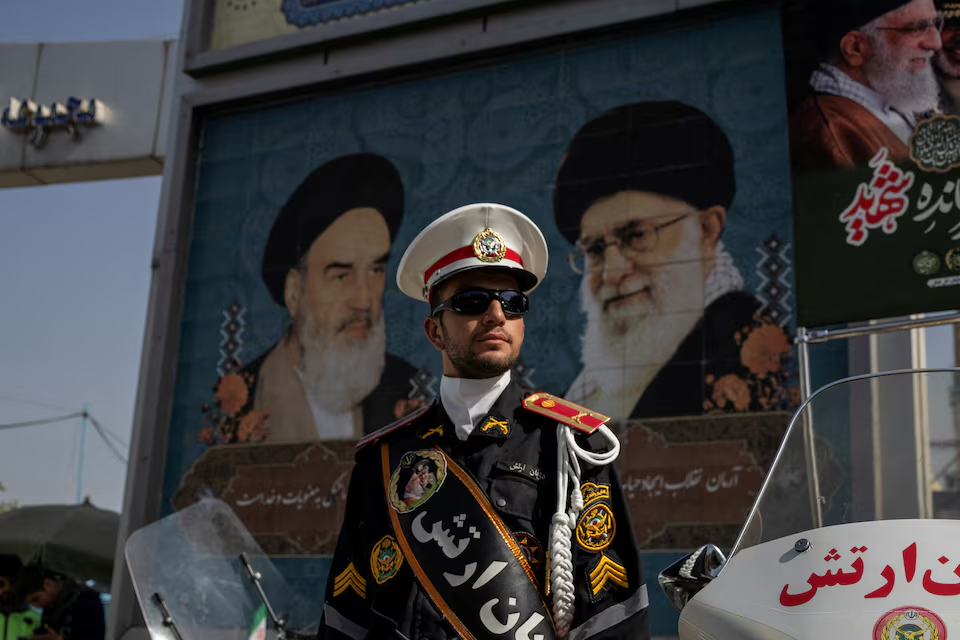
The body of Ayatollah Ali Khamenei lay in state in a vast prayer hall in Tehran on Friday as clerics, senior officials, and foreign dignitaries filed past his coffin to pay their respects to Iran’s Supreme Leader, killed in February by US and Israeli airstrikes that triggered the broader conflict now ending in an uneasy truce.
A Week of Mass Mourning Across Iran and Iraq
Iran’s government has organized a week of mass funeral processions, positioning the ceremonies as a display of public devotion to the Islamic Republic’s revolutionary ideals. Khamenei’s body is expected to travel from Tehran to the seminary city of Qom on Tuesday, then to the Iraqi Shi’ite shrine cities of Najaf and Kerbala on Wednesday, before final burial on Thursday in Mashhad — home to Iran’s holiest pilgrimage site, near the tomb of the Imam Reza.
Khamenei’s 37-year reign as Supreme Leader ended on February 28, the first day of the US-Israeli military campaign against Iran. His burial was delayed for months due to the dangers of staging a large public gathering during the war. Following last month’s interim truce, authorities moved forward with the ceremonies, offering 50% hotel discounts, converting schools, mosques, and sports halls into accommodations, and rerouting bus and rail networks to serve the procession routes.
Coffins Arrive as Sobbing Crowds Sway in Grief
Khamenei’s coffin was unveiled late Thursday to a crowd of mourners beating their chests and swaying in lamentation as flowers were thrown from the funeral bier. On Friday, the coffin — along with those of family members killed in the same strike — was laid on a white stepped dais inside the grand prayer hall built to honor his predecessor, Ayatollah Ruhollah Khomeini.
Displayed alongside Khamenei were the coffins of his daughter, son-in-law, baby granddaughter, and the wife of his son Mojtaba. A black turban and a folded chequered scarf — symbols of clerical lineage and revolutionary solidarity with Palestinians — rested on the Supreme Leader’s coffin.
Iran’s president, parliament speaker, foreign minister, and other senior officials attended Friday morning to weep and pray. A row of generals stood in salute before the coffin, including newly appointed Revolutionary Guards commander Ahmad Vahidi, making his first public appearance since taking the role amid fears of assassination.
Foreign dignitaries in attendance included former Russian President Dmitry Medvedev, Chinese National People’s Congress deputy head He Wei, Pakistani Prime Minister Shehbaz Sharif, and Iraqi President Nizar Amedi. Families of Hezbollah leader Hassan Nasrallah and senior commander Imad Mughniyeh — Lebanese allies of Iran killed in Israeli strikes — also attended the Khamenei funeral in Tehran.
A Critical Moment for the Islamic Republic
The Khamenei funeral Tehran ceremonies are unfolding at a moment of acute fragility for the Islamic Republic, even as authorities project an image of national unity and resilience. Despite surviving what the clerical leadership framed as an existential war against its most powerful adversaries, the regime faces deep internal divisions that state spectacle cannot fully conceal.
Support for the clerical leadership is described by analysts as paper thin after decades of crippling economic sanctions and a series of mass nationwide protests that security forces suppressed with increasing brutality, culminating in the killing of thousands of demonstrators in January. The new Supreme Leader, Mojtaba Khamenei — Ayatollah Khamenei’s son — has not been seen in any new images since being wounded in the strike that killed his father.
Tehran’s streets were under tight security, with military and police vehicles lining major roads and black-shirted Basij paramilitary volunteers patrolling on motorbikes. Iran warned the United States and Israel against any attacks during the funeral period.
Martyrdom and Symbolism in Shi’ite Tradition
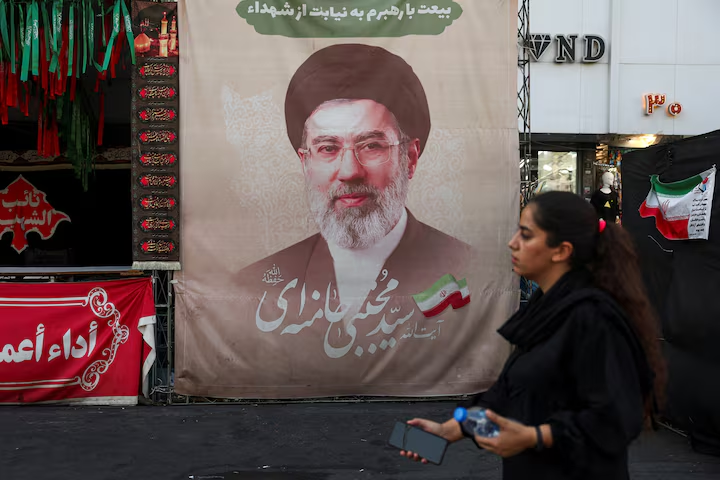
Khamenei’s death at the hands of enemy forces carries powerful resonance within Shi’ite Islamic tradition, which venerates martyrdom and mourning through elaborate processions, lamentation, and ritual acts of grief. Black funeral flags referencing the seventh-century martyrdom of Shi’ism’s third imam, Hossein, have hung over Tehran’s streets since his death.
In the clerical system of governance, Khamenei was not only head of state and leader of the revolutionary movement, but also the earthly representative of Shi’ite Islam’s 12th imam — a figure who disappeared in the ninth century and whose return is awaited by believers.
“God willing, only by avenging his blood, demanding justice for it, and ensuring that our leader’s blood is not left unavenged, can this sorrow of the people be somewhat alleviated,” said Mobina Razaaghi, an 18-year-old student from Isfahan attending the ceremonies with classmates.
Author: Staff Writer | Edited for WTFwire.com | SOURCE: Reuters
: 114