US and Iran Both Claim Hormuz Control After Heavy Exchanges

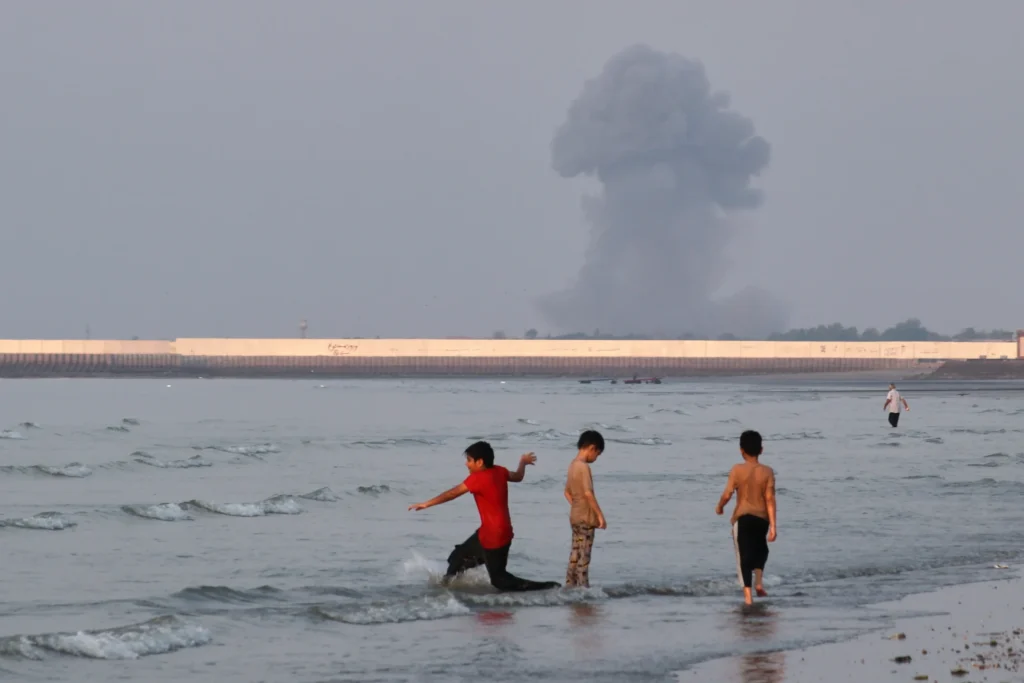
The United States and Iran each declared Monday that they control the Strait of Hormuz, following a weekend of escalating military strikes that stretched across the broader Middle East and further imperiled any diplomatic path to ending the war.
Trump: “We’re Taking Over the Strait”
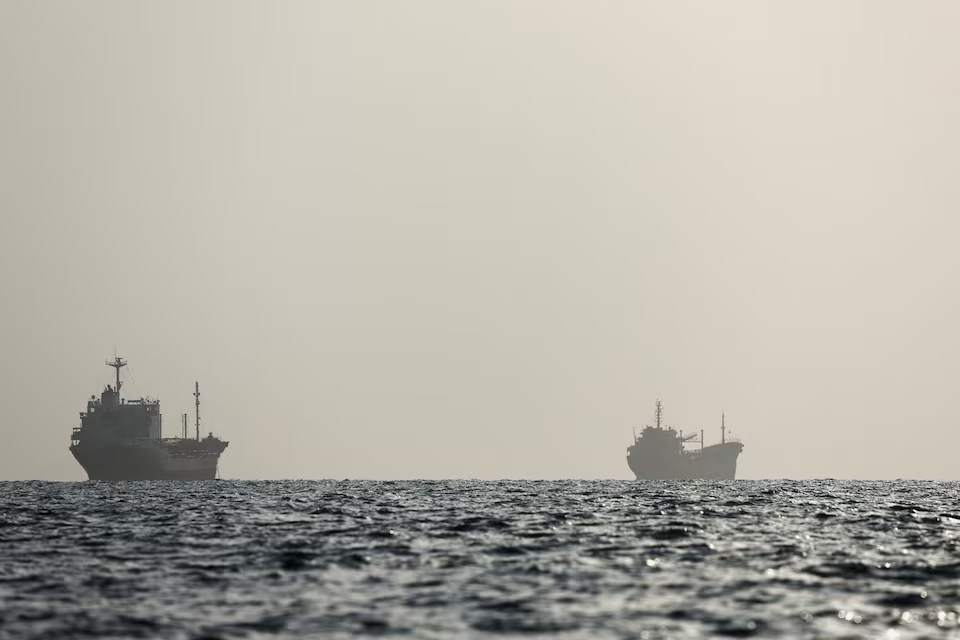
The latest cycle of violence was triggered by an Iranian attack on a container ship Sunday in the Strait of Hormuz. Calling into Fox News on Monday, President Donald Trump said “we’re taking over the Strait,” adding that “everything was agreed to” in an 11-hour meeting Sunday before Iranian negotiators called back requesting changes. He did not elaborate.
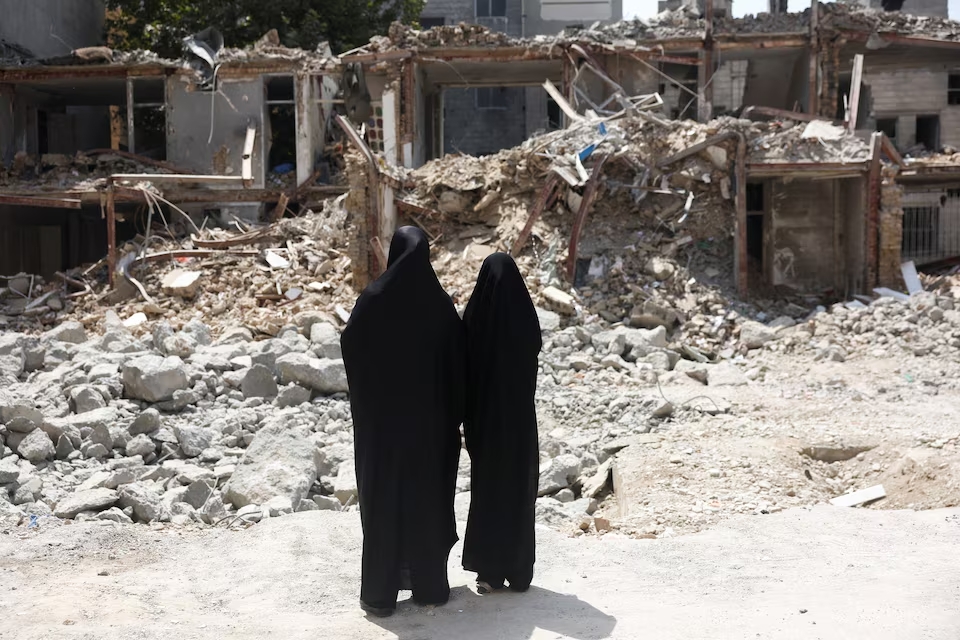
US Central Command said its forces struck dozens of targets Monday, including air defense systems, radar sites, missile and drone equipment, and small boats. Trump had said Sunday that US forces “bombed the hell out of them last night” after an earlier round of approximately 140 strikes — far heavier than either of the two previous rounds of strikes last week — targeting missile and drone launch sites, ammunition dumps, and communications equipment.
Iran’s Islamic Revolutionary Guard Corps rejected Washington’s assertion of control. “The Strait of Hormuz is our territory, and we will not allow a rogue and child-killing army from the other side of the world to continue its illegal interference in it,” the Guard said.
Attacks Spread Across the Gulf Region
Iran retaliated by striking nations across the region hosting US military forces. Missile alert sirens sounded three times Monday in Bahrain, home to the US Navy’s 5th Fleet. Kuwait said it was intercepting hostile fire. Jordan’s military said it shot down four Iranian missiles without casualties or material damage. Sunday’s attacks also reached Qatar and Oman — which shares the strait with Iran and has long served as an intermediary between Tehran and the West. Oman summoned an Iranian diplomat in protest.
In Iran, authorities reported strikes in Hormozgan, Khuzestan, and Markazi provinces, with at least two people killed, according to state-run IRNA. A base belonging to an Iranian Kurdish opposition group in Iraq’s Kurdistan region was also struck by drones Monday, though no group claimed responsibility.
Two Competing Claims Over One Waterway
Iran insists the Strait of Hormuz is its territory and that it has the right to manage shipping — and potentially charge fees — under its interpretation of last month’s interim peace deal. The US, Gulf Arab states, and the European Union reject that claim, invoking international law on freedom of navigation. EU foreign policy chief Kaja Kallas called Monday for the strait to be open as it was before the war. “Freedom of navigation has to be respected,” she said.
The US military has been supporting an alternative shipping route hugging Oman’s coastline to avoid Iranian-controlled waters. But that route has come under repeated Iranian attack, and ship-tracking site MarineTraffic.com reported that traffic along it dropped “to minimal levels” over the weekend as operators prioritized perceived security over more direct passage.
Iran’s Foreign Ministry spokesperson Esmail Baghaei blamed Washington for the region’s instability, accusing the US of systematically dismantling the June 17 memorandum of understanding clause by clause. Baghaei also said Iran would not allow inspectors from the International Atomic Energy Agency to visit Iranian nuclear sites struck by the US in 2025, where Tehran’s stockpile of highly enriched uranium is believed to remain.
Oil Prices Jump, Diplomacy Stalls
Oil prices jumped nearly 5% Monday before pulling back. US benchmark crude was trading at around $72.92 per barrel — below the nearly $120 peak reached at the height of the war but elevated from prewar levels. Markets were mixed overall.
The US and Iran are nearly halfway through the 60-day period established in the June 17 agreement during which they were supposed to negotiate a permanent end to the war and reach a deal on Iran’s nuclear program. Instead, repeated exchanges over the strait have consumed the diplomatic window and raised fears of a return to full-scale conflict.
Mediators including Pakistan, Qatar, and Egypt continued efforts to shore up the ceasefire. Pakistan’s foreign minister spoke by phone with Iran’s top diplomat, urging de-escalation from both sides. A regional official involved in mediation told the Associated Press on condition of anonymity that those efforts continued through Sunday.
New Supreme Leader Vows Revenge
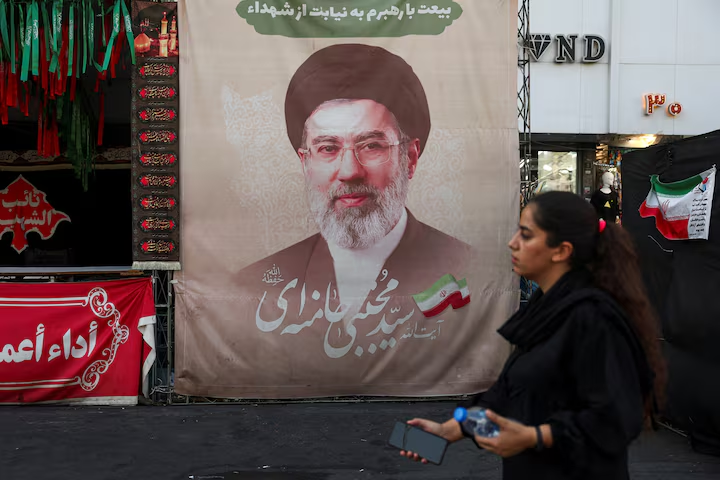
Iran’s new Supreme Leader, Ayatollah Mojtaba Khamenei — who has not appeared in public since the war began — vowed on Saturday to avenge the death of his father and predecessor, Ayatollah Ali Khamenei, who was killed in the February 28 US and Israeli strikes that launched the conflict.
Author: Staff Writer | Edited for WTFwire.com | SOURCE: AP News
: 293