Democrats’ Senate Majority Path Narrows After Platner Sexual Assault Allegation

A sexual assault allegation against Maine Democratic Senate candidate Graham Platner has thrown one of the party’s most essential pickup targets into disarray, complicating an already narrow path for Democrats to reclaim a Senate majority in November’s midterm elections.
The Stakes: Democrats Need a Net Gain of Four Seats
Republicans currently hold a 53-47 Senate majority, meaning Democrats must net at least four new seats to take control. Maine has been widely viewed as a necessary win in that math — making the crisis around Platner’s candidacy especially damaging for the party’s prospects.
Platner, who denied the allegation, now faces calls from senior Democrats — including Senate Minority Leader Chuck Schumer and Senator Bernie Sanders — to withdraw from the race. If Platner drops out by July 13, Maine Democrats have the option to place a replacement candidate on the ballot. If he remains and runs without significant national party support, he faces a steep climb against five-term Republican Senator Susan Collins, who has won statewide elections for three decades despite no Republican presidential nominee carrying Maine since 1988.
Any last-minute replacement candidate would face a dynamic similar to what Kamala Harris encountered in 2024 — entering a general election audience without the benefit of a competitive primary to build name recognition and a coalition.
Key Pickup Opportunities for Democrats
Alaska: Former Democratic Representative Mary Peltola, the first Alaska Native elected to Congress, is running against incumbent Republican Senator Dan Sullivan. Her candidacy has energized state Democrats. The August 18 primary is complicated by a separate challenger running under the same name and party affiliation as Sullivan — a situation the state Supreme Court has allowed to proceed over Sullivan’s objections.
North Carolina: Democrats secured one of their most prized recruits in former Governor Roy Cooper, who has never lost a statewide race across four terms as attorney general and two as governor. Republicans countered with Trump-endorsed Michael Whatley, former state and national GOP chairman. Cooper’s centrist positioning appeals to independents who have grown skeptical of Trump, while Whatley must simultaneously energize the Trump base and broaden his appeal beyond it — a difficult balance in a state where Democrats have won only two Senate races in three decades.
Ohio: Democrats are counting on former three-term Senator Sherrod Brown to unseat Republican incumbent Jon Husted, who was appointed to fill JD Vance’s seat after Vance became vice president. The Senate Leadership Fund has pledged $79 million to defend Husted. Brown lost his 2024 reelection bid but built his career as a champion of unions and working-class voters — a profile Democrats believe can still win in a state trending Republican.
Longshot Races That Could Surprise
Iowa: Republican Senator Joni Ernst’s retirement opens a seat Trump has carried three times. Democratic state Representative Josh Turek faces Trump-endorsed Republican Representative Ashley Hinson. Turek argues his ability to win in a red state House district proves he can appeal to independents and moderate Republicans. Hinson, a three-term incumbent, has positioned herself as an unconditional Trump ally.
Texas: State Representative James Talarico, 37, has become a national fundraising phenomenon running against scandal-laden Republican Attorney General Ken Paxton, who survived an impeachment attempt by his own party and a yearslong corruption investigation. Democrats were energized by primary turnout of roughly 2.3 million — eclipsing Republicans’ 2.2 million for the first time since the state flipped red in the 1990s. Whether Talarico can convert that enthusiasm into a winning coalition in November remains the central question.
Seats Democrats Must Hold
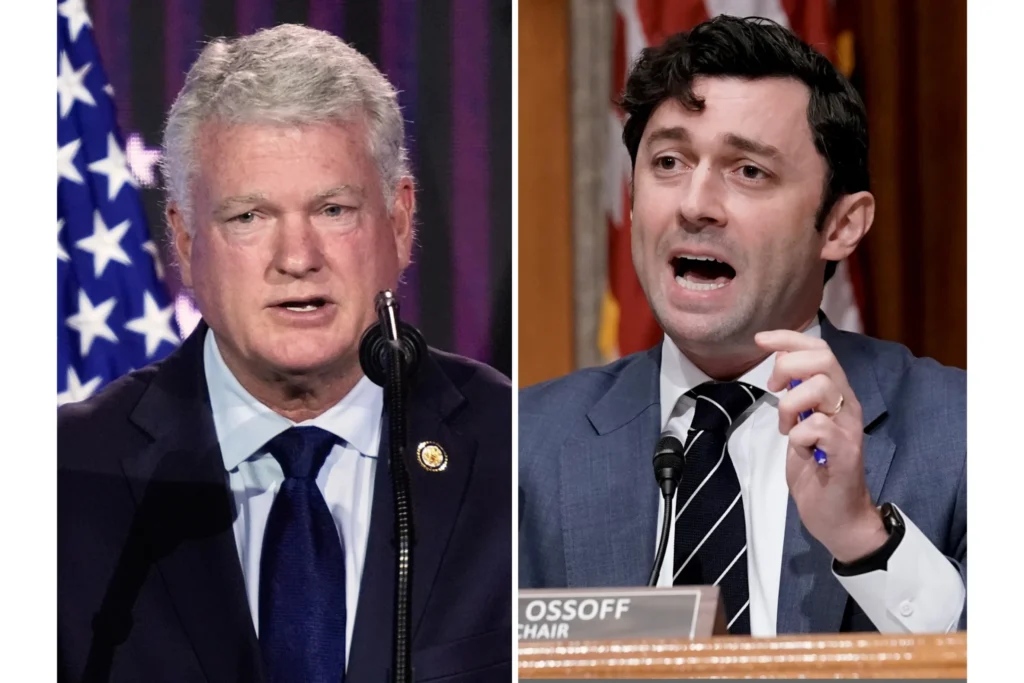
Georgia: Senator Jon Ossoff, the only Democrat running for reelection in a state Trump won in 2024, enters the general election well-funded with over $30 million cash on hand. His Republican opponent, Representative Mike Collins, has made immigration his primary line of attack, pointing to Ossoff’s earlier vote against a Republican immigration measure — though Ossoff later voted for the Laken Riley Act. Collins is also navigating a House ethics inquiry over alleged misuse of taxpayer funds.
Michigan: Senator Gary Peters’ retirement opens a battleground seat Democrats cannot afford to lose. The August 4 Democratic primary pits moderate Representative Haley Stevens, backed by Schumer, against progressive Abdul El-Sayed, backed by Sanders. Heavy outside spending — including nearly $8 million from an AIPAC-affiliated super PAC — has benefited Stevens. The Democratic winner is expected to face Republican Mike Rogers, who narrowly lost Michigan’s Senate race in 2024.
Author: Staff Writer | Edited for WTFwire.com | SOURCE: AP News
: 204