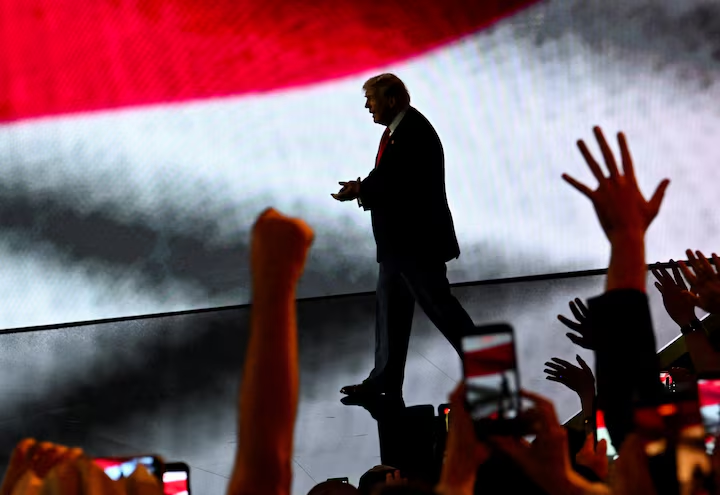
Trump Puts Election Security at Center of Republican Midterm Fight

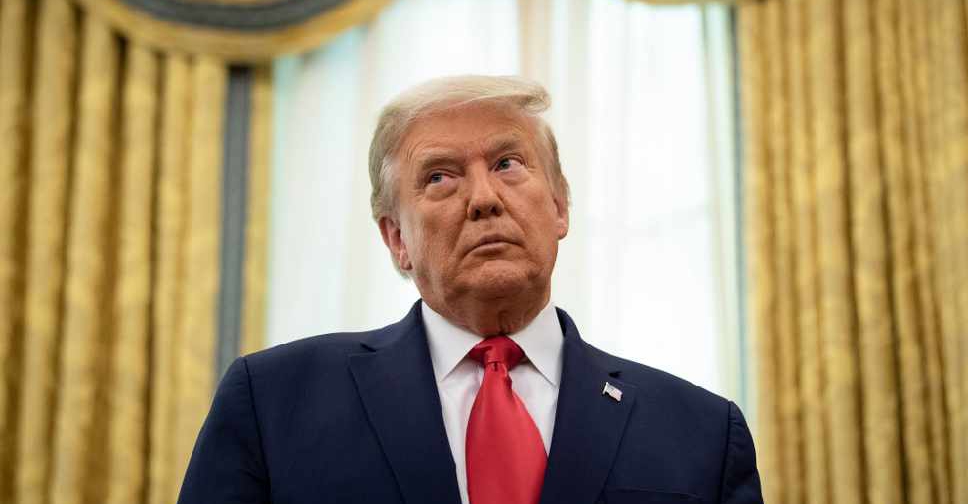
President Donald Trump delivered a prime-time speech from the White House Thursday night making election security the centerpiece of Republicans’ midterm strategy — reviving unsubstantiated claims about the 2020 election and asserting that China interfered in that contest, a claim contradicted by a US intelligence assessment conducted by his own appointee.
Claims of Chinese Interference Contradict US Intelligence
Trump told a national audience that newly declassified documents revealed “shocking vulnerabilities” in US elections and that China had illicitly acquired 220 million American voter files, including names, addresses, and other personal data. He claimed members of the intelligence community deliberately suppressed the extent of Chinese activities.
But the Trump election security midterms China interference claims were immediately challenged by the very documents he cited. An unclassified 2021 intelligence assessment — conducted under John Ratcliffe, Trump’s own director of national intelligence at the time, now his CIA director — found no indications any foreign actor attempted to or succeeded in altering “any technical aspect” of the 2020 election, including voter registrations, ballots, tabulations, or results.
A third CIA document cited by Trump stated that Beijing “does not currently intend to covertly interfere to try to sway the outcome of the election.” Another said “we assess that vote tabulation systems would be difficult to manipulate on a wide enough scale to compromise election results.” A separate CIA document Trump presented concerned Venezuela’s election, not America’s.
Two people familiar with the matter said the voter data China obtained was not confidential — voter files are routinely purchased by political consultants — and could not be used to manipulate vote totals.
China’s Foreign Ministry on Friday denied all allegations. “China has always adhered to the principle of non-interference in internal affairs and has had no interest in, nor has it ever interfered in, US elections,” said spokesperson Lin Jian, calling Trump’s claims “totally fabricated and a malicious smear.”
Democratic Senator Mark Warner of Virginia, vice chair of the Senate Intelligence Committee, dismissed the speech during it. “Trump’s shocking ‘bombshells’ about China are totally bogus. The fact is our intelligence agencies unanimously agreed that China did not even try to change a single vote in the 2020 election.”
SAVE America Act Revived, Again
Trump used the speech to renew pressure on Republicans in Congress to pass the SAVE America Act, legislation that would impose new voter ID and citizenship requirements nationwide. The bill has stalled in the Senate amid unified Democratic opposition and limited enthusiasm from some Republicans.
He also claimed the administration had found more than 275,000 non-citizens registered to vote in four states, without providing evidence that any had actually voted. Studies consistently find that non-citizens casting ballots is exceedingly rare, and previous attempts to identify such voters have sometimes mistakenly flagged naturalized citizens.
A Challenging Political Moment
The speech came as Trump and Republicans face the prospect of losing one or both chambers of Congress in November, with the president’s approval rating depressed by the unpopular Iran war and elevated energy prices. Some Republican leaders have privately urged Trump to focus on the cost of living rather than relitigating the 2020 election.
Trump briefly mentioned the Iran war, saying the US was “winning big,” before pivoting to domestic accomplishments and then spending the bulk of his remarks on election security — a topic that resonates strongly with his base. A Reuters/Ipsos poll in April found 63% of Republicans believe Trump’s claim that the 2020 election was stolen, despite numerous court rulings and vote recounts finding no evidence of large-scale fraud.
Risk to US-China Relations
The harsh language toward Beijing also carries diplomatic risk. Trump hopes to meet with Chinese President Xi Jinping in September to improve trade relations following last year’s costly trade war. Publicly accusing China of election interference, without evidence, complicates those efforts and prompted an unusually sharp public rebuttal from Beijing.
Author: Staff Writer | Edited for WTFwire.com | SOURCE: Reuters
: 324