Trump Defends Iran Deal but Warns Military Strikes Could Resume


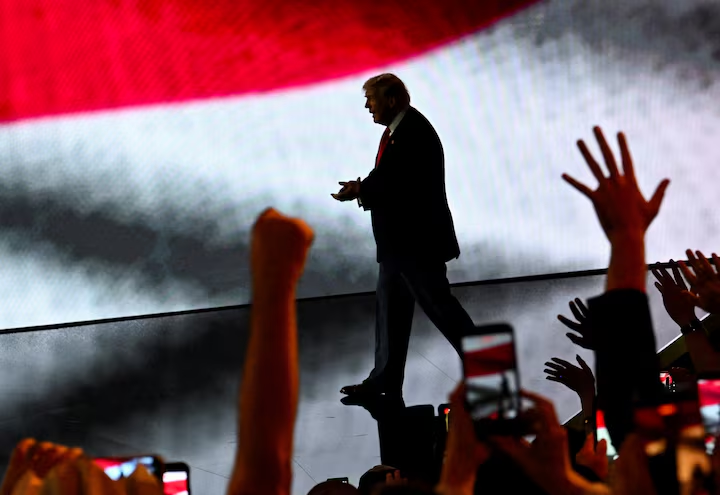
EVIAN-LES-BAINS, France — President Donald Trump defended the interim agreement reached with Iran on Wednesday, arguing that it prevented a potential global economic crisis while warning that military action could quickly resume if Tehran fails to comply with its commitments.
Speaking at the conclusion of the Group of Seven summit in France, Trump praised the agreement for helping restore stability to energy markets and reopening one of the world’s most important trade routes.
At the same time, he made clear that the ceasefire remains conditional.
“We’re going to bomb the hell out of them if they violate the agreement,” Trump told reporters. “I want them to honor the agreement.”
Trump Iran Deal Aims to Prevent Economic Disruption
The agreement follows months of conflict that began on February 28, when U.S. and Israeli forces launched strikes against Iran.
The war expanded across the region, disrupting maritime traffic through the Strait of Hormuz and pushing energy prices higher worldwide.
Trump said avoiding a prolonged economic crisis became a major factor behind the negotiations.
“The one thing I didn’t want to see is economic catastrophe,” Trump said. “If you kept this going, that could have happened.”
The Strait of Hormuz serves as a critical passage for global oil and natural gas shipments. Since the ceasefire announcement, maritime traffic has increased significantly, according to Trump.
Oil Markets React to Ceasefire Prospects
Oil prices initially declined on expectations that energy exports would normalize as the agreement takes effect.
Brent crude fell below $80 per barrel, reaching its lowest level since the conflict began.
However, prices later recovered after Trump reiterated that military action remains an option if negotiations fail.
Investors continue to weigh the possibility that tensions could escalate again during the upcoming negotiation period.
What the Agreement Includes
A senior U.S. official publicly outlined the contents of the 14-point memorandum of understanding, while emphasizing that both sides still retain the option to withdraw before a final agreement is reached.
The framework extends an existing ceasefire by another 60 days and establishes negotiations aimed at achieving a permanent settlement.
Key provisions include:
- An immediate halt to hostilities across the region.
- The reopening of the Strait of Hormuz.
- The lifting of the U.S. blockade on Iranian ports.
- Sanctions relief measures.
- A proposed $300 billion economic development plan for Iran.
- A renewed Iranian commitment not to develop nuclear weapons.
The agreement is expected to be formally signed during a ceremony in Switzerland later this week.
Critics Point to Unresolved Issues
Despite Trump’s positive assessment, critics note that several of the administration’s original war objectives remain unmet.
Iran’s government remains in power.
Its stockpile of highly enriched uranium has not been surrendered.
Its ballistic missile capabilities remain intact.
Tehran has also not agreed to end support for regional groups such as Hezbollah.
The current framework instead launches a new round of negotiations that will address those issues over the next two months.
G7 Leaders Welcome Diplomatic Progress
Leaders attending the G7 summit broadly welcomed the agreement.
In a joint statement, the United States, Canada, France, Germany, Italy, Japan and the United Kingdom reiterated concerns about Iran’s nuclear ambitions while supporting continued negotiations.
“We underline the need for the negotiation to address the threats posed by Iran in the region and beyond and ensure that they never obtain a nuclear weapon,” the statement said.
The leaders also called for an immediate ceasefire in Lebanon.
Trump and Netanyahu Remain Divided Over Lebanon
One of the most sensitive issues remains the conflict between Israel and Hezbollah in Lebanon.
Trump acknowledged ongoing disagreements with Israeli Prime Minister Benjamin Netanyahu regarding Israel’s military strategy.
“Netanyahu happens to be a good man, gets a little excited sometimes,” Trump said.
The president suggested Israel should take a more restrained approach to military operations against Hezbollah.
“We have a little dispute over Lebanon,” Trump said. “You don’t have to knock down a building every time somebody walks into it that’s from Hezbollah.”
Despite the ceasefire framework, violence continued on Wednesday.
Lebanese media reported additional Israeli airstrikes and artillery attacks in southern Lebanon. Security officials also reported drone attacks launched by Hezbollah against Israeli forces.
The Israeli military later confirmed that five soldiers were injured in two separate drone attacks.
Ordinary Iranians Remain Skeptical
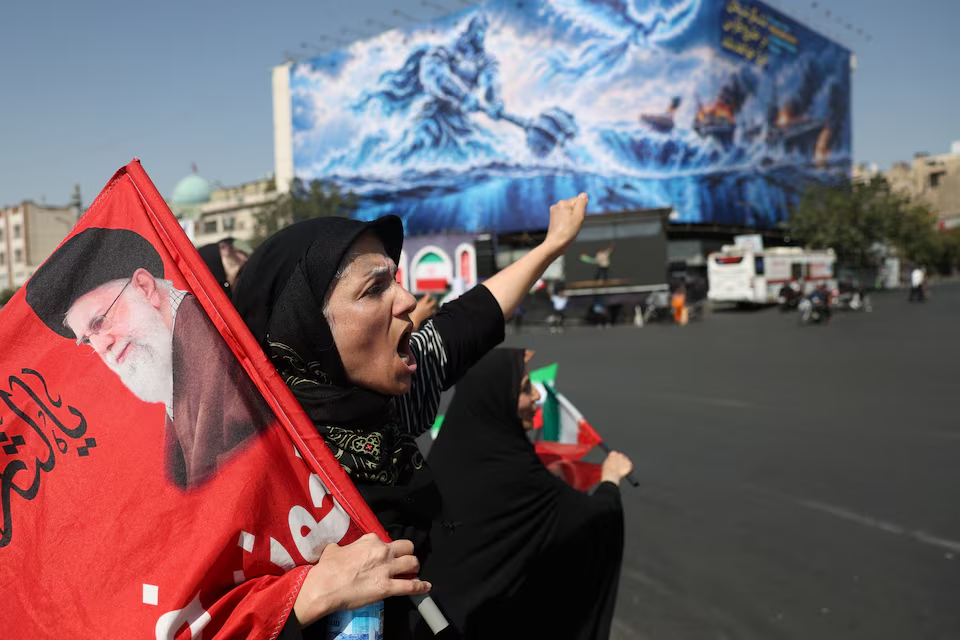
While Iranian officials have described the agreement as a diplomatic success, many citizens remain focused on economic survival after months of conflict and years of financial hardship.
Amir, a 34-year-old business owner in Isfahan, said optimism remains limited.
“I think 99% of people are in survival mode and just living day by day,” he said.
“I don’t think anybody has any hopes anymore. I don’t think anybody has any visions of what the future might look like.”
Negotiations Enter Critical Phase
The memorandum serves only as an interim framework.
Over the next 60 days, negotiators will attempt to resolve disputes involving Iran’s nuclear program, sanctions relief and regional security arrangements.
While Trump argues the agreement prevented a broader economic crisis, the success of the deal ultimately depends on whether both sides can reach a comprehensive settlement before the negotiation period expires.
For now, the ceasefire remains in place, but the president’s warnings underscore how fragile the situation remains.
Author: Staff Writer | Edited for WTFwire.com | SOURCE: Reuters
: 298