Long Island Rail Road Strike Disrupts 250,000 New York Commuters

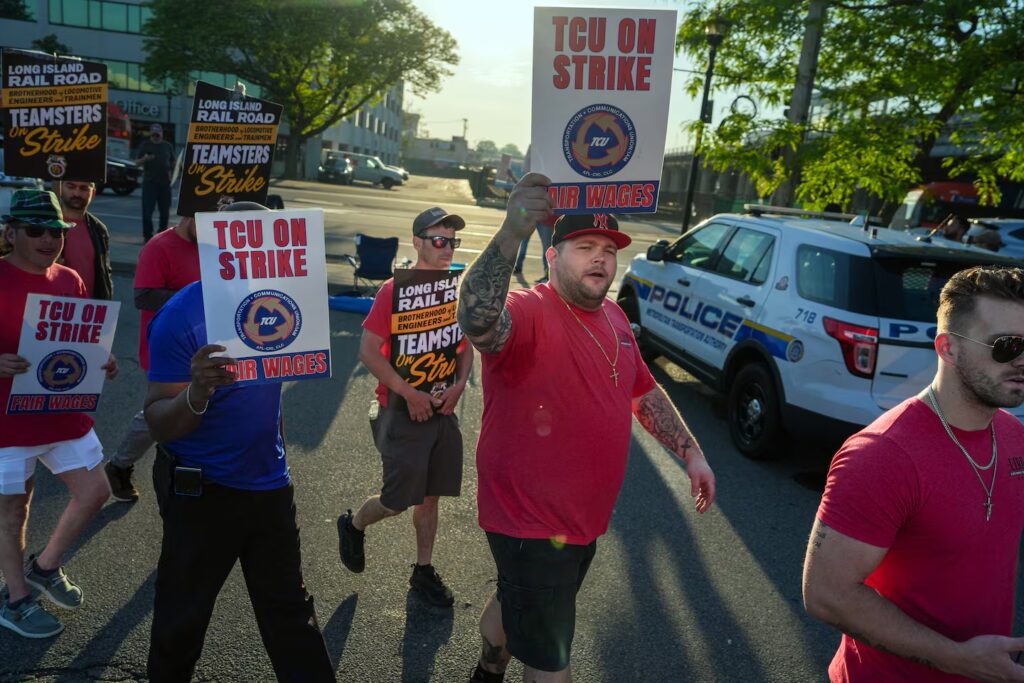
Negotiations to end the Long Island Rail Road strike resumed Monday after marathon overnight talks failed to produce a deal, leaving roughly 250,000 commuters facing another day of major transportation disruptions across the New York region.
The labor dispute has shut down North America’s busiest commuter rail system for the first time in decades, creating travel chaos for workers traveling between Long Island and New York City.
Overnight negotiations fail to secure deal
Union representatives and officials from the Metropolitan Transportation Authority negotiated late into Sunday night after intervention from the National Mediation Board and Kathy Hochul.
Talks continued until nearly 1:30 a.m. Monday before both sides agreed to resume negotiations several hours later.
Although discussions reportedly made progress, negotiators acknowledged that even a last-minute agreement would not have restored service in time for Monday morning’s commute because crews and trains would still need to be repositioned.
Strike impacts hundreds of thousands
The Long Island Rail Road strike began at 12:01 a.m. Saturday after five unions representing nearly half of the railroad’s workforce walked off the job.
The rail system serves commuters across:
- Brooklyn
- Queens
- Nassau County
- Suffolk County
- The Hamptons
The shutdown is affecting workers, students, tourists and sports fans traveling into Manhattan through Penn Station.
Kathy Hochul urges remote work
Governor Hochul called the railroad the “lifeblood of Long Island” and urged employers to allow remote work whenever possible.
“It’s impossible to fully replace LIRR service,” Hochul said during a Sunday press conference.
The state also announced emergency commuter bus services for essential workers traveling from Long Island into the city during peak hours.
Unions demand higher wages
The unions say workers deserve larger salary increases after years without a contract and rising living costs across the New York metropolitan area.
In a joint statement, union leaders argued employees are simply trying to keep pace with inflation after working for years without raises.
The dispute centers primarily on:
- Wage increases
- Healthcare costs
- Contract terms
- Inflation adjustments
MTA warns of financial impact
MTA officials insist the unions’ wage demands would place significant strain on the agency’s finances.
Janno Lieber said the proposals could severely damage the transit agency’s budget and potentially force fare increases for riders.
“We’re more than willing to meet them halfway on wages,” Lieber said.
Political blame game escalates
The Long Island Rail Road strike has also triggered political finger-pointing between Hochul and Donald Trump.
Hochul accused the Trump administration of shortening federal mediation efforts last year, while Trump denied responsibility and criticized the governor on social media.
“No, Kathy, it’s your fault,” Trump wrote on Truth Social.
Sports fans and commuters feel immediate effects
The strike quickly disrupted weekend sporting events, including:
- New York Yankees games
- New York Mets games
- New York Knicks playoff games
Penn Station departure boards displayed repeated “No Passengers” notices throughout the weekend as empty trains remained idle.
The strike marks the first Long Island Rail Road work stoppage since 1994, highlighting growing tensions between transportation unions and public agencies as inflation pressures continue affecting workers nationwide.
What happens next
Negotiators are expected to continue talks throughout Monday in hopes of reaching a tentative agreement.
However, transportation officials warned commuters to expect ongoing delays and disruptions until a formal deal is finalized and rail operations can safely resume.
Author: Staff Writer | Edited for WTFwire.com | SOURCE: AP News
: 281