US says Ebola patients from Kenya facility may be treated in America

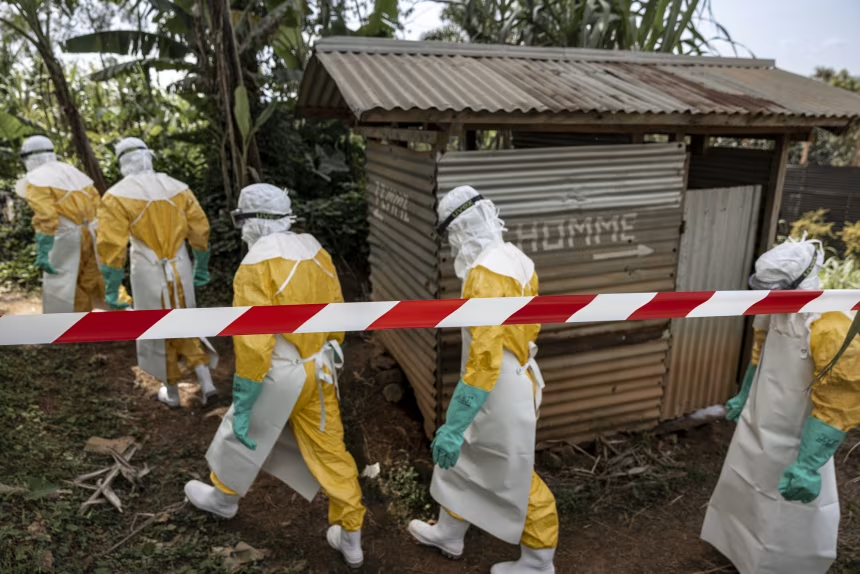
US officials have indicated that Americans who test positive for Ebola while under observation at a proposed quarantine facility in Kenya may be transferred back to the United States for treatment, marking a shift in the administration’s earlier messaging on containment policy.
The update was outlined by Secretary of State Marco Rubio during a Senate Appropriations subcommittee hearing, where he clarified that patients exposed in Kenya would be monitored locally but could be evacuated if they test positive.
Policy shift on treatment location
Rubio said Americans under observation at the Kenya facility would be transferred to treatment centers if they became infected, including hospitals in Europe or the United States.
The comments appear to contrast with earlier statements from the Trump administration suggesting that Ebola cases would not be allowed into the country under any circumstances.
US health officials later clarified that evacuation to the United States was always considered an option depending on medical need.
Purpose of the Kenya facility
The facility in Kenya is part of a broader US effort to manage Ebola exposure cases closer to the outbreak region in Central Africa while preventing uncontrolled spread.
Officials say the site is intended primarily for observation and quarantine of individuals who have been exposed but are not yet symptomatic.
If patients develop symptoms or test positive, they would be transferred to specialized treatment hospitals, including high-level infectious disease centers in Europe or the United States.
Health officials defend approach
Dr. Jay Bhattacharya, acting director of the US Centers for Disease Control and Prevention, said the Kenya facility is designed to provide rapid monitoring and ensure safe management of high-risk exposure cases.
He said the goal is to prevent “inadvertent entry” of Ebola into the United States while still ensuring access to advanced care when necessary.
He also noted that the US continues to maintain specialized Ebola treatment capacity, including hospitals equipped for high-containment infectious disease care.
Outbreak challenges in Central Africa
The current Ebola outbreak has affected parts of the Democratic Republic of Congo and Uganda, where conflict and limited infrastructure have complicated containment efforts.
US officials say they have deployed CDC personnel, surveillance teams, and funding support to assist local response efforts.
However, health experts warn that logistical barriers, insecurity, and delayed detection have made the outbreak more difficult to control.
Coordination and response efforts
According to CDC officials, dozens of staff members are currently deployed in the region, supporting contact tracing, testing, and outbreak modeling.
The US government has also provided tens of millions of dollars in emergency assistance to support containment and treatment operations.
Officials say ongoing cooperation with international partners remains critical to preventing further spread.
Ongoing debate over containment strategy
The proposed Kenya facility has sparked debate among public health experts, lawmakers, and international observers.
Supporters argue it helps reduce travel risk while maintaining medical oversight close to the outbreak zone. Critics question whether shifting treatment infrastructure abroad creates legal, ethical, and logistical complications.
Despite differing views, US officials maintain that the system is designed to balance rapid response with strict containment safeguards.
While policy details continue to evolve, officials emphasize that Ebola patients will have access to advanced care if needed, whether in Europe or the United States.
The broader strategy remains focused on containing the outbreak in Central Africa while preventing international spread through controlled monitoring and evacuation protocols.
: 320