House approves war powers resolution to challenge Trump over Iran war

The U.S. House of Representatives has approved a war powers resolution aimed at halting military action against Iran, marking a significant political rebuke of President Donald Trump as the three-month-long conflict continues.
The vote highlights growing bipartisan unease over the administration’s handling of the war, with a small group of Republicans joining Democrats in support of the measure.
The resolution passed 215–208 and reflects increasing concern in Congress over the scope and direction of U.S. involvement in the conflict.
Bipartisan opposition grows in Congress
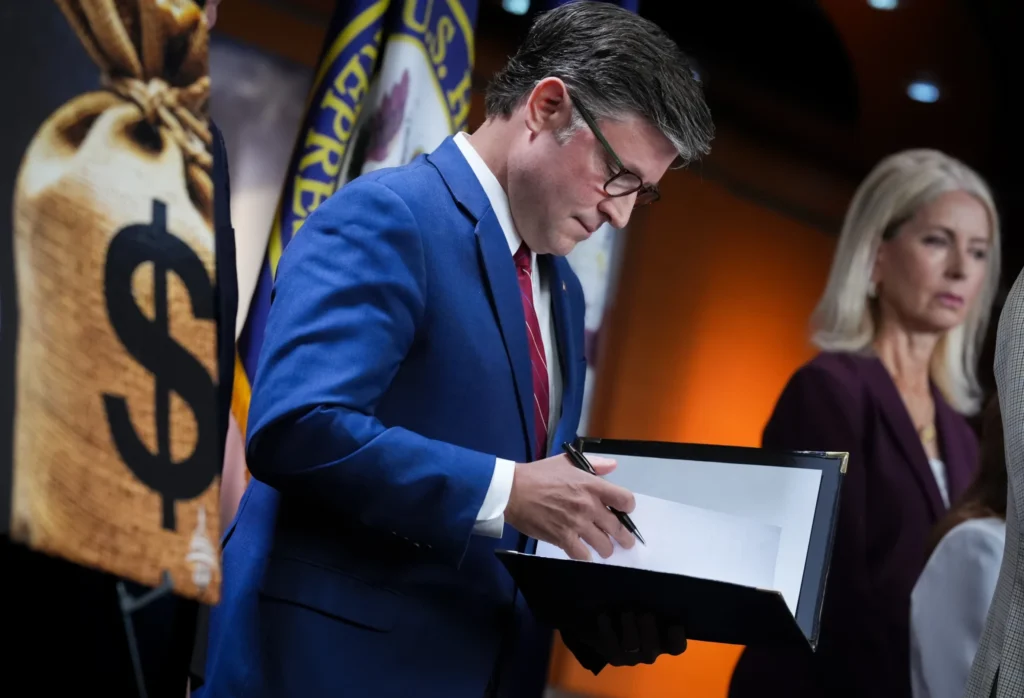
House Speaker Mike Johnson had attempted to block the measure, briefly halting floor proceedings weeks earlier when it appeared close to passing. However, opposition to the war has continued to grow as fighting in the Middle East drags on.
Democrats leading the effort argued that the administration has failed to contain the economic and humanitarian consequences of the conflict.
“It is time for the president to do the right thing,” said Rep. Gregory Meeks, the top Democrat on the House Foreign Affairs Committee. He said Americans are “tired of suffering” due to rising costs linked to the war, including higher prices at the gas pump and in grocery stores.
The vote marks the fourth attempt by the House to restrict U.S. military action against Iran, with support for the measure steadily increasing each time.
Limited immediate impact, but political significance
While the resolution passed in the House, its practical impact remains uncertain. President Trump is expected to reject any congressional effort that limits his authority as commander in chief.
The measure now moves to the Senate, where a similar resolution previously advanced with limited Republican support. However, no final vote has been scheduled.
Despite its limited legal force at this stage, the resolution represents a clear political signal of growing discomfort within Congress over the direction of the war.
Economic pressure and the Strait of Hormuz
Lawmakers have increasingly linked the conflict to rising energy prices and broader economic strain on American households.
Since the U.S. joined Israel in launching strikes on Iran in late February, global oil markets have remained volatile. Disruptions in the Strait of Hormuz, a key route for global energy shipments, have contributed to persistent inflationary pressure.
House Speaker Johnson said the administration is working with allies to restore stability in the region and reopen the waterway to commercial shipping.
“The entire world has an interest in the Strait of Hormuz being reopened for commerce,” Johnson said.
Trump administration defends strategy
The White House has maintained that its strategy is focused on pressure and negotiation. Officials argue that U.S. military action has weakened Iran and forced it into a more vulnerable negotiating position.
Secretary of State Marco Rubio warned lawmakers that restricting presidential war powers could undermine ongoing negotiations.
He argued that Iran would interpret congressional limits as a sign that the U.S. is less willing to use force, potentially weakening America’s bargaining position.
Constitutional tension over war powers
The resolution also revives long-standing constitutional questions over the balance of power between Congress and the presidency in matters of war.
Under the War Powers Act, presidents must seek congressional authorization for extended military operations. However, administrations have frequently interpreted or bypassed these requirements in past conflicts.
Lawmakers supporting the resolution argue that Congress must reassert its authority over military engagements, particularly as the conflict with Iran shows no clear end.
Next steps uncertain
The resolution now heads to the Senate, where its future remains unclear. Even if it passes both chambers, it would face a likely veto from President Trump.
Still, the vote underscores growing political pressure on the administration as the Iran conflict continues to shape domestic politics, economic conditions, and international relations.
: 194