WHO Declares Global Emergency Over New Ebola Outbreak

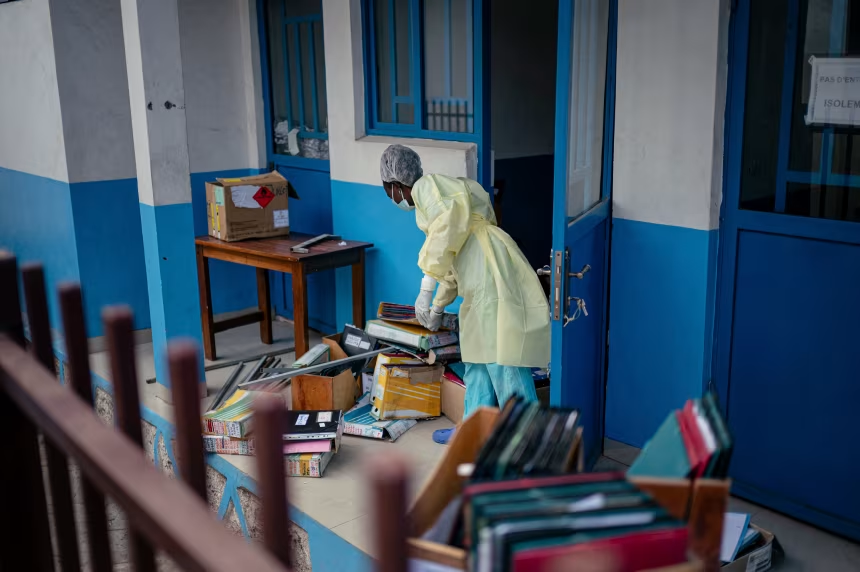
The World Health Organization has declared the growing Ebola outbreak in the Democratic Republic of the Congo and Uganda a global public health emergency as cases and deaths continue to rise.
The Ebola outbreak 2026 is being driven by the rare Bundibugyo strain, one of several Ebola-related viruses capable of causing severe hemorrhagic disease in humans.
Health officials say the outbreak has not yet reached pandemic status. However, the rapid increase in suspected infections and the lack of an approved vaccine have intensified global concern.
What is the Bundibugyo Ebola virus?
The current outbreak is linked to the Bundibugyo virus, a strain of Ebola first identified in Uganda in 2007.
According to the WHO, Ebola spreads through direct contact with:
- Bodily fluids from infected people
- Contaminated materials
- Infected deceased individuals
Symptoms typically begin with:
- Fever
- Fatigue
- Muscle pain
- Headaches
- Sore throat
As the disease progresses, patients may develop:
- Vomiting
- Diarrhea
- Abdominal pain
- Internal and external bleeding
Unlike airborne viruses, Ebola is not considered highly contagious through casual contact. However, experts warn it is extremely infectious once exposure occurs.
Cases and deaths continue to climb
The outbreak is centered in the northeastern Ituri province of the DRC near the Ugandan border.
According to the Centers for Disease Control and Prevention:
- 10 confirmed Ebola cases have been identified in the DRC
- 336 suspected cases are under investigation
- 88 deaths have been reported
In Uganda, authorities confirmed two laboratory cases in Kampala, including one death.
Officials also identified at least one Ebola case in Goma, a strategic city in eastern Congo.
Health experts warn the actual number of infections may be significantly higher than current figures suggest.
Why WHO declared a global health emergency
The WHO classified the Ebola outbreak 2026 as a “public health emergency of international concern” because of:
- Rising suspected deaths
- Increasing confirmed infections
- Cross-border transmission risks
- Weak healthcare infrastructure in affected areas
The organization warned the outbreak could spread further into neighboring countries if containment efforts fail.
WHO Director-General Tedros Adhanom Ghebreyesus praised both Congo and Uganda for quickly reporting cases and coordinating international response efforts.
No approved vaccine currently exists
One of the biggest concerns surrounding the Ebola outbreak 2026 is the absence of an approved vaccine or treatment specifically targeting the Bundibugyo strain.
Medical charity Médecins Sans Frontières said fatality rates for this strain range between 25% and 40%.
The organization is preparing to expand emergency operations in affected regions.
International response intensifies
The CDC announced it is deploying additional personnel and resources to support:
- Contact tracing
- Laboratory testing
- Surveillance systems
- Border screening
Health officials said no exposure has been identified on international flights so far.
Both Congo and Uganda have implemented airport and border screening measures to limit the virus’ spread through travel.
Ebola outbreak revives global fears after COVID-19
The new Ebola outbreak has also reignited fears of another major international health crisis years after the COVID-19 pandemic reshaped global public health systems.
Experts stress the risk to the general public outside affected regions remains low for now. Still, the WHO warned the situation remains highly volatile and requires urgent international coordination.
Author: Staff Writer | Edited for WTFwire.com | SOURCE: CNN News
: 228