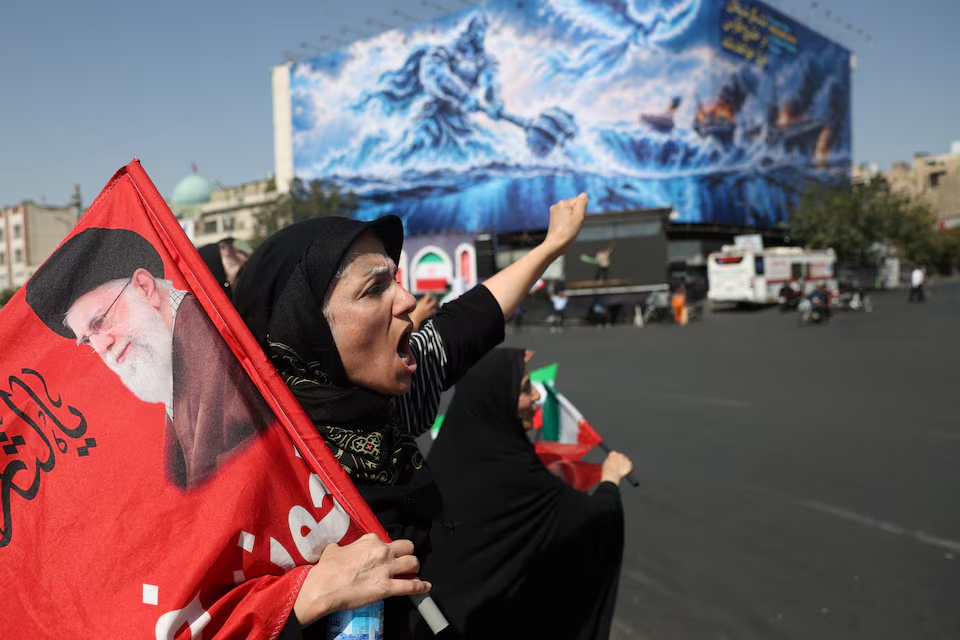
Israel and Lebanon agree to conditional ceasefire tied to Hezbollah attacks

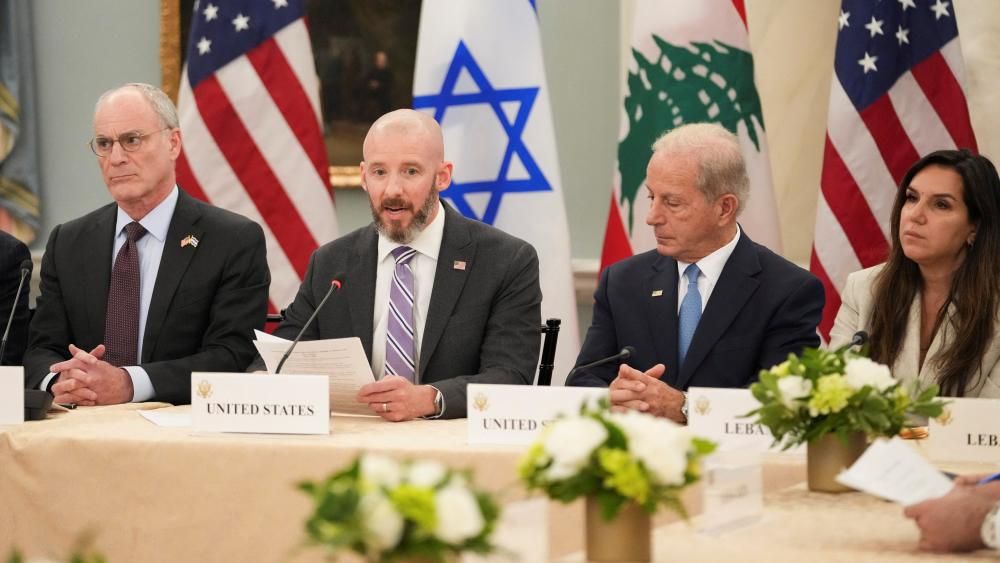
Israel and Lebanon have agreed to renew a fragile ceasefire framework that depends on Hezbollah halting its attacks, according to an announcement from the United States State Department.
The deal also includes plans to establish “pilot” security zones inside Lebanon where Hezbollah operatives would be excluded. The agreement was reached during US-mediated talks held in Washington.
However, the arrangement is conditional and requires a complete cessation of hostilities by Hezbollah, the Iran-backed armed group that plays a major political and military role in Lebanon.
Conditional agreement reached in Washington
A joint statement from the three parties said the deal would only move forward if Hezbollah stops its attacks and if additional conditions are met. It also stressed that no state or non-state actor should be allowed to “hold Lebanon’s future hostage.”
The announcement followed a day of renewed violence, including Israeli strikes in southern Lebanon that killed at least nine people and rocket fire launched by Hezbollah into northern Israel.
Lebanese state media later reported continued Israeli strikes in the south on Thursday, with additional casualties reported.
Security zones and phased control plan
Under the proposed framework, Hezbollah operatives would be removed from a buffer area between the Israeli border and the Litani River, located roughly 30 kilometers into Lebanese territory.
The agreement outlines the creation of “pilot zones” where the Lebanese Armed Forces would assume full control, with the exclusion of all armed non-state actors.
The United States is expected to assist in implementing and monitoring these zones as part of a broader stabilization effort.
Hezbollah’s role and ongoing tensions
Hezbollah, a powerful Shia political and military group backed by Iran, remains central to the conflict. It is designated as a terrorist organization by Israel, the United States, and several other countries.
The group has not formally commented on the latest agreement but has previously rejected elements of US-mediated talks. A Hezbollah representative told the BBC that the group does not recognize the negotiations or their outcomes.
Israeli officials have warned that strikes on Beirut’s southern suburbs could resume if Hezbollah continues cross-border attacks.
Humanitarian toll continues to rise
The conflict has caused significant casualties and displacement across Lebanon. According to the Lebanese health ministry, more than 3,500 people have been killed since the war began, though figures do not distinguish between civilians and combatants.
The United Nations estimates that more than one million people have been displaced due to ongoing violence. Israeli evacuation orders now cover large portions of southern Lebanon.
In recent incidents, Lebanese officials reported strikes that killed civilians, including Syrians and Palestinians, as well as medical personnel targeted in ambulance attacks. Israel has previously claimed, without providing evidence, that ambulances have been used for military purposes.
Fragile truce and uncertain future
The latest agreement follows earlier US-brokered ceasefire efforts that failed to fully halt hostilities. A partial truce announced earlier this week also remains fragile, with both sides continuing to report violations.
US officials say the renewed talks are part of a broader effort to stabilize the region and prevent further escalation involving Iran-backed groups.
However, uncertainty remains high, as both Israel and Hezbollah continue to accuse each other of violating ceasefire terms, and diplomatic negotiations remain ongoing in Washington.
Author: Staff Writer | Edited for WTFwire.com | SOURCE: BBC News
: 315